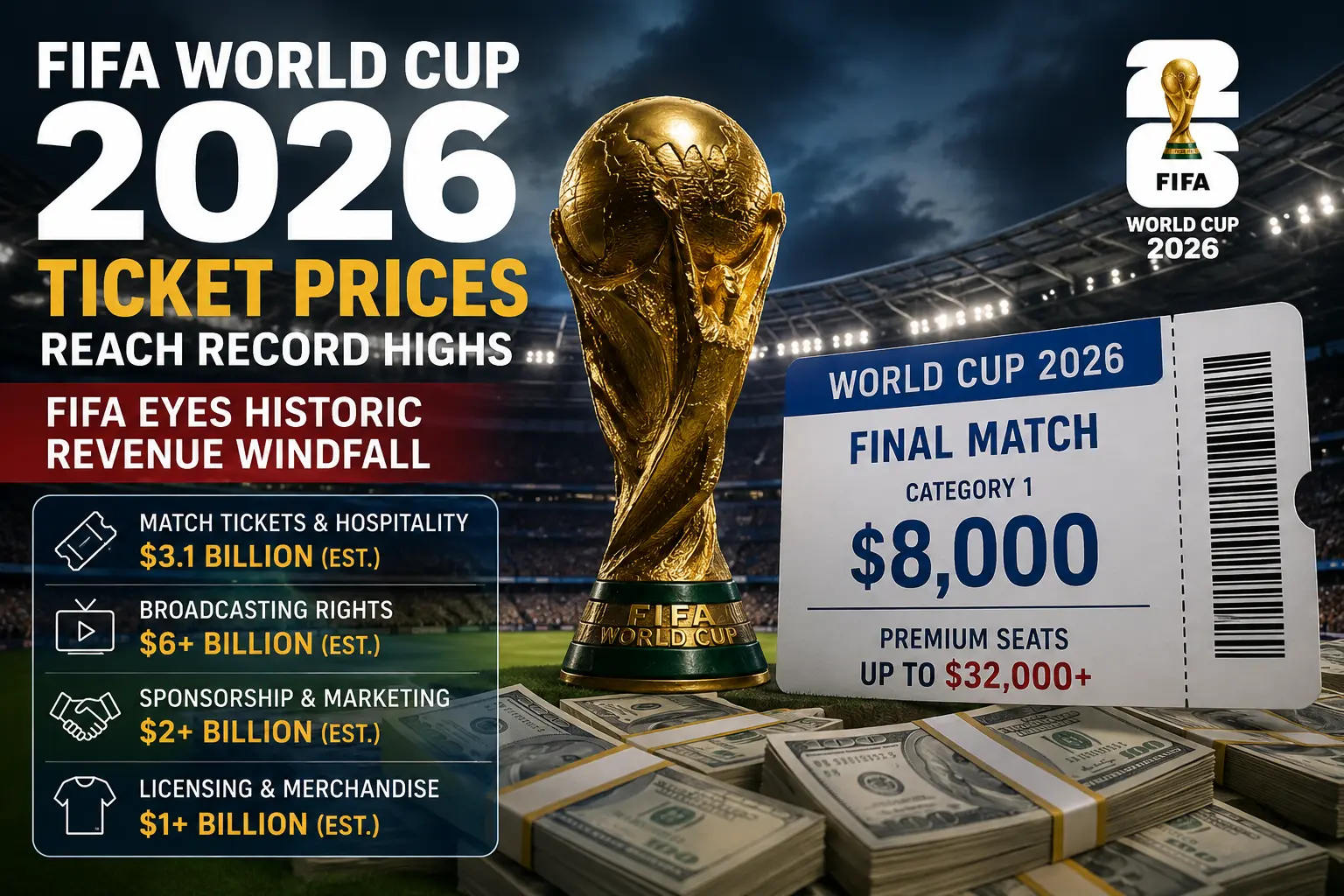
The global soccer landscape is shifting dramatically ahead of the sport’s biggest showcase. Unprecedented demand and expanded tournament formats are driving FIFA World Cup 2026 ticket prices to record highs, positioning the competition to become the most financially lucrative event in sports history. Hosted across the United States, Canada, and Mexico, the tournament features an expanded 48-team field and 104 total matches. This expansion significantly increases commercial opportunities compared to previous editions, reshaping the fiscal ecosystem of global football and leaving massive implications for future international tournaments, including the growth of the women’s game.
Table Of Contents
- 📈 Financial Impact and Pricing Structure
- A New North American World Cup Business Model
- Global Women’s Soccer and USWNT Implications
- 🔮 What Comes Next
- FAQ Section
- What is the primary reason behind the record-breaking FIFA World Cup 2026 ticket prices?
- How much do official FIFA hospitality packages cost for the 2026 tournament?
- What is the total projected 2026 FIFA World Cup revenue for the current cycle?
- Are there any affordable ticket options available for regular soccer supporters?
- How does the expansion to 48 teams impact the tournament’s overall business model?
📌 Key Takeaways
- Record Highs: General public ticket face values range from $120 to an unprecedented $7,875 for Category 1 Final seats.
- Dynamic Surge: FIFA’s implementation of dynamic soccer ticket pricing has led to steep increases based on real-time market demand.
- Revenue Windfall: Total projections for the 2023–2026 commercial cycle have risen to $13 billion, with $8.9 billion generated directly by the tournament.
- Hospitality Growth: Official FIFA hospitality packages and premium matchday seating represent the fastest-growing revenue stream, forecast to exceed $3 billion.
📈 Financial Impact and Pricing Structure
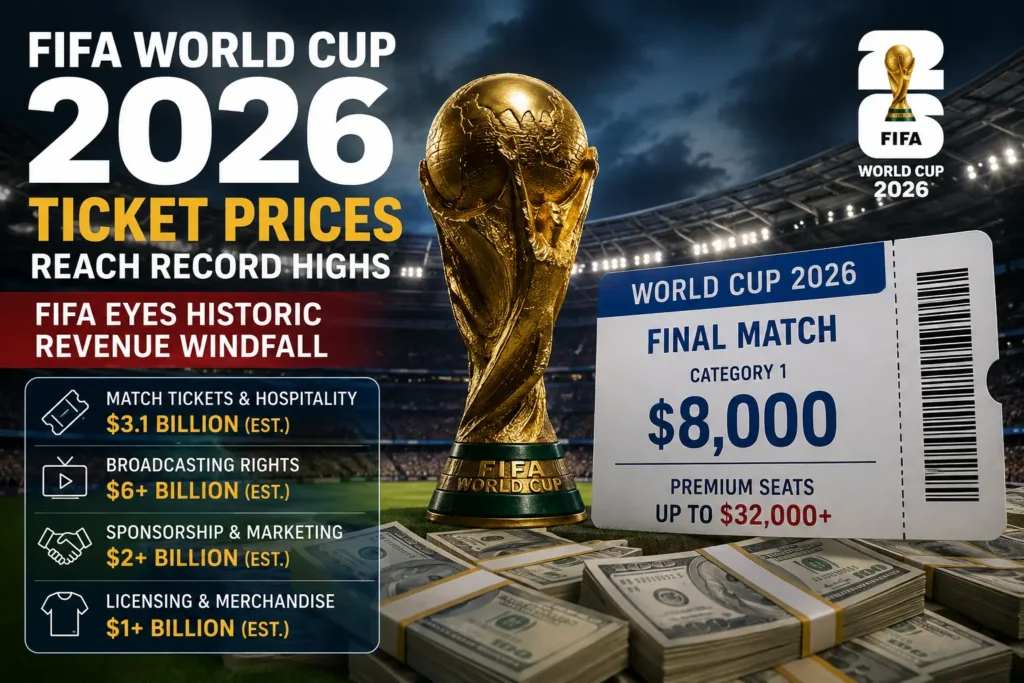
The financial framework of the tournament reflects a significant departure from previous iterations. The introduction of dynamic soccer ticket pricing means that entry costs fluctuate relative to real-time consumer demand, maximizing matchday returns in premium markets.
While a dedicated tier of $60 tickets was made available through national federations for loyal regular supporters, general public pricing reflects a steep upward trajectory. For matches featuring host nations, Category 1 group stage seats can command up to $2,735, illustrating the massive commercial premium placed on the North American market.
FIFA World Cup 2026 Ticket Prices by Stage
The following table outlines the official general public ticket price ranges across the tournament’s primary knockout and group stages:
| Stage | Minimum Ticket Price (USD) | Maximum Ticket Price (USD) |
|---|---|---|
| Group Stage (Standard) | $120 | $620 |
| Group Stage (Host Nations) | $400 | $2,735 |
| Round of 32 | $105 | $750 |
| Round of 16 | $170 | $980 |
| Quarter-finals | $275 | $1,775 |
| Semi-finals | $420 | $3,295 |
| The Final | $2,030 | $7,875 |
A New North American World Cup Business Model
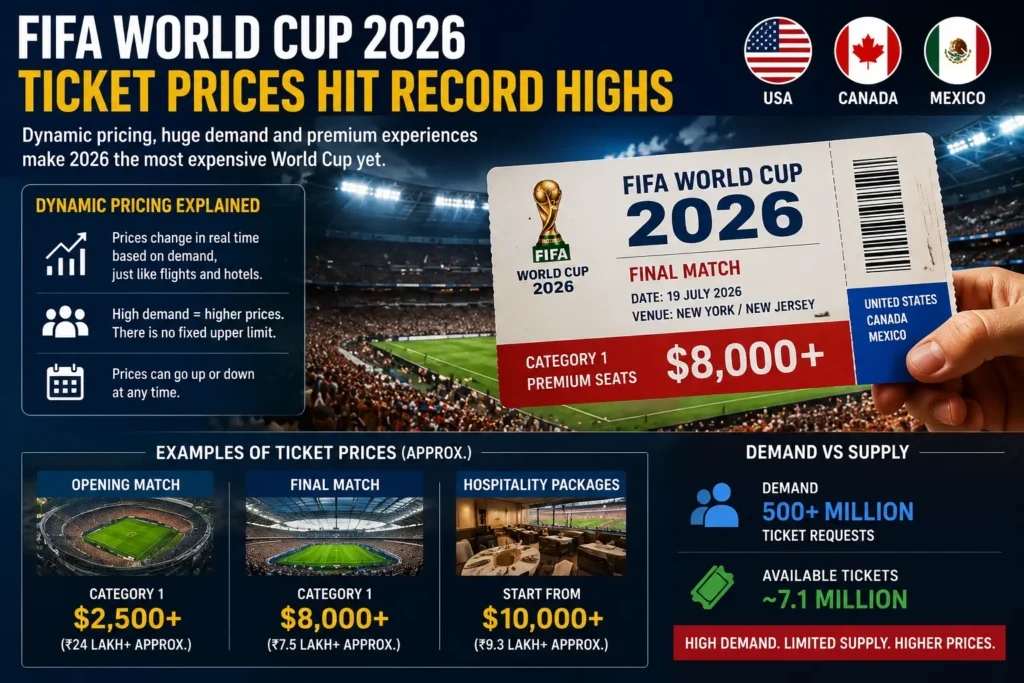
The structural expansion from 64 to 104 matches has drastically amplified FIFA’s inventory of broadcasting slots, corporate sponsorships, and gate receipts. Industry analysts point out that while traditional media rights value per game has technically fallen by 19% due to the massive volume of matches and time-zone hurdles for European broadcasters, matchday and commercial revenues have easily closed the gap.
A core element of this North American World Cup business model is the aggressive expansion of official FIFA hospitality packages. Premium options, such as the Pitchside Lounge and exclusive private suites, start at individual base rates of $1,400 for standard matches and scale well past tens of thousands for marquee knockout rounds. This strategy directly targets corporate partners and high-net-worth sports consumers, creating a clear blueprint for future major sports properties.
Projected 2023–2026 Revenue Streams
FIFA’s targeted $13 billion cycle total is driven by a diversified mix of historical and rapidly growing revenue categories:
| Revenue Category | Estimated Contribution (USD) |
|---|---|
| Broadcasting Rights | $4.0 Billion |
| Ticketing & Hospitality | $3.0+ Billion |
| Global Sponsorships | $1.8 Billion |
| Other Commercial Activities | $4.2 Billion |
| Total Projected Revenue | $13.0 Billion |
Global Women’s Soccer and USWNT Implications
The financial metrics established by this tournament carry deep ramifications for the future of women’s soccer. The immense profitability of the North American sports market underscores why U.S. Soccer and Mexico actively pursued hosting rights for upcoming women’s tournaments.
The financial infrastructure, stadium scaling, and corporate hospitality framework tested here will directly influence the commercial strategy for the next generation of women’s championships. Increased revenue at the FIFA level expands the global Forward development fund, which supports elite training facilities and competitive pipelines for women’s national teams globally.
Furthermore, the domestic boom in soccer interest benefits the National Women’s Soccer League (NWSL). With top global stars competing in filled American venues, domestic clubs can expect secondary growth in corporate sponsorships, stadium attendance, and media rights values.
🔮 What Comes Next
As the tournament progresses across the three host nations, commercial tracking will continue to monitor whether actual gate receipts outpace the projected $3 billion mark. FIFA’s official ticket resale platform will remain active throughout the knockout stages, providing a heavily regulated secondary marketplace operating under strict transfer limitations.
FAQ Section
What is the primary reason behind the record-breaking FIFA World Cup 2026 ticket prices?
The steep rise in prices is driven by record-breaking global demand and FIFA’s adoption of a dynamic pricing model. Because the tournament is hosted in premium North American venues, market forces have significantly escalated the cost of general public and premium category seats compared to previous World Cups.
How much do official FIFA hospitality packages cost for the 2026 tournament?
Official hospitality experiences, which include premium seating and curated venue access, begin at a base price of $1,400 per person for individual group stage matches. Multi-match venue series and elite options, like the Pitchside Lounge or private suites, can range from $8,275 to over $40,000 depending on the stadium.
What is the total projected 2026 FIFA World Cup revenue for the current cycle?
FIFA projects that the overall revenue for the 2023–2026 commercial cycle will reach $13 billion. Approximately $8.9 billion of that total is expected to be generated directly by operations, sponsorships, broadcasting rights, and matchday ticketing from the 2026 tournament itself.
Are there any affordable ticket options available for regular soccer supporters?
Yes, FIFA allocated a specific tier of tickets priced at $60 explicitly for regular supporters through participating national federations. However, these entry-level tickets are limited in volume, subject to specific qualifying attendance histories, and are not available to the general public via standard sales channels.
How does the expansion to 48 teams impact the tournament’s overall business model?
The expansion to 48 teams increases the total match inventory from 64 to 104 games. This 47% increase in matches creates significantly more broadcasting inventory, additional ticket availability, and broader corporate sponsorship opportunities across the three host nations, driving record-breaking overall commercial returns.