

The FIFA Women’s World Cup returns in June 2027, when Brazil becomes the first South American nation to host the tournament. But for American fans, the more urgent question isn’t about Brazil’s eight stadiums — it’s about whether the USWNT will be in any of them.
As of this writing, the U.S. Women’s National Team has not qualified for Brazil 2027. Its path runs through a single-elimination tournament in Texas this November, opening against a team it has literally never played. On paper, USWNT 2027 World Cup qualifying looks like a formality: win once, and you’re in. In practice, it’s the first real pressure test of Emma Hayes’ tenure — and a window into whether 18 months of roster experimentation have actually produced a team built for knockout football.
Key Takeaways
A USWNT player sprints under stadium lights during a World Cup qualifying match


- USWNT 2027 World Cup qualifying begins Nov. 27, 2026, when the team faces El Salvador in the Concacaf W Championship quarterfinals at Texas Health Mansfield Stadium in Mansfield, Texas. The two nations have never met.
- A win sends the USWNT directly to Brazil. A loss doesn’t eliminate them, but it routes them into an unfamiliar and riskier path through a Concacaf play-in match and a global intercontinental playoff.
- Brazil 2027 (June 24–July 25) is the first Women’s World Cup held in South America and the last edition with a 32-team field before FIFA expands to 48 teams in 2031.
- The USWNT sits No. 2 in the FIFA rankings behind Spain, but enters Concacaf play as the confederation’s top seed.
- Emma Hayes has capped 60 different players since taking over in November 2023 — a program record — but her most recent rosters signal that experimentation phase is closing just as qualifying arrives.
- Only 16 of the tournament’s 32 spots were filled as of July 2026. All four Concacaf berths, including the USWNT’s, remain undecided.
Main Story: A Qualifying Path That Runs Through Texas, Against a Team the USWNT Has Never Faced
FACT: The 2026 Concacaf W Championship — the confederation’s qualifying tournament for Brazil 2027 — kicks off Nov. 27 at Texas Health Mansfield Stadium in Mansfield, with the final and third-place match set for Dec. 5 at Shell Energy Stadium in Houston, according to Concacaf’s official announcement. The USWNT and Canada earned byes directly into the eight-team knockout bracket as the confederation’s two highest-ranked teams; they’re joined by Costa Rica, El Salvador, Haiti, Jamaica, Mexico and Panama, who advanced through a 29-nation qualifying round.
The bracket was seeded using the April 2026 FIFA rankings, pairing the highest seed against the lowest in each quarterfinal. That put the No. 1 USWNT against No. 8 El Salvador — a matchup with no history at all. El Salvador is making its Concacaf W Championship debut, and the two countries have never played each other in the USWNT’s more than four-decade existence, per Sports Illustrated.
The format is straightforward: all four quarterfinal winners advance to the semifinals and, in doing so, automatically qualify for the World Cup — regardless of how the semifinal itself goes. For the USWNT, that means one result, on one night in Mansfield, effectively decides its World Cup fate. Beat El Salvador, and Brazil is booked. The same tournament also carries Olympic implications: the two Concacaf W Championship finalists and the third-place finisher earn direct berths to the 2028 Los Angeles Games. Because the USWNT already holds an automatic Olympic spot as host, a top-three finish would pass that fourth Concacaf Olympic berth down to whichever team finishes fourth.
Why It Matters
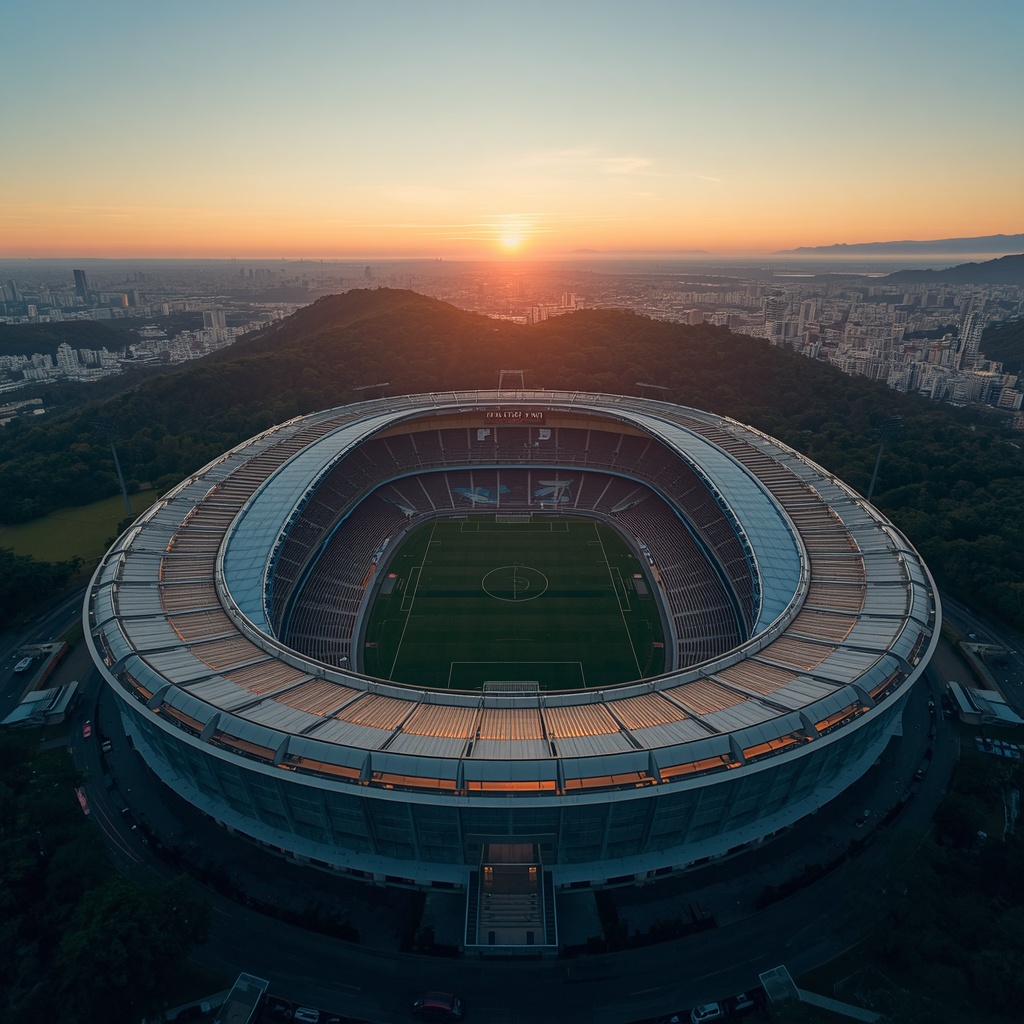
An aerial view of a Brazilian stadium at dusk ahead of the 2027 Women’s World Cup.”
ANALYSIS: The “win-and-in” framing is accurate, but it understates the risk sitting on the other side of it. A quarterfinal loss wouldn’t end the USWNT’s World Cup hopes — it would just make them far more complicated. The four Concacaf quarterfinal losers drop into play-in matches for two spots in FIFA’s intercontinental playoff tournament, a separate global bracket where the USWNT would need to beat unfamiliar opposition from other confederations across two more rounds between November 2026 and February 2027, with no automatic seeding advantage guaranteed. It’s a survivable path, but not one any USWNT roster has had to travel before under the current format.
That backdrop is part of why the broader qualification picture matters. Here’s where things stood across the sport’s six confederations as of early July 2026, according to FIFA and ESPN’s reporting on the qualification process:
| Confederation | Direct World Cup Slots | Status (as of July 2026) |
|---|---|---|
| CONMEBOL (South America) | 3, including host Brazil | Qualified: Brazil (host), Argentina, Colombia |
| UEFA (Europe) | 11 | Qualified so far: Denmark, France, Germany, Spain. Remaining 7 slots decided via playoffs through December 2026 |
| AFC (Asia) | 6 | Qualified: Australia, China PR, Japan, Korea DPR, Korea Republic, Philippines |
| Concacaf (N./Central America, Caribbean) | 4 | Not yet determined — decided at the Concacaf W Championship, Nov. 27–Dec. 5, 2026 |
| CAF (Africa) | 4 | Not yet determined — decided at the Women’s Africa Cup of Nations, July 25–Aug. 16, 2026 |
| OFC (Oceania) | 1 | Qualified: New Zealand |
| Inter-confederation playoff | 3 | Not yet determined — held November 2026–February 2027 |
The USWNT is the only one of the sport’s traditional powers whose World Cup fate is still entirely undecided this deep into the cycle — a reminder that Concacaf’s compressed, single-elimination format leaves far less room for error than Europe’s multi-round group qualifying.
Tactical & Strategic Analysis: What Emma Hayes’ Roster Churn — and Its Recent Reversal — Actually Signals
FACT: Since taking over the USWNT in November 2023, Emma Hayes has capped 60 different players, including a program-record 44 different players in the 2025 calendar year alone, according to U.S. Soccer’s own roster data. No other full-time USWNT head coach had started more than 36 different players in their first 30 games in charge; Hayes blew past that mark within her first year.
ANALYSIS: That churn wasn’t incidental — it was the point. With no World Cup or Olympic qualifying on the line for most of 2024 and 2025, Hayes used the calendar to stress-test depth across the player pool rather than lock in a first-choice lineup too early, a strategy consistent with someone building toward a 2027 cycle rather than optimizing for any single friendly result.
The data suggests that phase is now ending. For three straight camps by June 2026, Hayes named zero uncapped players — the first time that’s happened in her tenure. The March 2026 SheBelieves Cup roster averaged 30.4 caps per player, a sharp reversal from the 6.6-cap average of a January training camp just two months earlier. The clearest signal came in June: for the first time in over 600 days, Hayes reunited the “Triple Espresso” front line of Trinity Rodman, Sophia Wilson and Mallory Swanson — the trio that combined for 10 goals and five assists en route to Olympic gold in Paris — for a pair of friendlies against host nation Brazil.
The results were instructive rather than conclusive: the USWNT lost 2-1 in São Paulo on June 6, then won 1-0 in Fortaleza three days later. Splitting a series against a fellow World Cup-caliber team, with a front three still shaking off long absences from injury and, in Wilson’s and Swanson’s cases, maternity leave, is a reasonable outcome — but it’s not a finished product. That chemistry question, more than any single tactical wrinkle, is the one Hayes has five months to answer before a knockout match where there’s no second leg.
Bigger Picture Impact
ANALYSIS: This is Hayes’ first tournament assignment where a bad night ends the competition outright. Her results to date have been strong — a 33-5 record across her first 40 matches, an Olympic gold medal in 2024, and the first-ever Ballon d’Or for Women’s Coach of the Year — but all of that came without the single-elimination stakes a Concacaf quarterfinal carries. The USWNT has never missed a Women’s World Cup, appearing in all nine editions since the tournament began in 1991. That streak, while not something FIFA formally guarantees, is part of the program’s identity — and it’s the streak that’s technically on the line in Mansfield, even if the intercontinental playoff route offers a safety net most American fans would rather not need.
BACKGROUND: Brazil’s hosting duties carry their own significance beyond the USWNT storyline. All eight confirmed Host Cities and stadiums previously hosted matches at the 2014 men’s World Cup, giving FIFA proven infrastructure to work with as it stages the first Women’s World Cup ever held in South America.
| Host City | Stadium | 2014 Men’s World Cup Venue |
|---|---|---|
| Belo Horizonte | Estádio Mineirão | Yes |
| Brasília | Estádio Nacional (Mané Garrincha) | Yes |
| Fortaleza | Arena Castelão | Yes |
| Porto Alegre | Estádio Beira-Rio | Yes |
| Recife | Arena de Pernambuco | Yes |
| Rio de Janeiro | Estádio do Maracanã | Yes |
| Salvador | Arena Fonte Nova | Yes |
| São Paulo | Arena Itaquera (Neo Química Arena) | Yes |
Brazil 2027 will also be the last 32-team Women’s World Cup before FIFA’s confirmed expansion to 48 teams in 2031 — a tournament the United States is set to co-host alongside Mexico, Costa Rica and Jamaica. That makes this cycle something of a closing chapter for the current format, adding one more reason the sport is watching how Concacaf’s compressed qualifying math plays out.
What Comes Next
The next five months carry the entire qualification picture toward resolution. Africa’s direct qualifiers are decided at the Women’s Africa Cup of Nations (July 25–Aug. 16, 2026). Europe’s final seven direct slots are settled through UEFA playoff rounds running into December 2026. The USWNT’s fate, along with the rest of Concacaf’s, is decided Nov. 27–Dec. 5 in Texas. Whatever’s left unresolved funnels into FIFA’s intercontinental playoff tournament, staged in two phases between November 2026 and February 2027, to fill the competition’s final three spots.
FIFA has not yet scheduled the group-stage draw for the tournament itself, and match-by-match ticket sale windows haven’t been announced beyond general registration at FIFA’s official ticketing portal. The tournament’s brand and emblem were unveiled at a Copacabana event on Jan. 25, 2026, under the slogan “Vai Ser Épico” (“Go Epic”) — with the full match schedule expected as FIFA’s next major milestone once qualification clarifies which cities host which stages.
Conclusion
Strip away the seeding and the byes, and USWNT 2027 World Cup qualifying comes down to one night in Mansfield: beat a team they’ve never played, and the deceptively simple version of this story is over. But the more useful version is the one Emma Hayes has been building toward since 2023 — whether 18 months of unprecedented roster rotation has actually produced a group that’s ready when there’s no next friendly to fall back on. Brazil will find out in November.
FAQ
When is the 2027 FIFA Women’s World Cup?
June 24 to July 25, 2027, hosted across eight cities in Brazil.
Has the USWNT qualified for the 2027 World Cup?
Not yet. The team must reach the Concacaf W Championship semifinals in November/December 2026 to qualify automatically.
Who does the USWNT play first in qualifying?
El Salvador, on Nov. 27, 2026, at Texas Health Mansfield Stadium in Mansfield, Texas — the first-ever meeting between the two nations.
How many teams are in the 2027 Women’s World Cup, and where will it be played?
32 teams across eight Brazilian host cities: Belo Horizonte, Brasília, Fortaleza, Porto Alegre, Recife, Rio de Janeiro, Salvador and São Paulo. It’s the final 32-team edition before the field expands to 48 in 2031.
Who are the defending champions?
Spain, who beat England in the 2023 final and currently sit No. 1 in the FIFA Women’s World Ranking.
What happens if the USWNT loses to El Salvador?
They wouldn’t be eliminated immediately, but they’d face a longer, less certain route: a Concacaf play-in match, followed by FIFA’s intercontinental playoff tournament against opposition from other confederations.
When is the World Cup group-stage draw?
FIFA had not scheduled it as of this article’s publication.