The Savannah DeMelo lawsuit has put the medical care surrounding NWSL players back under the spotlight one year after the Racing Louisville midfielder suffered cardiac arrest during a match. DeMelo is suing University of Louisville Health and two physicians, alleging that a heart condition was not properly diagnosed or treated before she collapsed on the field.
The significance extends beyond the legal claims themselves. The case raises questions about how professional women’s soccer clubs structure medical care, how responsibility is shared between clubs and outside health providers, and what safeguards players can expect when symptoms appear before an emergency.
What happened to Savannah DeMelo?
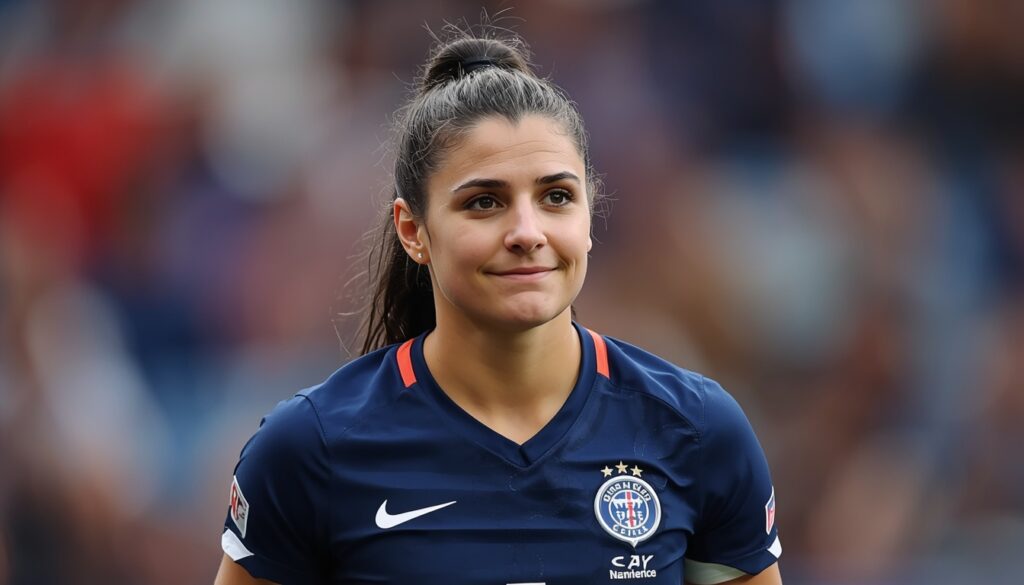
DeMelo collapsed during Racing Louisville’s September 14, 2025 match against Seattle Reign. The NWSL subsequently suspended the match, which was completed two days later after DeMelo had received medical treatment.
At the time, the club described the incident as a medical emergency and said DeMelo was stable and receiving care.
One year later, DeMelo publicly identified the underlying issue as an undiagnosed cardiac arrhythmia that caused her cardiac arrest. She then filed a lawsuit alleging medical negligence.
Reuters reported that the lawsuit alleges doctors failed to diagnose the cardiac condition despite symptoms that DeMelo had experienced before the on-field emergency. The University of Louisville Health has not commented on the allegations through Reuters’ reporting. UofL Health also told local outlet WLKY that it could not comment because the case is pending.
Those allegations remain allegations. The lawsuit has not established that the defendants were legally responsible for DeMelo’s cardiac arrest.
Why does the Savannah DeMelo lawsuit matter to the NWSL?
The most important part of this story may not be the legal dispute itself. It is the structure behind professional sports medicine.
NWSL clubs depend on medical professionals to diagnose injuries and illnesses, manage emergencies and determine when athletes can safely return to competition. Those services can involve relationships between clubs and outside medical organizations.
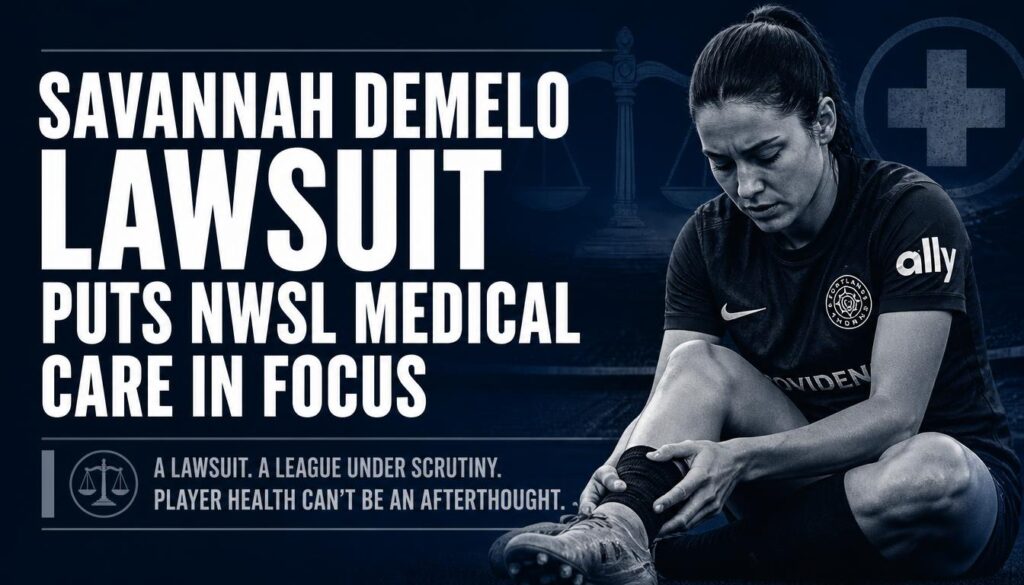
In DeMelo’s case, reporting identifies UofL Health as a medical partner connected to Racing Louisville. USA TODAY reporting also identified one of the physicians named in the lawsuit as Racing Louisville’s chief medical officer while noting that she was not directly employed by the club.
That distinction matters.
For fans, “team doctor” can sound like one simple relationship. In professional sports, the actual structure can be more complicated: a club, a health system, physicians, athletic trainers and league protocols can all have different responsibilities.
The lawsuit puts that structure under examination.
What does the case reveal about player safety?
The central issue is not whether every unusual symptom can be predicted. Cardiac conditions can be difficult to identify, and a legal complaint represents one side of a dispute.
The more useful question is what professional sports organizations can learn from situations in which an athlete reports symptoms before a serious medical event.
DeMelo’s complaint alleges that symptoms existed before the cardiac arrest. That makes the case particularly important from a sports-medicine perspective because it shifts the discussion from emergency response to pre-emergency detection.
The NWSL has also taken broader steps around emergency preparedness. In 2026, the league partnered with the American Heart Association on CPR and automated external defibrillator education, with Savannah DeMelo included among Racing Louisville’s “Nation of Lifesaver” ambassadors.
That creates an important distinction: rapid emergency response can save a player’s life, but emergency response and early diagnosis are two different parts of player safety.
The 2025 collapse changed the context
The original incident demonstrated how quickly a soccer match can become a medical emergency.
Racing Louisville and Seattle stopped their September 2025 match after DeMelo collapsed. The league later arranged for the remaining portion of the match to be played behind closed doors.
The response also showed the importance of trained medical personnel being immediately available at professional matches.
But the new lawsuit asks a different question: What happened before the emergency?
That is why the case has implications beyond the original match.
The NWSL has expanded its medical infrastructure as the league has grown, and the 2026 season features 16 clubs after the additions of Boston Legacy FC and Denver Summit FC. More clubs and more players mean medical systems must scale alongside the competition.
What does this mean for Racing Louisville?
For Racing Louisville, the immediate issue is both legal and organizational.
The lawsuit names UofL Health and physicians rather than simply treating the dispute as a sporting disagreement. Published reports also indicate that Racing Louisville is expected not to continue its relationship with UofL Health beyond the current season.
That could lead to a change in how the club organizes medical care going forward.
However, it is important not to confuse a change in medical partnership with a finding of legal responsibility. Those are separate questions.
The legal case will determine the claims through the court process. The club’s medical-provider decisions are an organizational matter.
What does it mean for the USWNT?
DeMelo has represented the United States at the senior level and played at the 2023 FIFA Women’s World Cup. U.S. Soccer’s player profile lists her as a Racing Louisville midfielder and records her senior national-team experience.
Her case therefore also intersects with the broader USWNT player pool.
But the immediate national-team significance should not be overstated. The central story today is DeMelo’s health, recovery and legal action—not speculation about a future roster.
The more relevant national-team question is whether professional clubs and national-team programs continue strengthening systems that protect elite players across the entire pathway.
What happens next in the Savannah DeMelo lawsuit?
The next stage is the legal process.
The allegations will have to be addressed through the court system, and the defendants will have an opportunity to respond. The available reporting does not establish a final legal finding.
For DeMelo, the sporting question is separate from the lawsuit. Published reports indicate that she has returned to training, while her competitive return remains dependent on medical and team circumstances.
For Racing Louisville and the NWSL, the broader question is whether the case prompts changes in medical-provider relationships, diagnostic protocols or communication between athletes and medical staff.
That could become the lasting significance of the story.
Conclusion
The Savannah DeMelo lawsuit is bigger than a one-day legal headline because it connects three parts of professional women’s soccer that rarely receive equal attention: the athlete’s health, the club’s medical structure and the league’s responsibility to maintain safe working conditions.
The court will determine the merits of DeMelo’s allegations. But regardless of the eventual legal outcome, the case highlights why women’s soccer’s rapid professional growth must be accompanied by equally strong medical systems.
For players, the standard is straightforward: when a serious health issue emerges, the quality of the response matters—but so does what happens before the emergency.
FAQ
What is the Savannah DeMelo lawsuit about?
Savannah DeMelo is suing University of Louisville Health and two physicians over medical care she received before suffering cardiac arrest during an NWSL match in September 2025. Her lawsuit alleges that a cardiac condition was not properly diagnosed or treated. Those claims remain allegations and have not been established by a court.
When did Savannah DeMelo suffer cardiac arrest?
DeMelo suffered cardiac arrest during Racing Louisville’s match against Seattle Reign on September 14, 2025. The match was suspended after she collapsed and was later completed. DeMelo publicly identified an undiagnosed cardiac arrhythmia as the cause of the emergency one year later.
Is Savannah DeMelo still a USWNT player?
DeMelo has represented the U.S. Women’s National Team and was part of the United States’ 2023 FIFA Women’s World Cup team. Her current health and club situation should be considered separately from speculation about future national-team selection.
What does the case mean for NWSL medical care?
The case highlights how professional clubs organize medical care through combinations of club personnel, outside physicians and health-system partnerships. It may prompt additional discussion about early diagnosis, medical-provider accountability and emergency preparedness across the league, although any specific changes would depend on the legal and organizational processes that follow.
Has a court found the medical providers responsible?
No. The lawsuit contains DeMelo’s allegations about the care she received before her cardiac arrest. The defendants have the opportunity to respond, and the available reporting does not establish a final court finding of negligence.