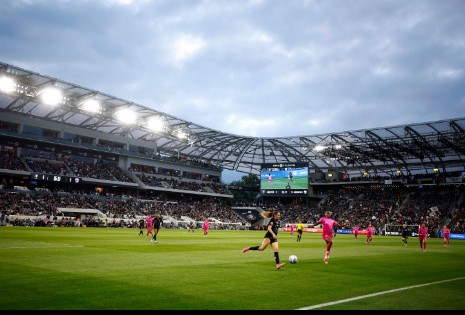
Gotham FC did everything necessary to earn home-field advantage in the 2026 NWSL playoffs. The club finished the regular season at the top of the standings, secured the No. 1 seed and advanced to the semifinals after defeating Seattle Reign FC.
But when the biggest home match of its season arrived, Gotham faced an unexpected problem: it could not safely rely on its regular stadium’s playing surface.
Concerns about field conditions at Sports Illustrated Stadium forced Gotham to move its November 15 semifinal against the Kansas City Current to Icahn Stadium on Randall’s Island in New York City.
The change protects the immediate priority of giving players a suitable surface. However, it also reduces the available stadium capacity from approximately 25,000 to 5,000. Gotham’s new venue sold out in just 10 minutes, showing how many supporters wanted to be part of the occasion.
This is bigger than one stadium change. It raises an important question for the National Women’s Soccer League: How much control do clubs really have over their home games when they do not control the venues where they play?
What Happened at Sports Illustrated Stadium?
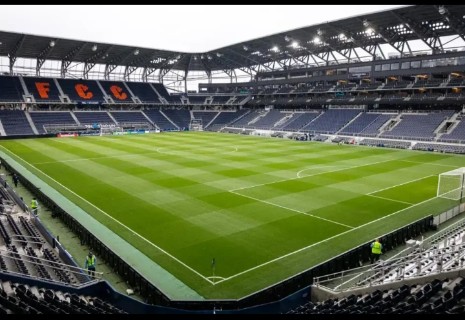
The controversy developed during the final days of the regular season and the opening round of the playoffs.
Sports Illustrated Stadium is shared by Gotham FC and Major League Soccer’s New York Red Bulls. Gotham plays its home matches there but does not operate the venue independently.
The playing surface attracted attention after a USA Rugby doubleheader took place at the stadium on October 30, just two days before Gotham’s November 1 regular-season finale.
Concerns about the condition of the field continued into the playoffs. Gotham hosted Seattle Reign FC in a quarterfinal on November 8 and won 1-0, but players and coaches from both teams criticized the playing surface afterward.
Seattle head coach Laura Harvey was particularly critical, describing the field as the worst she had experienced in the league. Gotham head coach Juan Carlos Amorós also acknowledged the problem and expressed regret about the conditions players had faced.
The criticism made it difficult for the club to proceed with its next match at the same venue without addressing the situation.
CBS Sports and other outlets reported that the NWSL had fined Gotham $10,000 following the poor field conditions during its November 1 match. The reported punishment attracted additional attention because Gotham was not the stadium’s primary operator.
Why Gotham Moved Its Semifinal to Icahn Stadium
On November 9, Gotham FC announced that its semifinal against Kansas City would take place at Icahn Stadium instead of Sports Illustrated Stadium.
The club explained that the decision was made to prioritize the quality of the playing surface and provide its players with appropriate conditions for an important playoff match.
Gotham governor Carolyn Tisch Blodgett acknowledged the disappointment for supporters who had expected to attend the semifinal at the club’s regular home.
The decision came after discussions about possible ways to address the original stadium’s field conditions. However, the available solutions could not provide the necessary certainty in time for the match.
Gotham president Yael Averbuch West also emphasized the club’s responsibility to provide a suitable playing environment for its athletes.
Icahn Stadium offers a different setting. Located on Randall’s Island in Manhattan, it has a much smaller capacity than Sports Illustrated Stadium. The change means fewer supporters can attend in person, even though Gotham remains the designated home team.
For the players, however, the quality of the surface had to take priority over the size of the crowd.
A Sold-Out Game Shows Gotham’s Support Is Strong
The relocation created an immediate challenge for Gotham supporters.
Sports Illustrated Stadium has approximately five times the capacity of Icahn Stadium. That represents a potential capacity reduction of around 20,000 seats, although it should not be confused with a confirmed number of fans who were unable to obtain tickets.
The demand became clear when Gotham announced on November 11 that the semifinal had sold out in just 10 minutes.
The club also arranged official watch parties around the New York and New Jersey region, giving supporters another way to follow the match.
This is an important part of the story. Gotham had earned the opportunity to host a major playoff game, and its supporters wanted to be there. The relocation did not remove that enthusiasm. Instead, it created a situation in which demand significantly exceeded the number of available seats.
The sellout also makes the stadium issue more than a question of convenience. Venue capacity can affect the experience of supporters, the atmosphere inside the stadium and the commercial opportunities surrounding an important match.
The Red Bulls Connection Raises a Bigger NWSL Question
Gotham’s situation highlights a structural challenge within professional women’s soccer.
Several NWSL clubs share stadiums with men’s professional teams or other sports organizations. This arrangement can offer access to established facilities and larger markets, but it can also create scheduling and operational challenges.
Gotham’s regular home is shared with the New York Red Bulls. Reporting from CBS Sports and other outlets indicates that discussions about possible field repairs involved the stadium’s operators, Gotham and league representatives. The available time and control over stadium work became central to the relocation decision.
The Red Bulls publicly wished Gotham success at Icahn Stadium while noting their own upcoming match at Sports Illustrated Stadium. That response attracted criticism because Gotham had just lost the opportunity to play its semifinal at its regular home.
However, the issue should not be reduced to a social media disagreement between two clubs. The more important question concerns responsibility.
When a club is held accountable for the conditions of its home match but relies on another organization for venue operations, the division of responsibilities needs to be clear.
Gotham president Mark Zarthar told Reuters that the relationship with the Red Bulls remained positive and that the organizations would work together on stadium conditions for the following season.
That is an important detail. The dispute does not necessarily mean the two organizations cannot work together. It demonstrates why venue agreements, maintenance responsibilities and playoff contingency plans matter.
Washington Spirit’s Situation Shows This Is Not Just a Gotham Problem
Gotham was not the only semifinal team facing a stadium scheduling challenge.
The Washington Spirit also encountered a venue conflict ahead of its semifinal against Utah Royals. A college football game was scheduled at Audi Field during the same weekend, creating a potential clash with the NWSL playoff schedule.
The Spirit ultimately remained at Audi Field after arrangements were made.
The two situations were different, but they exposed a common issue: NWSL clubs do not always have complete control over the facilities they use.
This matters because playoff qualification should ideally come with a reliable home venue. Teams earn higher seeds through their performances during the regular season. The benefits of that achievement should not depend on whether another event or stadium operator controls the calendar.
As the league grows, venue planning will become increasingly important. Clubs, stadium operators and the NWSL need arrangements that account for regular-season matches, playoffs, field maintenance and competing events.
Gotham vs. Kansas City: The Match Still Has a Championship at Stake
Despite the stadium controversy, the attention now turns to Sunday’s semifinal.
Gotham FC will face the Kansas City Current on November 15 at 3 p.m. ET at Icahn Stadium. The match will be broadcast nationally on ABC, with ESPN Deportes also carrying coverage.
Gotham enters the contest as the No. 1 seed and defending champion. Kansas City earned its semifinal place after defeating Angel City FC 1-0 in extra time.
There is also recent playoff history between these clubs.
In 2025, Gotham produced a memorable upset against Kansas City, defeating the top-seeded Current as the No. 8 seed. That result helped launch Gotham’s championship run.
The 2026 meeting has a different setup. Gotham has now earned the top seed, while Kansas City is looking to reach the championship after another strong postseason campaign.
The matchup also presents an interesting tactical contrast.
Reuters highlighted Gotham’s defensive strength, including the contributions of Jess Carter and Tierna Davidson. Kansas City, meanwhile, has attacking threats in Temwa Chawinga and Haley Hopkins.
For Gotham, controlling possession and preventing dangerous transitions will be important. For Kansas City, finding opportunities against one of the league’s strongest defensive units could determine whether it reaches the final.
The venue change adds another unusual element, but the competition itself remains the priority.
What the Gotham Stadium Controversy Means for the Future of the NWSL
The NWSL has made significant progress in attracting supporters, building club identities and expanding the visibility of women’s professional soccer.
But the Gotham situation shows that growth requires more than strong teams and bigger audiences.
It also requires dependable infrastructure.
Clubs need venues where they can plan their seasons with confidence. They need clear agreements about pitch maintenance, scheduling authority and the responsibilities of stadium operators. They also need contingency plans that protect supporters from last-minute changes during the most important part of the season.
The November 15 semifinal will demonstrate whether Gotham can turn an unusual home setting into a competitive advantage. But the league should not treat the relocation as a problem solved simply because a new venue was found.
The bigger lesson is that home-field advantage must mean more than having a team officially designated as the home side.
It should include access to a suitable playing surface, a dependable stadium arrangement and the ability to welcome the supporters who helped the club earn that opportunity.
Gotham FC earned its place at the top of the league. Its fans earned the chance to celebrate that achievement. The next step for the NWSL is ensuring that situations like this become less likely as the competition grows.
Frequently Asked Questions
Why did Gotham FC move its NWSL semifinal to Icahn Stadium?
Gotham moved the November 15 semifinal because of concerns about the playing surface at Sports Illustrated Stadium. The club said it wanted to prioritize suitable playing conditions for its athletes.
Where will Gotham FC play Kansas City Current?
The semifinal will take place at Icahn Stadium on Randall’s Island in Manhattan, New York City.
When is Gotham FC vs. Kansas City Current?
The match is scheduled for Sunday, November 15, 2026, at 3 p.m. ET.
How can fans watch Gotham FC vs. Kansas City Current?
The match will be shown on ABC and ESPN Deportes.
How many people can Icahn Stadium accommodate?
Icahn Stadium has an approximate capacity of 5,000, compared with approximately 25,000 at Sports Illustrated Stadium.
Did Gotham FC’s semifinal sell out?
Yes. Gotham announced on November 11 that tickets for the semifinal sold out in 10 minutes.
Was Gotham FC fined over the field conditions?
CBS Sports and other media outlets reported that the NWSL imposed a $10,000 fine following the conditions at Gotham’s November 1 regular-season match.