Introduction
On the final matchday of the CONMEBOL Women’s Nations League, Ecuador and Venezuela punched their tickets to the FIFA Women’s World Cup 2027 Play-Off Tournament — Ecuador despite losing 1-0 to Argentina, and Venezuela via a stoppage-adjacent 1-1 draw with Uruguay sealed by a Deyna Castellanos equalizer. On paper, it’s a routine qualifying result: two nations advancing to a play-off, not a World Cup. But underneath the standings sits a genuinely rare storyline in South American soccer — Venezuela has never appeared at a men’s or women’s World Cup in its history, and Ecuador’s only prior appearance, in 2015, remains one of the most lopsided campaigns in tournament history. Both nations are now one bracket away from changing that permanently.
Key Takeaways
- FACT: Ecuador and Venezuela finished fourth and third, respectively, in the CONMEBOL Women’s Nations League, missing automatic Brazil 2027 qualification (won by Argentina and Colombia) but advancing to the FIFA Play-Off Tournament.
- FACT: The Play-Off Tournament runs in two phases — a six-team opening round in November/December 2026, and a six-team final round in February 2027 — for three remaining World Cup places.
- ANALYSIS: Venezuela is the only CONMEBOL nation, men’s or women’s, to have never reached a World Cup finals. A playoff win in early 2027 would end that drought before either senior national team gets there.
- ANALYSIS: Ecuador’s only previous Women’s World Cup appearance (2015) ended without a point and with a heavy 10-1 loss to Switzerland; a second qualification would be a chance to prove that campaign was an outlier, not a ceiling.
- BACKGROUND: Portland Thorns forward and Venezuela captain Deyna Castellanos scored the equalizer that sent her country through, giving U.S. fans a direct NWSL connection to the story.
Main Story
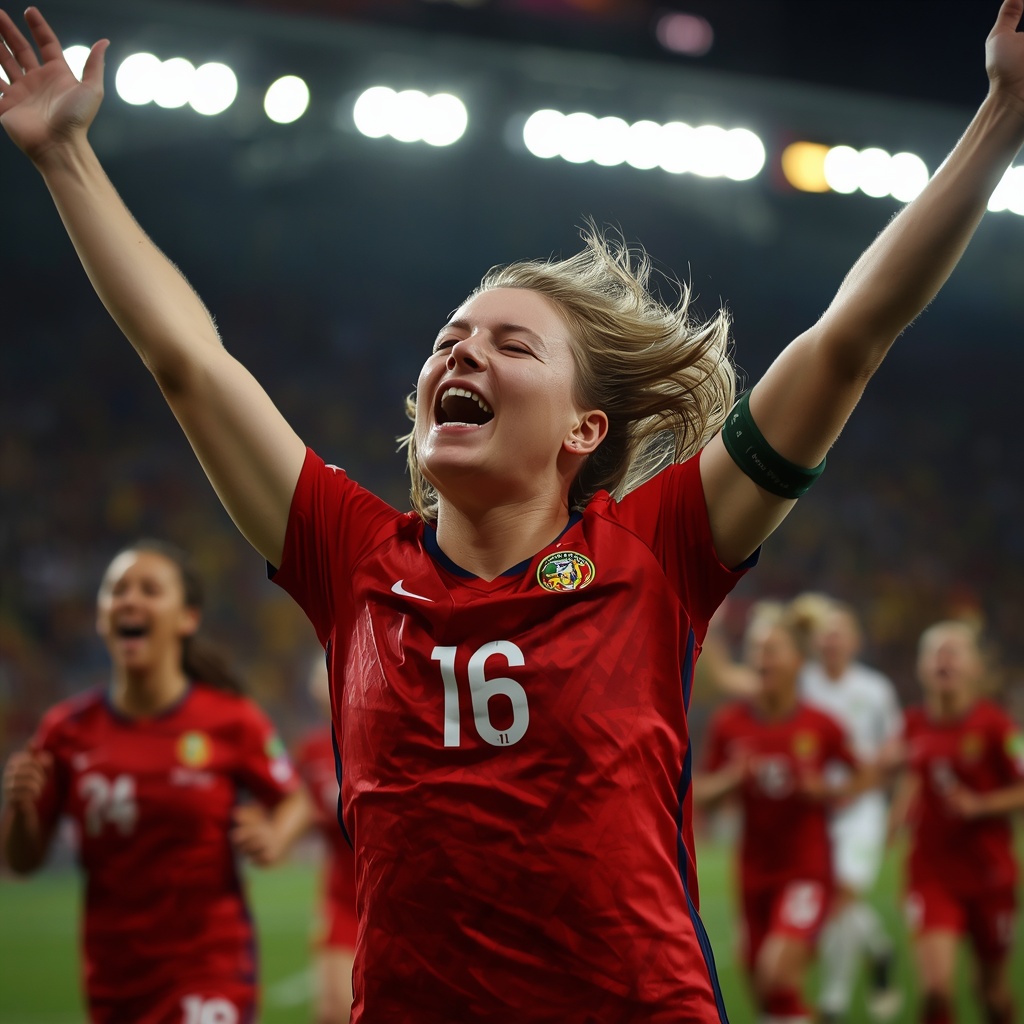
CONMEBOL’s road to Brazil 2027 wrapped up on June 9, with Colombia crowned inaugural Women’s Nations League champions after edging Paraguay 4-3 in a match decided in its closing minutes. But the automatic qualification picture had already been set the week prior, when Argentina and Colombia — the top two finishers — locked up direct places at the tournament they’ll co-headline as South American favorites.
That left Venezuela and Ecuador fighting for the confederation’s two remaining lifelines: places in FIFA’s ten-team intercontinental Play-Off Tournament rather than a golden ticket to Brazil. Ecuador entered the final matchday needing results to go its way and still lost 1-0 to Argentina, yet finished fourth in the standings — enough to advance. Venezuela’s path was more dramatic: La Vinotinto Femenina trailed Uruguay before Castellanos, Venezuela’s captain and all-time program cornerstone, drew her team level in the closing stages, locking in third place and the playoff berth that came with it.
Under CONMEBOL’s expanded format for this qualifying cycle, the confederation received three direct World Cup slots (Brazil as automatic hosts, plus the top two Nations League finishers) and two additional places in the FIFA Play-Off Tournament — a jump from the single South American playoff spot used in the 2023 cycle. That extra spot is precisely why Ecuador and Venezuela are still alive.
Why It Matters
For most federations, a play-off berth is a consolation prize. For these two, it’s the furthest either program has been from World Cup irrelevance in years — and for Venezuela, ever.
Venezuela’s senior women’s team has never qualified for a FIFA Women’s World Cup. Its best continental finish remains a third-place showing at the very first Copa América Femenina in 1991, when the tournament featured just three teams. Every other CONMEBOL nation — including tiny competitive minnows like Bolivia — has featured in one World Cup or another at senior level, men’s or women’s, except Venezuela. That single fact has followed Venezuelan soccer for decades, most recently reinforced when the men’s team missed out on the expanded 48-team 2026 World Cup by a single point on the tournament’s final day. The women’s side now has a chance to get there first.
Ecuador’s stakes are different but no less real. La Tri qualified for exactly one Women’s World Cup, in 2015, fielding a squad of largely amateur and part-time players against European and Asian opposition with far greater professional infrastructure. The results were brutal: a 6-0 loss to Cameroon, a 10-1 defeat to Switzerland in which forward Angie Ponce scored the program’s first-ever World Cup goal off a penalty, and a respectable 1-0 defeat to eventual finalists Japan that hinted at what the team could do with better resourcing. Ecuador finished that tournament as the lowest-performing team in the field — a distinction later ceded to Thailand in 2019. A decade of professionalization since, including the 2019 launch of Ecuador’s Superliga Femenina, gives this qualification push a fundamentally different foundation than 2015 did.
Strategic and Tactical Context
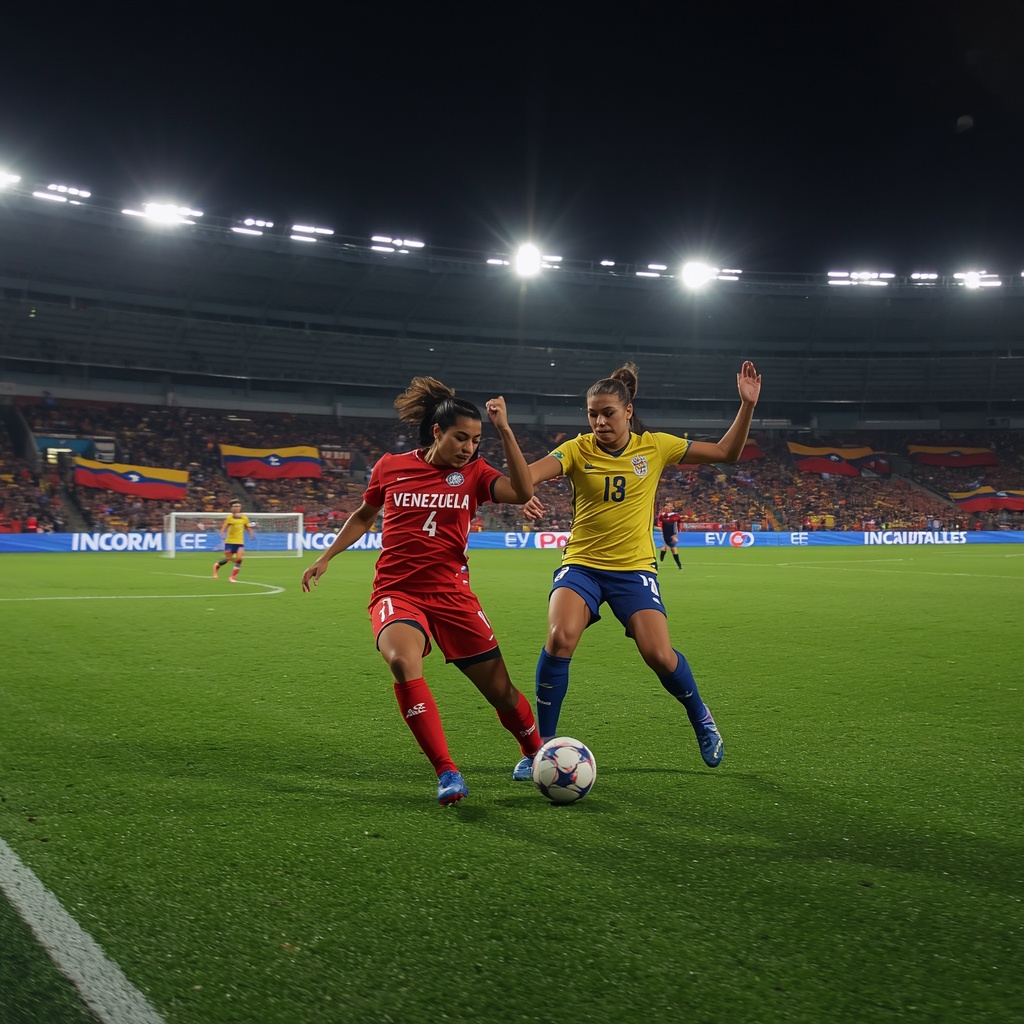
Neither federation has named a first-phase-versus-second-phase assignment yet — FIFA seeds the six-team November/December 2026 opening round using the FIFA/Coca-Cola Women’s World Ranking published just before the draw, meaning it isn’t yet public which of Ecuador or Venezuela will play in that opening round and which advances directly to the February 2027 final phase alongside two Concacaf sides, another CONMEBOL representative from a different confederation slot, and a UEFA playoff team. What is confirmed: the opening round pairs two AFC sides, two CAF sides, one OFC representative (Papua New Guinea) and one CONMEBOL side, with two winners moving on. The final phase then draws six teams into three straight knockout paths — with a hard rule preventing two teams from the same confederation from meeting in the same bracket — to decide the tournament’s last three World Cup places.
Practically, that means Ecuador and Venezuela cannot meet each other in the play-offs, and neither can face Argentina, Colombia, or Brazil, since South America’s remaining CONMEBOL berths are structurally kept apart. It also means both nations are guaranteed at least one match against a team from a different continent’s qualifying pool — opposition neither program has had recent tournament experience against, adding a genuine variable to preparation between now and next February.
For a U.S. audience, the more immediate tactical storyline runs through the NWSL. Castellanos, who plays for the Portland Thorns and has been Venezuela’s talisman since her teenage years, is the clearest thread connecting this qualifying story to domestic fans — her ability to produce in high-leverage moments, as she did against Uruguay, will likely define how far Venezuela’s playoff run goes.
Bigger Picture Impact
Beyond the individual sagas, this result says something about the state of women’s soccer investment across South America. CONMEBOL’s decision to expand its automatic and playoff allocation for this cycle — three direct slots plus two playoff berths, up from the smaller allotment used for 2023 — reflects FIFA’s broader 32-team expansion of the Women’s World Cup and a recognition that depth in South American women’s soccer now extends past the traditional trio of Brazil, Argentina, and Colombia.
That depth has been building for years through youth pipelines: Venezuela’s under-17 women have won back-to-back South American titles and finished fourth twice at the U-17 World Cup, while Ecuador’s federation has spent the past decade building semi-professional domestic infrastructure specifically to avoid a repeat of the amateur-squad experience that defined 2015. If either senior team converts its playoff spot into a World Cup berth, it becomes the clearest evidence yet that those investments are translating into senior-level results — a template other CONMEBOL federations outside the traditional powers will be watching closely.
What Comes Next
The first phase of the Play-Off Tournament will be staged at a centralized venue in November and December 2026, with the draw for that round expected once FIFA publishes its pre-draw world rankings. Six confederations will be represented in that opening round: two from AFC (Chinese Taipei and Uzbekistan have already secured spots), two from CAF (still to be confirmed), one from CONMEBOL, and Papua New Guinea representing the OFC. The two winners advance to the February 2027 final phase, where they’ll be joined by two Concacaf sides, a second CONMEBOL representative, and a UEFA playoff qualifier for a three-path knockout that determines the tournament’s final three Brazil 2027 places.
Until the draw sets seeding, neither Ecuador nor Venezuela knows its exact route — or which of the two nations plays in November versus waiting until February. Both federations will use the intervening months for friendlies and roster planning, with continued NWSL, Liga F, and other European-based minutes for their exported players likely to factor heavily into final squad decisions.
Conclusion
A fourth-place and a third-place finish in a Nations League table rarely make for a headline. But behind this particular result sits two nations chasing genuinely historic firsts: Venezuela trying to end a drought that predates its men’s program’s own near-misses, and Ecuador trying to prove its lone World Cup trip wasn’t a ceiling but a starting point. Neither is guaranteed anything beyond a playoff seed — but both are now closer to Brazil 2027 than either program has ever been at this stage of a cycle.
FAQ
Did Ecuador or Venezuela qualify directly for the 2027 Women’s World Cup?
No. Argentina and Colombia took CONMEBOL’s two automatic qualifying places behind host nation Brazil. Ecuador and Venezuela instead advanced to the FIFA Play-Off Tournament, which offers three additional World Cup places across seven confederations.
Has Venezuela ever played in a Women’s World Cup?
No. Venezuela has never qualified for a FIFA Women’s World Cup and is the only CONMEBOL nation — men’s or women’s — to have never reached a senior World Cup finals.
When did Ecuador last qualify for a Women’s World Cup?
Ecuador’s only prior appearance came in 2015 in Canada, where the team lost all three group matches and was outscored 17-2, including a 10-1 defeat to Switzerland.
When is the Play-Off Tournament?
The first phase runs in November and December 2026 at a centralized venue. The winners advance to a final knockout phase in February 2027, which determines the tournament’s final three World Cup qualifiers.
Which NWSL player is involved in this story?
Portland Thorns forward Ecuador and Venezuela’s Play-Off Tournament Bid Is a Bigger Deal Than the Standings Suggest Castellanos is Venezuela’s captain and scored the equalizing goal against Uruguay that secured her country’s playoff spot.