Introduction
In 1996, the landscape of global women’s soccer shifted forever at the Atlanta Olympics. Forward Tiffeny Milbrett scored the game-winning goal against China to secure the inaugural Olympic gold medal for the U.S. Women’s National Team (USWNT).
Overcoming early systemic barriers—including a time when women’s soccer was not an Olympic event—the Portland, Oregon native forged a legendary career. Spanning from her 1991 debut to her final international goal in 2005, Milbrett amassed 100 goals and 206 appearances, solidifying her status as one of the most impactful players in USWNT history.
Defying Early Odds
Long before stepping onto the Olympic podium, Tiffeny Milbrett faced a stark reality: her sport lacked a global stage. In 1989, her high school coach informed her that women’s soccer was not an Olympic event. Undeterred by the limitation, Milbrett responded, “That’s okay, I’ll just play for the boys.”
Her perseverance paid off. By 1993, the International Olympic Committee (IOC) officially added women’s soccer to the 1996 Atlanta Games. Concurrently, Milbrett dominated at the collegiate level at the University of Portland, becoming a three-time NSCAA All-American and setting program and NCAA records for scoring and assists.
Why This Legacy Matters Now
Understanding the origins of the USWNT’s global dominance requires looking back at the foundational tournaments that established their winning culture. Milbrett’s heroics in the 1990s and early 2000s set the standard for modern forwards. As international competition grows increasingly fierce today, the tactical efficiency and relentless drive demonstrated by players like Milbrett remain the blueprint for USWNT success.
The 1996 Atlanta Olympics Breakdown
Selected by head coach Tony DiCicco for the 16-player roster, Milbrett entered an eight-nation tournament that the players viewed as a pure, unprecedented experience. “Atlanta 1996 was a really cool experience because everyone was naive about it,” Milbrett noted.
Group Stage to the Final
- Match 1: USA defeated Denmark 3-0 (Milbrett scored the final goal).
- Match 2: USA defeated Sweden 2-1.
- Match 3: USA drew 0-0 with China.
- Semifinal: USA defeated Norway 2-1 (via a Shannon MacMillan “Golden Goal”).
The Gold Medal Match
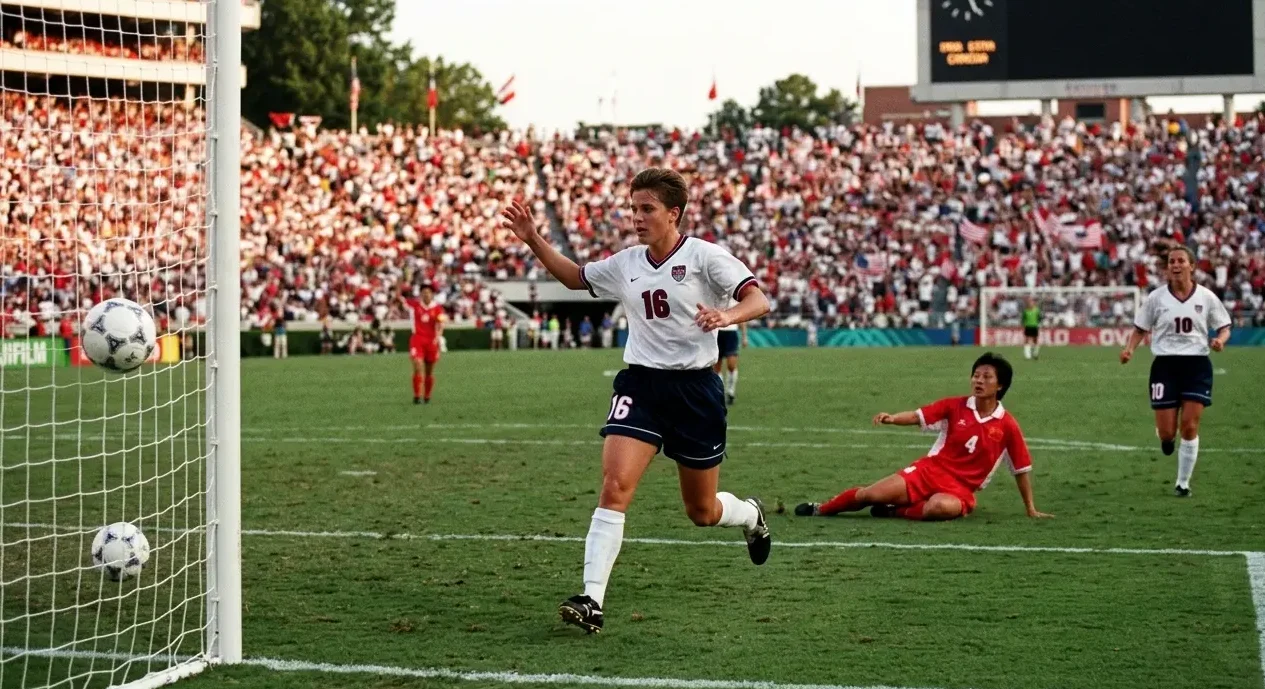
Playing in front of a record crowd of 76,489 fans at Sanford Stadium in Athens, Georgia, the USA faced China again. After Shannon MacMillan opened the scoring in the 18th minute, China’s Sun Wen quickly equalized.
The breakthrough occurred in the 68th minute. Joy Fawcett intercepted the ball, executed a give-and-go with Mia Hamm, and delivered a perfect square pass into the box. Milbrett calmly finished the cross to secure a 2-1 victory. Reflecting on the moment, Milbrett praised the buildup: “No goal is easy to score, but when you’re left alone and your teammate leaves you a cross so absolutely perfect, it’s one of the easier moments that you can have.”
Continued Dominance: 1999 to 2003
Milbrett’s scoring prowess extended far beyond Atlanta. She helped lead the USWNT to victory in the 1999 FIFA Women’s World Cup, finishing as the team’s top scorer with three goals (two against Nigeria, one against Germany).
The 2000 Sydney Olympics Heartbreak
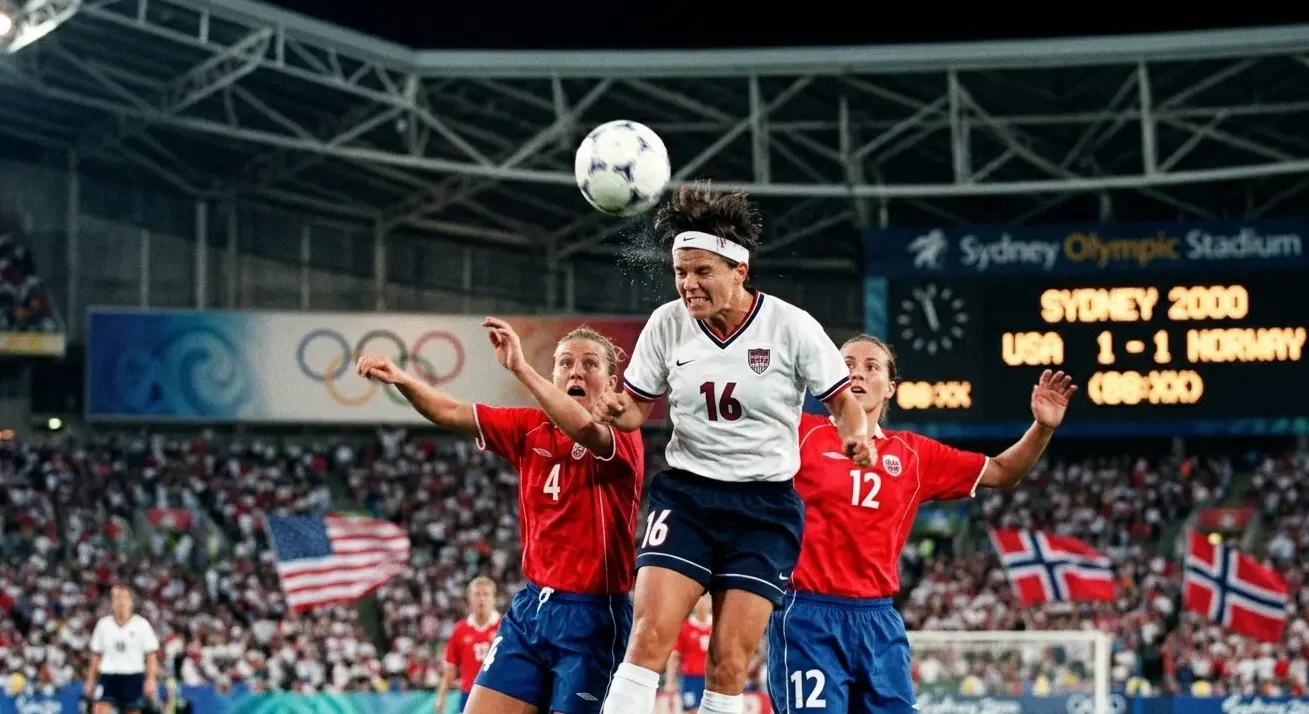
A year later, Milbrett made history as the first woman to score in two Olympic gold medal matches. In the 2000 final against Norway, she scored the opening goal just five minutes in. After Norway took a 2-1 lead, the 5-foot-2 forward miraculously jumped over two taller Norwegian defenders in stoppage time to head in Mia Hamm’s cross, forcing extra time.
Despite Norway ultimately winning 3-2 on a highly controversial goal (involving an uncalled handball by Dagny Mellgren that preceded the shot), Milbrett’s clutch performance cemented her reputation. She would go on to score the bronze-medal-winning goal against Canada in the 2003 World Cup.
Player Information and Career Statistics
Table 1: Tiffeny Milbrett USWNT Career Snapshot
| Category | Data |
|---|---|
| Position | Forward |
| National Team Debut | 1991 |
| Final International Goal | 2005 (vs. Ukraine, Portland) |
| Total Appearances | 206 (11th in USWNT history) |
| Total Goals | 100 (7th in USWNT history) |
| Total Assists | 64 (Tied-5th in USWNT history) |
| Hall of Fame Induction | 2018 |
Table 2: Major Tournament Medal Record
| Tournament | Medal | Milbrett Contribution |
|---|---|---|
| 1995 FIFA Women’s World Cup | Bronze | Key roster player |
| 1996 Atlanta Olympics | Gold | Game-winning goal in Final |
| 1999 FIFA Women’s World Cup | Gold | Team top scorer (3 goals) |
| 2000 Sydney Olympics | Silver | 2 goals in Final |
| 2003 FIFA Women’s World Cup | Bronze | Final goal in Bronze match |
Context and Impact Analysis
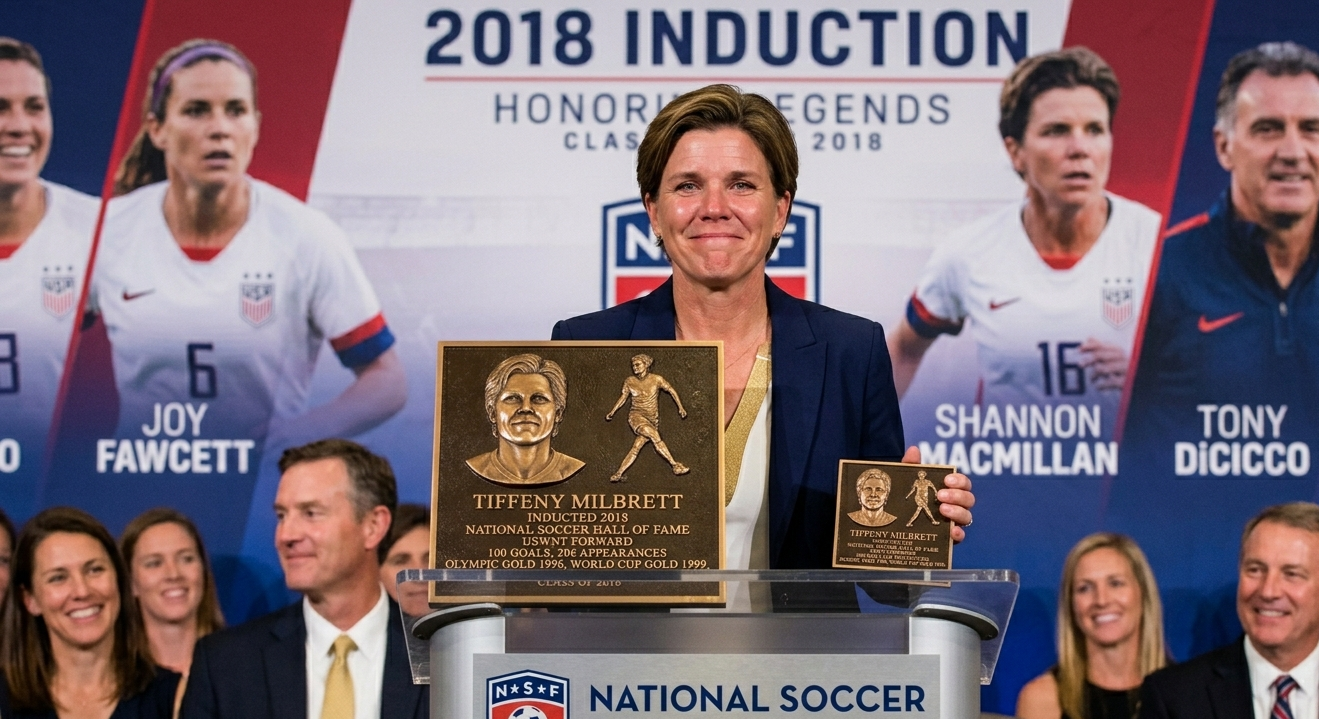
Tiffeny Milbrett’s career holds significant historical weight. Her 100 international goals make her one of only seven players in the program’s history to reach that milestone. Short-term, her goals directly resulted in the foundational medals that put U.S. women’s soccer on the map. Long-term, her induction into the National Soccer Hall of Fame in 2018 signifies her permanent place in the sport’s pantheon.
As former teammate Julie Foudy summarized: “She’s a player that took this team on her shoulders for many years. She was big in big moments, all the time.”
Conclusion
Tiffeny Milbrett’s journey from a high schooler with no Olympic pathway to a global icon perfectly encapsulates the rise of the USWNT. Through verified achievements—including the historic 1996 game-winner, her 1999 World Cup dominance, and her clutch performances in Sydney—Milbrett’s legacy remains an untouchable pillar of U.S. soccer history.
FAQ Section
What year did women’s soccer become an Olympic sport?
The International Olympic Committee (IOC) added women’s soccer in 1993, and the first tournament was played at the 1996 Atlanta Olympics.
How many goals did Tiffeny Milbrett score for the USWNT?
Tiffeny Milbrett scored exactly 100 goals during her international career, making her one of only seven players in program history to achieve this feat.
Who did the USWNT defeat to win the 1996 Olympic Gold Medal?

The USWNT defeated China 2-1 in the gold medal match, with Milbrett scoring the game-winning goal in the 68th minute.
How tall is Tiffeny Milbrett?
Tiffeny Milbrett is 5-foot-2, a fact famously highlighted by announcers when she out-jumped taller defenders to score a header in the 2000 Olympic final.
My Question To You!
Milbrett proved that physical stature doesn’t dictate big-game impact. Which current USWNT player do you think embodies Milbrett’s relentless, clutch energy on the pitch today? Let us know your thoughts in the comments below!