The international soccer landscape in 2026 represents the most significant commercial and athletic convergence in the history of the sport. As the North American continent prepares to host the expanded 48-team FIFA World Cup, the overarching “WE ARE 26” campaign has become the central narrative framework, bridging the gap between men’s and women’s professional play while redefining global fandom. This report provides an exhaustive analysis of the 2026 cycle, focusing on the tactical evolution of the United States Women’s National Team (USWNT), the strategic significance of the Paraguay fixtures across both senior squads, and the sophisticated digital marketing paradigms required to navigate this unprecedented sports media event.
The Commercial and Cultural Architecture of the “WE ARE 26” Campaign
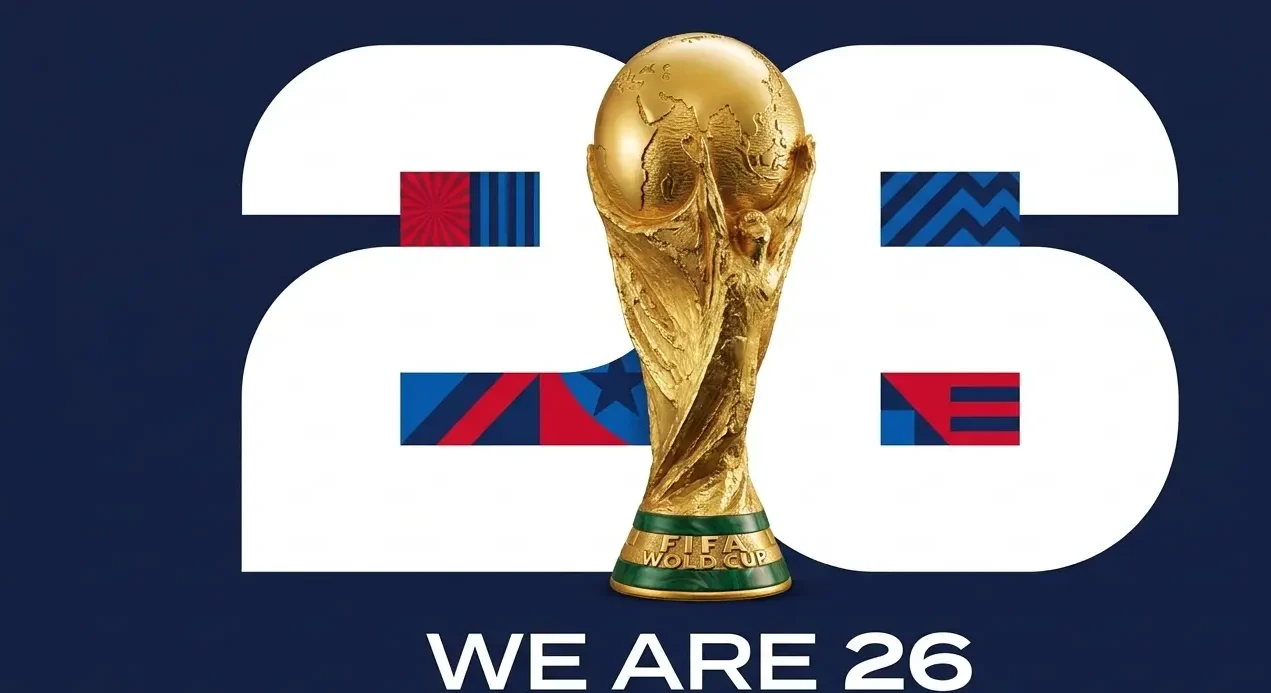
The launch of the “WE ARE 26” brand identity by FIFA marked a departure from traditional tournament marketing, shifting toward a decentralized, inclusive model that leverages the unique cultural identities of 16 host cities across the United States, Mexico, and Canada. FIFA President Gianni Infantino characterized the campaign as a “rallying cry” intended to unify an entire continent to deliver the largest and most inclusive sporting event on the planet. The visual architecture of the campaign is rooted in a minimalist design system that allows for modular customization, a critical feature for a tournament spanning three nations and multiple time zones.
Visual Identity and Modular Design Systems
The 2026 FIFA World Cup logo features a prominent, 3D-rendered golden trophy superimposed over a bold, white “26”. This design choice is strategically significant; the white space within the numerals is intentionally left open to be filled with the logos, colors, and patterns of individual host cities, such as “We Are Dallas 26” or “We Are Toronto 26”. The typography itself is constructed from 48 distinct shapes, a subtle but persistent reminder of the expanded field of participating teams. This visual flexibility ensures that the brand remains recognizable at a global level while feeling deeply local to fans in specific markets like Atlanta, Seattle, or Mexico City.
The commercial implications of this branding are extensive. FIFA has implemented a strict commercial naming policy for the 2026 event, requiring that all 16 stadiums be temporarily renamed to remove existing corporate sponsor identities. For example, MetLife Stadium in East Rutherford, New Jersey, is officially designated as “New York New Jersey Stadium” for the duration of the tournament, a move that ensures the exclusivity of official FIFA partners. This “clean slate” approach extends to “Clean Zones” established around official venues, where unauthorized advertising and vending are strictly prohibited to protect the intellectual property rights of sponsors.
Merchandising and Youth Engagement
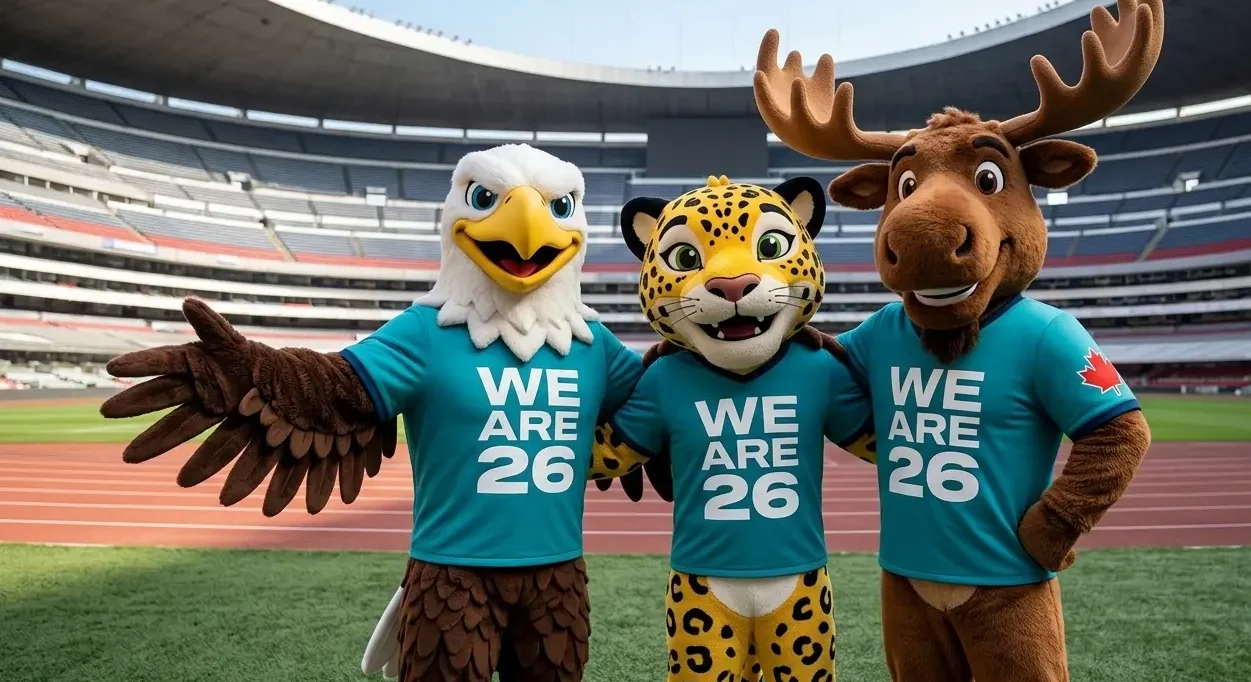
To maximize the reach of the “WE ARE 26” campaign, FIFA has partnered with manufacturers like Jazwares to produce a range of consumer products aimed at younger demographics. These products, which include 10-inch colorful bear plushes and mascot keychains, serve as tangible touchpoints for the brand. The mascots—Clutch the Bald Eagle for the USA, Zayu the Jaguar for Mexico, and Maple the Moose for Canada—each feature the “WE ARE 26” clip, reinforcing the tri-national unity of the tournament. This merchandising strategy recognizes that fandom in 2026 is no longer a passive experience but an active participation in cultural moments.
| Host City Committee | Branding Mantra | Key Infrastructure |
|---|---|---|
| Atlanta World Cup Host Committee | We Are Atlanta 26 | Mercedes-Benz Stadium, Centennial Olympic Park |
| Boston Soccer 2026 | We Are Boston 26 | Gillette Stadium |
| Dallas Host Committee | We Are Dallas 26 | AT&T Stadium (Dallas Cowboys Home) |
| Philadelphia Soccer 2026 | We Are Philly 26 | Lincoln Financial Field |
| Toronto FIFA World Cup 26 | We Are Toronto 26 | BMO Field (Toronto Stadium) |
The USWNT Strategic Pivot: Roster Overhaul and Tactical Maturity
While the “WE ARE 26” campaign is primarily associated with the men’s World Cup, the USWNT has effectively integrated the branding into their own 2026 calendar as they prepare for the 2027 FIFA Women’s World Cup in Brazil. Under the leadership of head coach Emma Hayes, the USWNT has undergone a radical roster transformation intended to address the aging core of the “golden generation”. The early months of 2026 provided a critical laboratory for this youth movement, with the January training camp in Los Angeles serving as the opening act.
The January 2026 Experimental Window
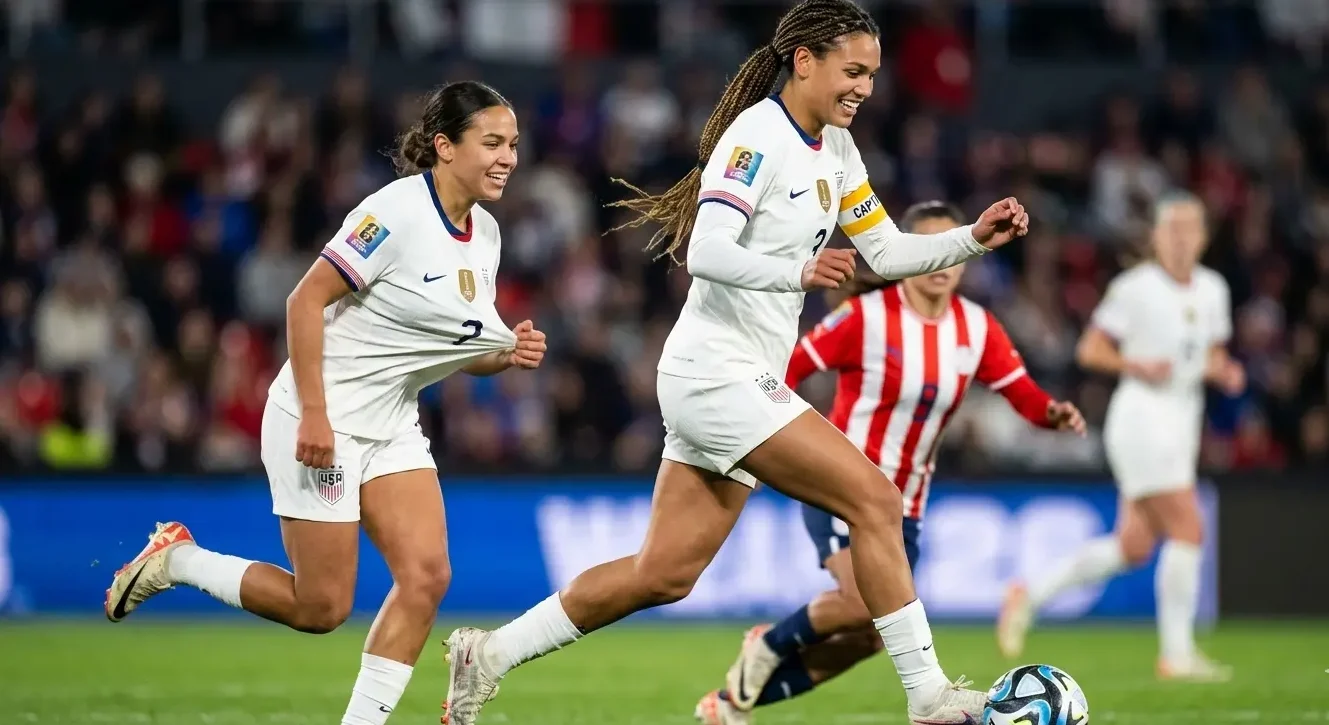
The USWNT kicked off 2026 with a training camp at Dignity Health Sports Park from January 17-27, culminating in international friendlies against Paraguay and Chile. The selection of Paraguay as an opponent was highly intentional, providing a physical, defensive test for a squad that featured the least experienced Starting XI in 25 years. On January 24, 2026, the USWNT fielded a lineup that averaged just 9.6 caps, a 55% decrease from the previous record low set in October 2025.
The match performance against Paraguay demonstrated the rapid integration of new talent. Despite the lack of international experience, the U.S. secured a 6-0 victory, with five goals scored in a frantic 12-minute span during the second half. This outburst was characterized by clinical finishing and high-intensity pressing, hallmarks of the tactical philosophy Hayes has sought to instill since her arrival.
| Player | Match Impact (vs. Paraguay) | Career Milestone |
|---|---|---|
| Reilyn Turner | Scored opening goal (45+3′) | 25th player to score in USWNT debut |
| Ally Sentnor | Scored two goals (47′, 57′) | Second career brace |
| Trinity Rodman | Goal (56′), Captained side | Most experienced player at 23 years old |
| Emma Sears | Scored final goal (72′) | 5th career international goal |
| Mandy McGlynn | Clean sheet (90′) | 5th career cap |
The inclusion of players like Lo’eau LaBonta, who at 32 years and 10 months became the oldest player to make her first USWNT start, alongside teenagers like Gisele Thompson and Olivia Moultrie, highlights the diversity of the current player pool. This “open door” policy saw Hayes give 43 players their first national team cap across 2025 and early 2026, a strategy that prioritizes long-term depth over short-term continuity.
The SheBelieves Cup and Tournament Resilience
The tactical momentum from the January window carried into the 11th annual SheBelieves Cup in March 2026. This tournament, featuring Argentina, Canada, and Colombia, provided a higher level of competition and served as a dress rehearsal for the 2027 World Cup qualifying tournament. The U.S. opened the tournament with a 2-0 win over Argentina in Nashville, followed by a hard-fought 1-0 victory against long-time rivals Canada in Columbus.
The finale against Colombia at Sports Illustrated Stadium in Harrison, New Jersey, was particularly significant. Facing a Colombian side known for rhythm-disrupting play and individual brilliance from players like Leicy Santos, the U.S. struggled to find a breakthrough for much of the match. However, an 81st-minute strike from Alyssa Thompson secured a 1-0 win and an eighth SheBelieves Cup title for the Americans. This result underscored a growing maturity in the squad, showing an ability to win “ugly” matches against organized South American defenses.
| Match Date | Opponent | Venue | Key Goal Scorer | Result |
|---|---|---|---|---|
| March 1, 2026 | Argentina | GEODIS Park, TN | Lindsey Heaps, Jaedyn Shaw | 2-0 W |
| March 4, 2026 | Canada | ScottsMiracle-Gro Field, OH | Ally Sentnor | 1-0 W |
| March 7, 2026 | Colombia | Sports Illustrated Stadium, NJ | Alyssa Thompson | 1-0 W |
The 2026 SheBelieves Cup was also notable for its celebration of USWNT legends. Before the matches against Paraguay in January and Colombia in March, U.S. Soccer held retirement ceremonies for Christen Press and Tobin Heath, respectively. These moments served to bridge the gap between the historic successes of the past and the emerging potential of the “WE ARE 26” era, ensuring that the team’s legacy remains central to its future branding.
Tactical Analysis of “La Albirroja”: The Paraguayan National Identity
Paraguay enters the 2026 cycle with a distinct national identity rooted in defensive resilience and physical endurance, a philosophy applied to both their men’s and women’s programs. Known as “La Albirroja” or “Las Guaraníes,” the Paraguayan teams have historically thrived in low-scoring, high-tension matches where patience is a virtue. This “Garra Guaraní” (Guaraní Spirit) is a fundamental component of their competitive strategy, intended to frustrate more technically gifted opponents.
Defensive Structure and Counter-Attacking Profiles
Under head coach Gustavo Alfaro, the Paraguayan men’s team has revitalized its defensive-oriented approach, which was instrumental in their successful qualification for the 2026 World Cup. Alfaro, who led Ecuador at the 2022 World Cup, has prioritized a stout organization anchored by experienced center-backs Gustavo Gomez and Omar Alderete. This defensive solidity is complemented by a creative midfield led by Brighton’s Diego Gomez and the explosive speed of Newcastle United’s Miguel Almiron.
| Key Player | Position | Club | Role/Specialty |
|---|---|---|---|
| Gustavo Gomez | Centre-Back | Palmeiras (BRA) | Captain, Defensive anchor |
| Omar Alderete | Centre-Back | Getafe (ESP) | Physical presence, Tactical awareness |
| Diego Gomez | Central Midfield | Brighton (ENG) | Creative hub, Breakout star potential |
| Julio Enciso | Forward | Brighton (ENG) | High-upside attacking threat |
| Miguel Almiron | Winger | Newcastle United (ENG) | Veteran speed and directness |
The women’s squad, led by Fabio Fukumoto, mirrors this tactical patience. Despite a 6-0 loss to the USWNT in early 2026, the team demonstrated a commitment to a low-block defensive system that sought to deny the Americans space in the final third for the first 45 minutes of the match. Players like Fatima Acosta (Pumas) and Lice Chamorro (Real Sociedad) represent the next generation of Paraguayan talent, capable of providing a counter-attacking threat against high-pressing teams.
Historical Context: USA vs. Paraguay Matchups
The head-to-head history between the U.S. and Paraguay is relatively modern for the women but deeply historic for the men. The USWNT first faced Paraguay in September 2021, a series that became a showcase for the legendary Carli Lloyd. Lloyd scored a record-tying five goals in the first match in Cleveland, a 9-0 victory, and another goal in the second match in Cincinnati, an 8-0 win. These early fixtures established a clear competitive gap, with the U.S. outscoring Paraguay 17-0 over their first two meetings.
The men’s rivalry dates back to the inaugural 1930 World Cup, where the U.S. defeated Paraguay 3-0 in the group stage. In nine total meetings, the U.S. Men have five wins, two draws, and two losses, with a total goal difference of 13-7 in favor of the Americans. The upcoming match on June 12, 2026, at SoFi Stadium marks their first World Cup meeting in 96 years, a fixture that carries immense historical weight for both programs.
| Date | Competition | Venue | Result |
|---|---|---|---|
| July 17, 1930 | FIFA World Cup | Montevideo, URU | USA 3-0 PAR |
| June 12, 2016 | Copa America | Philadelphia, PA | USA 1-0 PAR |
| March 27, 2018 | International Friendly | Cary, NC | USA 1-0 PAR |
| June 12, 2026 | FIFA World Cup | Los Angeles, CA | TBD |
The Digital Battleground: SEO Strategies and Search Volume Spikes
As the single largest spectator event on the planet, the 2026 World Cup presents a unique challenge for digital publishers and sports marketers. Capturing and maintaining attention during this cycle requires an understanding of “real-time volatility”—the way search intent shifts by the minute as matches unfold, stars emerge, and defining moments trend. Traditional keyword tracking is insufficient; instead, successful organizations are adopting a “topic layer” approach that monitors the entire spectrum of related queries.
Mapping the World Cup Topic Layer
The data indicates that search queries will follow a predictable but intense lifecycle, beginning with broad interest in tickets and schedules and narrowing down to specific match-driven data. High-volume keywords are no longer the only metric for success; visibility in Google’s “Top Stories,” “Twitter Carousels,” and “People Also Ask” (PAA) boxes is essential for establishing authority on the subject.
| Search Phase | High-Intent Keywords | Digital Strategy |
|---|---|---|
| Pre-Tournament | “World Cup 2026 tickets,” “Host city guides” | Utility-focused content, Travel logistics |
| Matchday -1 | “USWNT starting XI,” “Paraguay tactical preview” | Projected lineups, Tactical analysis |
| Live Match | “USA vs Paraguay score,” “VAR decision” | Real-time updates, Social commentary |
| Post-Match | “Match highlights,” “Coaching changes” | Video recaps, Analysis, “What’s next” narratives |
Publishers like The New York Times, Yahoo Sports, and Fox Sports currently dominate these results by leveraging their domain authority and high content velocity. However, smaller publishers can compete by focusing on niche tactical breakdowns or localized host city guides, provided they adhere to mobile-first optimization and leverage CTV (Connected TV) streaming trends.
Digital Tactics for Audience Engagement
Audience segmentation is critical for the 2026 cycle. Brands must move fast to engage “Die-Hard Fans,” “Casual Viewers,” and “Hispanic and Latino Audiences,” the latter of which over-index on travel behavior and second-screen activity during live matches. Tactics such as TikTok polls, Instagram Reels, and real-time “trendjacking” of match memes are essential for remaining in the cultural conversation.
For e-commerce and retail integration, search queries spike for jersey sales and “restaurants near the stadium,” providing local businesses with a prime opportunity for geo-fencing and digital OOH (Out-of-Home) advertising. The use of QR codes in interactive ads and SMS opt-ins can further enrich CRM (Customer Relationship Management) data, allowing brands to build long-term relationships with fans beyond the 39-day tournament window.
Sociological Impact and Media Framing of Women’s Soccer
The 2026 cycle also provides a timely opportunity to examine the evolving media representation of women’s soccer. Despite the historic success of the USWNT, studies have shown a persistent imbalance in coverage compared to men’s sports. A 30-year USC/Purdue study found that 95% of total television sports news focused on men’s sports, with women’s athletics often subjected to “symbolic annihilation” or sexualization.
Framing the Elite Strata of the Game
Recent research indicates a positive shift away from the sexualization of women athletes toward a framing of the “elite stratum” of the game. During mega-events like the World Cup, women’s soccer coverage often triples, reaching up to 31% of sports news stories. This “Matildas Effect”—named after the Australian national team’s 2023 campaign—demonstrates that global tournaments can act as a catalyst for permanent changes in media visibility.
| Framing Theory | Old Media Pattern | 2026 “Elite” Pattern |
|---|---|---|
| Visibility | “One and done” coverage | Sustained match-by-match analysis |
| Narrative | Trivialization/Sexualization | Tactical breakdowns, Professional milestones |
| Gender Bias | Ambivalence toward performance | Recognition as “model citizens” and serious athletes |
| Diversity | Dominated by male journalists | Increased bylines from female journalists (34%+) |
However, this increased visibility is often temporary and tied to nationalistic fervor. Scholars argue that for women’s soccer to achieve true equity, media organizations must adopt gender-neutral language and maintain consistent year-round coverage of club competitions like the NWSL. The 2026 NWSL season, which kicks off on March 13 with 16 clubs, including expansion sides Denver Summit FC and Boston Legacy FC, will be a key indicator of whether the “World Cup bump” can be sustained.
Strategic Roadmap: Key Dates and Operational Milestones for 2026
The operational complexity of 2026 requires a meticulous understanding of the international calendar. For the USWNT, the year is divided into distinct phases: evaluation, preparation, and qualification.
Q1-Q2: Domestic Friendlies and Tournament Play
Following the SheBelieves Cup in March, the USWNT enters the April FIFA window with a high-profile “Triple-Header” against Japan. This series is strategically located in NWSL markets—San Jose, Seattle, and Commerce City—to maximize club-country synergy. These matches are vital for refining the roster before the NWSL season takes center stage and the men’s World Cup begins in June.
Q3-Q4: World Cup Infrastructure and Qualification
The summer of 2026 will be dominated by the men’s tournament, with the opening match between the USA and Paraguay taking place on June 12 at SoFi Stadium. This period will likely see a pause in senior USWNT match activity due to the logistical strain on shared venues. However, the program will remain active through youth national team competitions, including the FIFA U-20 Women’s World Cup in September and the U-17 Women’s World Cup in October.
The USWNT returns to competitive senior play in November for the Concacaf W Championship. This tournament is the highest-stakes event of the year, with berths for the 2027 FIFA Women’s World Cup in Brazil and the 2028 Los Angeles Olympics on the line. As host of the 2028 Games, the USA has an automatic berth, but the tournament remains essential for maintaining their #1 global ranking and securing a top seed for the World Cup draw.
Strategic Conclusions and Future Outlook
The 2026 cycle represents the pinnacle of professional soccer’s maturation in North America. The “WE ARE 26” campaign has successfully moved beyond a corporate slogan to become a functional design and marketing system that empowers local host cities while maintaining global consistency. For the USWNT, the year has been a masterclass in roster management, as Emma Hayes has successfully integrated a record number of debutantes without sacrificing tournament success.
The upcoming USA vs. Paraguay World Cup opener on June 12 stands as the symbolic start of the final phase of this megacycle. For Paraguay, it is a chance to showcase their “Garra Guaraní” on the world’s stage, while for the U.S., it is the beginning of a journey that the nation hopes will culminate in the final at MetLife Stadium on July 19.
For digital stakeholders, the message is clear: success in 2026 depends on agility, narrative-driven SEO, and an authentic connection with a multicultural, mobile-first audience. As soccer fandom continues to evolve across gender lines and national borders, the 2026 World Cup will be remembered as the event that fundamentally reshaped the sport’s presence in the global consciousness. The integration of club successes, such as Gotham FC’s performance in the inaugural FIFA Women’s Champions Cup, alongside national team triumphs, ensures that 2026 is not just a moment, but a lasting legacy for the beautiful game.