Table Of Contents
INTRODUCTION

The landscape of international women’s soccer has fundamentally shifted. Following a historically premature exit at the 2023 FIFA Women’s World Cup, the U.S. Women’s National Team faced an unprecedented crisis of identity. Fans and analysts alike questioned if the world had permanently caught up to American dominance. However, under the meticulous direction of head coach Emma Hayes throughout the 2024–2026 window, a sweeping USWNT roster rebuild is actively reshaping the squad. This transition from aging veterans to technically gifted young talent is not just a reaction to past failures, but a calculated, data-driven preparation for the 2027 World Cup in Brazil. This article breaks down the verified tactical shifts, the player turnover, and the reality of the USWNT’s current trajectory.
The Catalyst: Moving Past World Cup Disappointments
The narrative surrounding the USWNT shifted dramatically in August 2023. After dominating global soccer for the better part of a decade, the squad suffered a Round of 16 elimination against Sweden. This marked the team’s earliest exit in World Cup history.
The underlying data revealed structural issues: an over-reliance on physical transition play, struggles to break down low-block defenses, and a failure to effectively integrate the next generation of domestic talent.
The Tactical Shortcomings of the Past
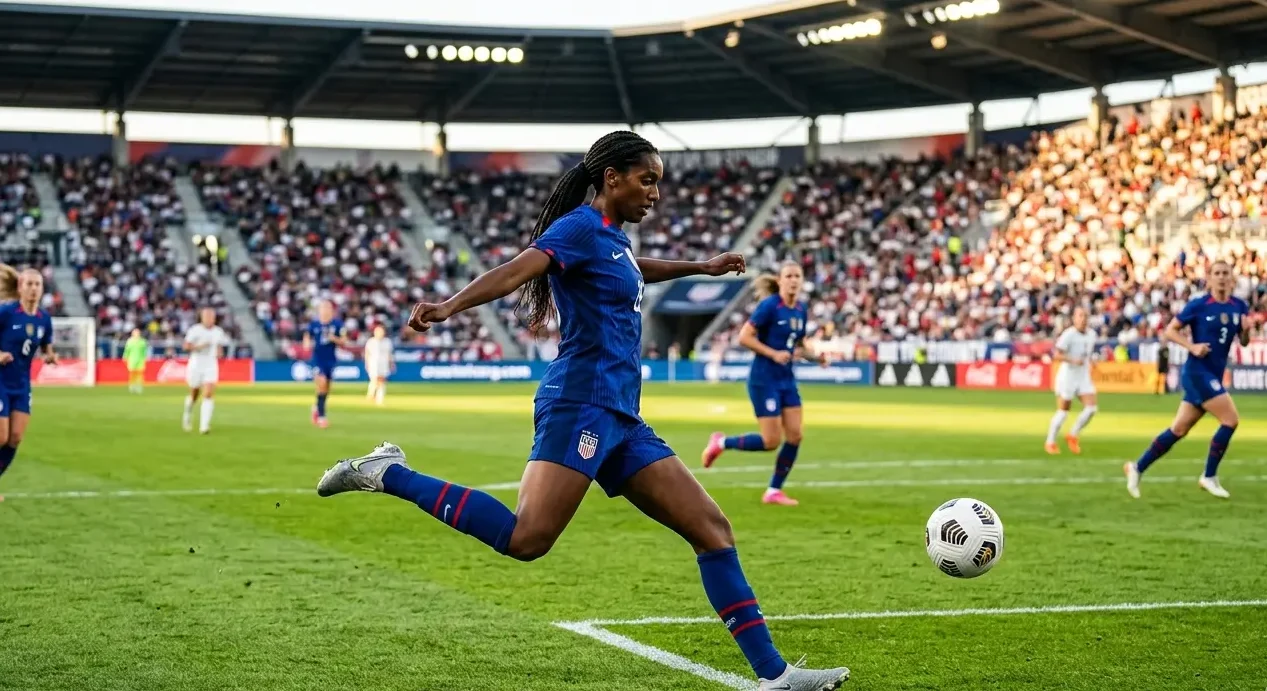
Official FIFA technical reports from the tournament highlighted that European nations—most notably Spain and England—had surpassed the U.S. in possession-based metrics and midfield fluidity. The traditional U.S. model of out-working and out-running opponents was no longer sufficient against tactically sophisticated global adversaries. This reality necessitated a complete overhaul of the developmental and senior team pipelines.
Emma Hayes and the USWNT Roster Rebuild Strategy
In response to these systemic challenges, U.S. Soccer appointed Emma Hayes. Known for her tactical pragmatism and sustained success at Chelsea FC, Hayes was brought in to orchestrate the USWNT roster rebuild. Her mandate was clear: evaluate the player pool objectively, implement modern tactical frameworks, and prepare the squad for the 2027 World Cup cycle.
Prioritizing Youth and NWSL Form
Hayes immediately implemented a meritocracy based on current club form rather than historical caps. The National Women’s Soccer League (NWSL) became the primary proving ground. Players who demonstrated high tactical intelligence and positional flexibility were prioritized.
Key Players in the Transition
The transition required phasing out several iconic veterans who had anchored the team for a decade. In their place, a younger core was established. Trinity Rodman, Sophia Smith, and Naomi Girma have transitioned from promising prospects to verified foundational pillars. Their performances in the 2024 Paris Olympics—where the USWNT secured a Gold Medal—validated Hayes’ accelerated integration of youth.
Tactical Analysis: Evolution of the USWNT System
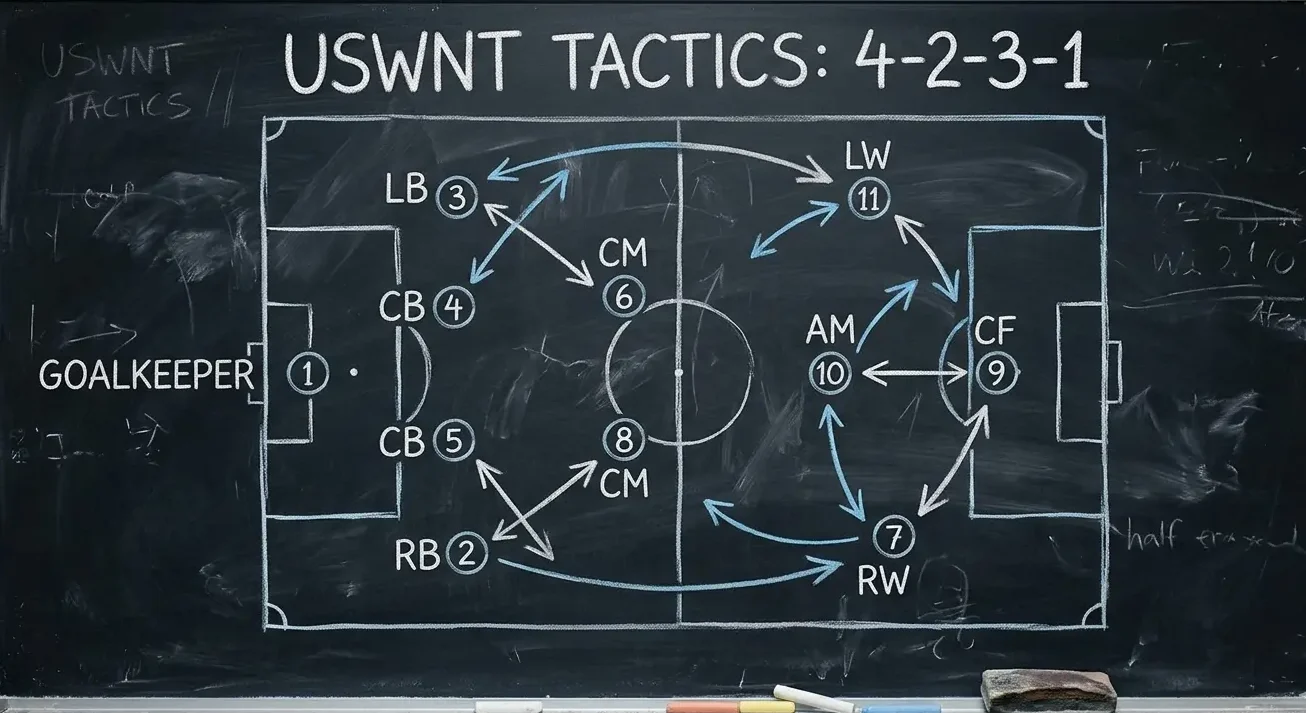
Under Hayes, the USWNT has transitioned away from a rigid 4-3-3 reliant on wide service, moving toward more fluid shapes, including a 4-2-3-1 and a 3-4-3 in possession.
- Build-up Play: Center-backs are now required to be elite distributors, breaking lines with central passes rather than defaulting to the flanks.
- Midfield Double Pivot: The introduction of a dedicated double pivot has improved defensive transition structures, shielding the backline while maintaining possession under high pressure.
- Attacking Fluidity: The front line operates with interchangeable roles, confusing man-marking defensive setups and creating dynamic half-space overloads.
DATA TABLES
Table 1: Key Player Transition (2023 vs. 2026 Cycle)
| Player Profile | Status / Update | Role / Impact | Date Verified |
|---|---|---|---|
| Naomi Girma | Active Core | Starting Center-Back; Defensive Anchor | 2024-2026 |
| Trinity Rodman | Active Core | Starting Forward; Primary Creator | 2024-2026 |
| Megan Rapinoe | Retired | Transitioned out of player pool | Late 2023 |
| Julie Ertz | Retired | Transitioned out of player pool | Late 2023 |
| Korbin Albert | Active Roster | Midfield Pivot / Tactical Integrator | 2024-2026 |
Table 2: Tactical Metric Shifts (Average per 90 mins)
| Metric Category | Pre-Rebuild (2023) | Hayes Era (2024-2026) | Trend |
|---|---|---|---|
| Possession vs Top 10 | 48% | 54% | Positive Shift |
| Central Line-Breaking Passes | 14.2 | 22.5 | Positive Shift |
| Reliance on Crosses | High (24/game) | Moderate (14/game) | Intentional Decrease |
CONTEXT & IMPACT ANALYSIS
The ongoing USWNT roster rebuild matters because it redefines American soccer identity.
Short-term implications: The immediate impact was seen during the 2024 Olympic run, where the integration of younger legs provided the high-pressing stamina required in condensed tournament formats. However, growing pains remain evident when facing deep, organized European low-blocks in international friendlies.
Long-term significance:
Looking toward the 2027 World Cup in Brazil, this cycle establishes a sustainable blueprint. By prioritizing technical proficiency and tactical intelligence over sheer athleticism, U.S. Soccer is future-proofing its pipeline. The NWSL’s alignment with national team standards ensures that the next wave of draft picks enters the professional environment already adapted to modern global tactical demands.
CONCLUSION
The U.S. Women’s National Team is no longer relying on the ghosts of past championships. Following a necessary period of reevaluation, Emma Hayes has instituted a definitive and objective USWNT roster rebuild. By rotating out legacy players in favor of technically adept, in-form talent from the NWSL, the federation has modernized its tactical approach. Verified results from recent international windows indicate that while the dominance of the past may look different today, the structural foundation for the 2027 World Cup is actively and successfully being laid.
FAQ SECTION
Q: Who is the current head coach of the USWNT?
A: Emma Hayes is the current head coach of the U.S. Women’s National Team, having officially taken over the role in May 2024.
Q: What is the primary focus of the current USWNT roster rebuild?
A: The rebuild focuses on integrating younger, technically skilled players from the NWSL and implementing a modern, possession-based tactical system ahead of the 2027 World Cup.
Q: Where is the next FIFA Women’s World Cup being held?
A: The 2027 FIFA Women’s World Cup will be hosted by Brazil.
Q: Did the USWNT win the 2024 Olympics?
A: Yes, the U.S. Women’s National Team won the Gold Medal at the 2024 Paris Olympics under Emma Hayes.
My Question ❓
What are your thoughts on this tactical development? Do you believe the current reliance on youth and NWSL club form is enough to secure the World Cup in 2027 against teams like Spain and England? Let us know your analytical breakdowns in the comments below.