


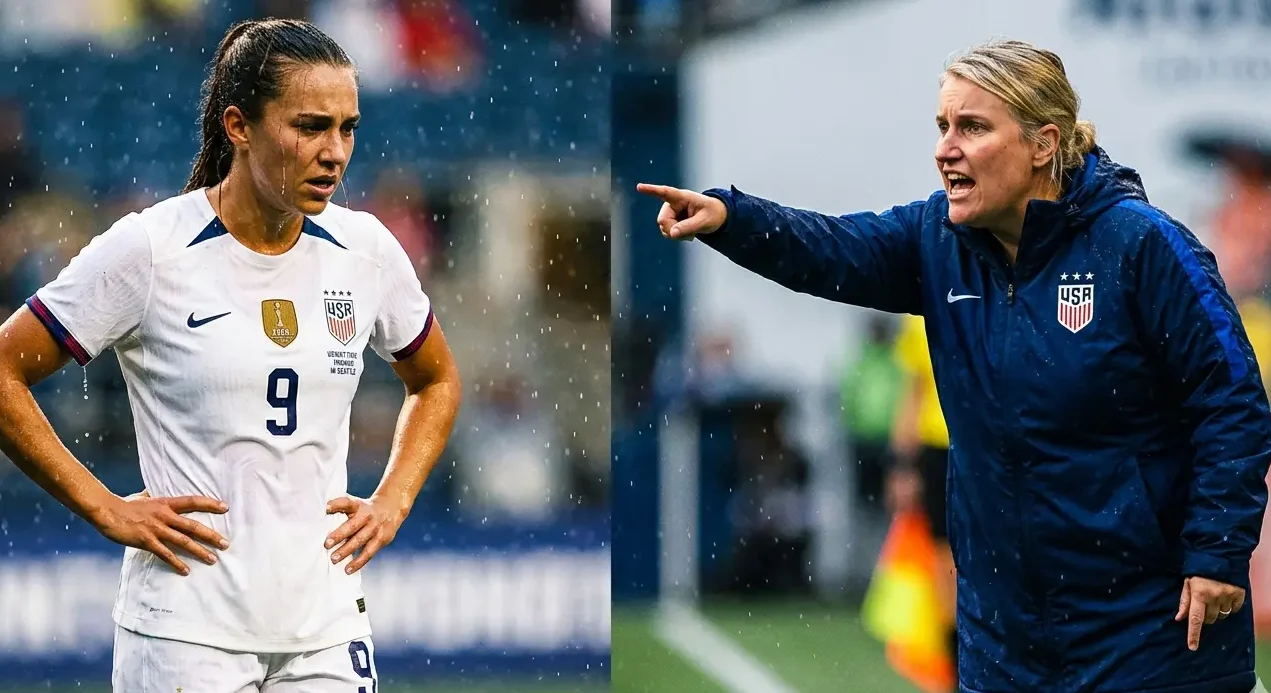
The U.S. Women’s National Team experienced a critical tactical breakdown during a 1-0 defeat to Japan on April 14, 2026, at Lumen Field in Seattle. Despite dominating 67% of possession and outshooting the reigning Asian Cup champions 12 to nine, the American squad failed to register a single goal. This unexpected offensive stagnation snapped a historic 10-game winning streak and marked the first American shutout since a scoreless draw against England in November 2024. Following the match, head coach Emma Hayes and her staff immediately shifted their tactical priorities. The USWNT Focuses on Final Third Precision Ahead of Finale vs. Japan to rectify these execution errors, utilizing the April 17 matchup in Commerce City, Colorado, as a vital testing ground for attacking cohesion.
The Catalyst for Change: Analyzing the Seattle Stumble
The second match of the April international window provided a harsh diagnostic assessment for the American squad. Facing a technically elite Japanese side, Emma Hayes made the calculated decision to rotate her entire starting XI.
This rotational strategy resulted in a lineup that averaged a mere 23.9 international caps, standing in stark contrast to the 56.3 cap average utilized in the series opener. The objective was to evaluate younger personnel against a world-class opponent under adverse weather conditions.
The underlying metrics suggested American dominance across the pitch. The United States maintained 67% possession, successfully bypassed Japan’s high press, and generated 12 total shots. Five of those attempts tested Japanese goalkeeper Akane Okuma.

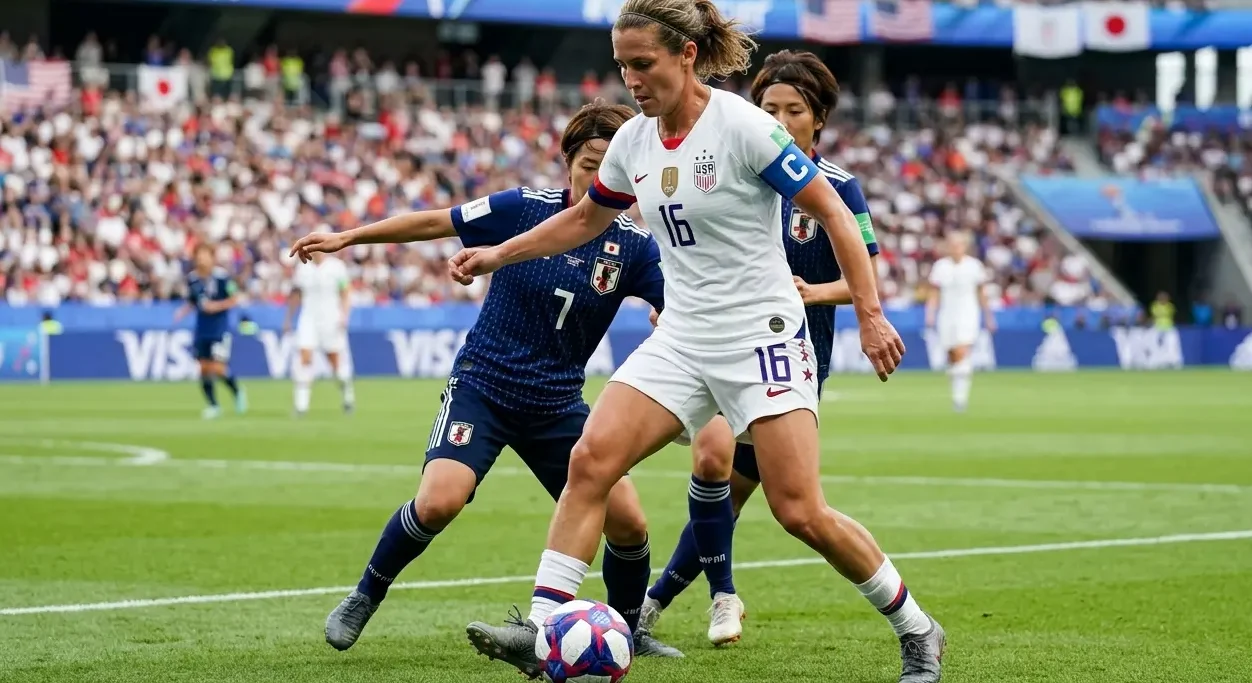
However, possession without penetration proved fatal. The American midfield repeatedly advanced the ball into the attacking third, only to witness sequences break down due to poor decision-making or mistimed runs.
The definitive moment arrived in the 27th minute following an unforced American turnover in the central third of the pitch. Japan immediately initiated a rapid counterattack.
Tottenham Hotspur midfielder Maika Hamano collected the ball, isolated American defender Lilly Reale, and executed a clinical left-footed strike past goalkeeper Phallon Tullis-Joyce. The sequence perfectly illustrated the disparity between American volume and Japanese efficiency.
Despite bringing on established attacking stars like Trinity Rodman and Sophia Wilson in the 65th minute, the United States could not equalize. The 1-0 defeat forced a profound internal reckoning regarding the team’s offensive mechanics.
Tactical Diagnostics: Identifying the Execution Gap
The aftermath of the Seattle defeat prompted transparent assessments from the coaching staff and veteran players. The consensus pointed directly to a lack of synchronization in the final 18 yards of the pitch.
Emma Hayes tactics have consistently relied on fluid positional interchanges, but the execution in Seattle fell short of the required standard. The manager noted that while the buildup phase was functional, the final pass was severely lacking.
”I always think the final third in football, that’s where connections really matter,” Hayes explained to the media. “It’s still very early on for us with that, so it looks a little clunky to me”.
Team captain and central midfielder Lindsey Heaps provided a similar assessment. She emphasized the frustration of dictating the tempo of a match without generating a tangible end product.
“We had a lot of control, and that’s a really good thing, but it’s like, alright, with all that control, what can we do?” Heaps stated. “It’s that finishing phase. We had three, four chances at the end there. Continuing to build the connections in the final third is super important for us”.
The technical specificities of the breakdown were best articulated by defender Tierna Davidson. Returning to the national team after a 13-month absence due to an ACL injury, Davidson offered a granular perspective on the passing discrepancies.
“We had a lot of good ideas, but we were just off by the ball being a little too long or a little bit behind somebody or just not exactly synched up,” Davidson observed. “The more we fine-tune that, the more chances we create and hopefully score”.
This collective realization formed the tactical foundation for the remainder of the camp. The reality that the USWNT Focuses on Final Third Precision Ahead of Finale vs. Japan became the central narrative leading into the Colorado matchup.
Emma Hayes and the Evolution of the Player Pool

The execution errors witnessed in Seattle were partially a byproduct of deliberate squad experimentation. Since assuming the managerial role in mid-2024, Emma Hayes has utilized 60 different players in international competition.
This expansive vetting process was designed to identify the optimal blend of youth and experience following the tactical staleness of previous administrative cycles. Hayes used the early months of her tenure to evaluate domestic standouts who previously lacked international exposure.
The 2026 SheBelieves Cup, held just one month prior to the Japan series, showcased the depth of this expanded pool. The United States secured the tournament title by defeating Argentina, Canada, and Colombia while utilizing a different starting lineup in every match.
During that tournament, young talents like Jaedyn Shaw, Ally Sentnor, and Alyssa Thompson all registered crucial goals. The defensive structure was equally robust, yielding zero goals across 270 minutes of tournament play.
However, the Japan series marked a pivotal transition point in Hayes’ long-term strategy. Following the extensive data-gathering phase that began in January 2026, the coaching staff recognized the need to shift from experimentation to solidification.
“We don’t have a lot of windows left, so we need to get some of these players playing back together again,” Hayes noted. The mandate to narrow the player pool is essential for developing the intuitive, unspoken connections required to break down elite defensive blocks.
Rebuilding the Front Line: The “Triple Espresso” Dynamic
Achieving final third precision relies heavily on the chemistry between the primary attackers. For the United States, this means re-establishing the formidable forward line colloquially known as “Triple Espresso”.
Comprising Trinity Rodman, Mallory Swanson, and Sophia Wilson, this trio terrorized opposing defenses during the USWNT’s gold medal run at the 2024 Paris Olympics. Their combined pace, technical dribbling, and ruthless finishing provided the foundation for Hayes’ initial success.
However, sustaining that connection has proven difficult due to roster availability. The United States entered the April 2026 window without the services of Mallory Swanson.
The attacking corps was further depleted by the absence of Catarina Macario, the squad’s leading goal scorer during the 2025 calendar year. These missing pieces forced Hayes to rely heavily on the remaining members of the Olympic core while integrating newer talents like Emma Sears and Michelle Cooper.
The primary objective during the Japan series became the reintegration of Sophia Wilson alongside Trinity Rodman. The two forwards had not shared the pitch in 17 months due to Wilson’s extended maternity leave.
Hayes purposefully deployed Wilson and Rodman together during both the San Jose and Commerce City matches. The tactical intent was to force repetitions, allowing the forwards to recalibrate their spacing and timing against live international competition.
The most emotionally resonant narrative of the April 2026 international window was the highly anticipated return of forward Sophia Wilson (née Smith). Her journey back to the pitch represents a monumental achievement in the realm of elite athletic performance and maternal healthcare.
Wilson stepped away from professional competition following the 2024 Olympics, missing the entirety of the 2025 National Women’s Soccer League (NWSL) season. On September 3, 2025, she and her husband, Arizona Cardinals wide receiver Michael Wilson, welcomed their daughter, Gianna Capri (“Gigi”) Wilson.
The 25-year-old forward utilized the NWSL’s progressive six-month paid parental leave policy to prioritize her family and physical recovery. Wilson expressed deep gratitude for the support system surrounding her return, specifically citing the supportive environment cultivated by Emma Hayes.
“I knew from the time I got pregnant that I was going to be very patient with myself through the whole process,” Wilson explained. “Getting back to playing at a high level, it’s not a straight path. That’s not going to happen with the snap of my fingers”.
Wilson’s club return occurred on March 13, 2026, when she logged 13 minutes as a substitute for the Portland Thorns in a 1-0 victory over the Washington Spirit. She gradually increased her workload, eventually playing a full 90 minutes against the North Carolina Courage just weeks prior to the national team camp.
| Sophia Wilson | 2026 NWSL Season (Through April) |
|---|---|
| Club | Portland Thorns FC |
| Matches Played | 5 |
| Minutes Played | 247 |
| Goals | 0 |
| Match Rating Avg (FotMob) | 6.67 |
Table 1: Sophia Wilson’s domestic statistics prior to the USWNT April camp.
Upon reporting to the national team, Wilson noted a profound psychological shift in her approach to the sport. “I feel more grounded, I feel more present. And I think that’s how I view the game as well,” she stated. “I’m trying to approach it with… a goldfish mentality. It’s just, be present in whatever practice, whatever game I’m in, and then it’s on to the next”.
Wilson officially became the 18th mother to represent the USWNT when she started the April 11 match in San Jose. She immediately impacted the game, drawing a critical foul in the eighth minute that led directly to the opening goal.
While she did not register a goal during the series, her off-ball movement consistently fractured the Japanese defensive lines. Coach Hayes commended her physical resilience, noting the immense difficulty of jumping directly into international intensity after a 17-month hiatus.
Lindsey Heaps’ Homecoming: Denver Summit FC and the NWSL HIP Rule
The series finale at DICK’S Sporting Goods Park in Commerce City held profound personal significance for USWNT captain Lindsey Heaps (née Horan). The April 17 match marked her first appearance in her home state of Colorado since announcing a landmark transfer to the NWSL.
In January 2026, NWSL expansion franchise Denver Summit FC secured Heaps on a historic four-year contract extending through the 2029 season. The Golden, Colorado native will officially join the Summit in June 2026 upon the conclusion of her campaign with French powerhouse OL Lyonnes.
“I’m incredibly excited to come home to Colorado and join Denver Summit FC,” Heaps stated in the official club announcement. “This club represents something special, not just for the league, but for this community and for the next generation of players growing up here”.
The acquisition of a player of Heaps’ global stature by an expansion club was made possible by the NWSL’s newly instituted High Impact Player (HIP) Rule. Introduced in late 2025, the HIP Rule allows each club to exceed the league’s $3.5 million salary cap by up to $1 million to attract or retain world-class talent.
This regulatory shift directly addressed the competitive financial pressures exerted by heavily funded European clubs. Denver Summit FC general manager Curt Johnson acknowledged that the club intended to sign Heaps regardless, but the HIP Rule provided the necessary salary cap flexibility to execute the complex transfer.
The commercial viability of the Denver market has already been proven. In March 2026, Denver Summit FC broke the all-time NWSL single-match attendance record when 63,004 fans packed Empower Field at Mile High for the club’s inaugural home match against the Washington Spirit.
Heaps acknowledged the overwhelming local support leading into the Japan finale. “I saw the jersey sales come out, which was really special,” Heaps remarked regarding the massive local demand for her Denver Summit apparel. “I’m so thankful. I’m not even here yet, and for us to have that as a club is so cool”.
Event Breakdown: The Three-Match Series Against Japan
The strategic decision to schedule three consecutive matches against the same opponent is exceptionally rare in international soccer. It marked only the ninth time in the program’s 40-year history that the USWNT faced the same nation in a triple-header.
This format forced both coaching staffs to continuously adjust tactical paradigms over an eight-day window. The resulting matches provided a clear timeline of the USWNT’s offensive evolution.
Match 1: April 11, 2026 (San Jose, California)
The series opened at PayPal Park with Emma Hayes deploying her most experienced available lineup. The veterans immediately established control against a Japanese squad playing their first match under an interim manager.
In the ninth minute, Sophia Wilson drew a crucial foul deep in the attacking half. Sam Coffey delivered the resulting free kick toward the far post, where Trinity Rodman brilliantly volleyed the ball back into the center of the penalty area. Rose Lavelle connected with an outside-of-the-foot strike to secure a 1-0 lead.
The United States doubled their advantage shortly after halftime. Gisele Thompson executed a high-intensity defensive press, winning the ball and initiating a swift transition. The sequence concluded with Lavelle finding an unmarked Lindsey Heaps, who buried a first-time shot into the bottom corner.
The strike marked Heaps’ 40th career international goal, cementing her status as the 16th player in program history to reach that milestone. Japan managed to score a late consolation goal via a Riko Ueki header, but the U.S. held on for a 2-1 victory.
| Match 1 Statistics | United States | Japan |
|---|---|---|
| Final Score | 2 | 1 |
| Total Shots | 9 | 12 |
| Shots on Goal | 3 | 3 |
| Possession | 51% | 49% |
| Corner Kicks | 4 | 2 |
Table 2: Statistical summary of the series opener on April 11, 2026.
Match 2: April 14, 2026 (Seattle, Washington)
The narrative shifted dramatically during the second fixture at Lumen Field. As previously analyzed, Hayes implemented a complete roster rotation, fielding an inexperienced starting XI.
Despite dominating the ball with 67% possession, the disjointed American attack failed to penetrate Japan’s organized defensive structure. Maika Hamano’s 27th-minute counterattack goal proved to be the decisive factor, handing the United States a 1-0 defeat and snapping their 10-game win streak.
The shutout immediately highlighted the imperative need for greater tactical cohesion, serving as the catalyst for the intensive attacking drills conducted prior to the series finale.
Match 3: April 17, 2026 (Commerce City, Colorado)
Entering the rubber match at DICK’S Sporting Goods Park, the narrative was clear: the USWNT Focuses on Final Third Precision Ahead of Finale vs. Japan. Hayes reverted to an experienced starting lineup, averaging 60.7 caps, while ensuring both Colorado natives—Heaps and Wilson—were on the pitch for kickoff.
The first half was a tense, scoreless affair. The United States controlled 69.7% of the possession and generated nine shots, but Japanese goalkeeper Chika Hirao produced several point-blank saves to deny Sophia Wilson and Naomi Girma.
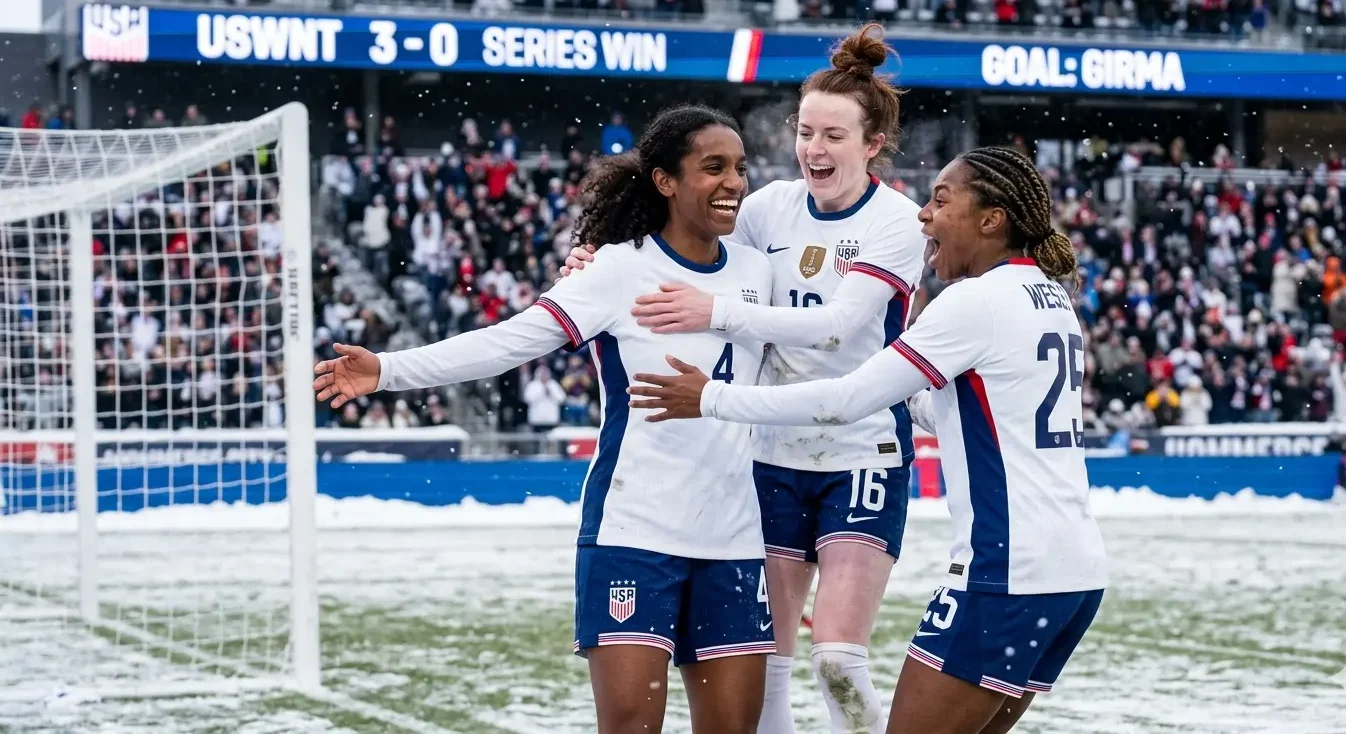
However, the halftime tactical adjustments yielded immediate results. In the 47th minute, Rose Lavelle served an out-swinging corner kick to the back post. Substitute defender Kennedy Wesley, who had just entered the match for Tierna Davidson, headed the ball centrally. Naomi Girma elevated over the defense to head home her third career international goal.
The precision Hayes demanded finally materialized in the 56th minute. Following a midfield turnover, Trinity Rodman delivered a perfectly weighted through ball that split the Japanese center-backs. Rose Lavelle outpaced the recovery run and calmly slotted the ball inside the left post, extending the lead to 2-0.
The United States sealed the emphatic victory in the 64th minute. Jaedyn Shaw curled a dangerous corner kick into the box, allowing Kennedy Wesley to strike a clean volley past the keeper. The goal marked Wesley’s first-ever international tally, capping a brilliant substitute appearance that included both a goal and an assist.
| Match 3 Statistics | United States | Japan |
|---|---|---|
| Final Score | 3 | 0 |
| Goal Scorers | Girma (47′), Lavelle (56′), Wesley (64′) | None |
| Key Assists | Wesley, Rodman, Shaw | N/A |
Table 3: Scoring breakdown of the series finale on April 17, 2026.
Opponent Profile: Nadeshiko Japan’s Tactical Discipline
The execution difficulties experienced by the United States must be contextualized by the elite quality of their opponent. Nadeshiko Japan entered the April window ranked fifth globally, firmly establishing themselves as a primary contender for the upcoming World Cup.
Their tactical pedigree was fully displayed during their triumphant run at the 2026 AFC Women’s Asian Cup in Australia. The Japanese squad played a devastating brand of possession-based football, outscoring their continental opposition by an aggregate margin of 29-1.
They clinched the Asian Cup title on March 31 with a highly impressive 1-0 victory over the host nation, Australia, silencing a massive crowd of 74,397 at Stadium Australia. The tournament highlighted their offensive depth, with 14 different players registering goals, led by West Ham striker Riko Ueki’s six-goal tally.
The April friendlies presented a unique challenge for Japan, as their federation unexpectedly dismissed head coach Nils Nielsen just days prior to traveling to the United States. Long-time assistant and former U-20 manager Michihisa Kano assumed interim head coaching duties for the three-match series.
Despite the managerial turbulence, Kano maintained the squad’s highly technical, disciplined structure. Their ability to execute a coordinated mid-block press and launch rapid counterattacks—as perfectly demonstrated by Maika Hamano’s game-winner in Seattle—proved why they remain one of the most difficult teams to break down in world football.
Context & Impact Analysis: The Road to the 2027 FIFA Women’s World Cup
The intensive, highly scrutinized series against Japan was engineered to replicate the physical and psychological demands of a major tournament. Emma Hayes deliberately utilized the April window to finalize her tactical blueprints ahead of the defining challenge of the cycle.
Short-Term Implications
In the immediate future, the stark contrast between the Seattle loss and the Colorado victory provides the coaching staff with definitive data regarding roster hierarchy. The depth players who struggled to connect the final pass during the 1-0 defeat are now fully aware of the precise technical standards required to operate within Hayes’ system.
The successful reintegration of Sophia Wilson and Tierna Davidson solidifies the core spine of the team. As Wilson continues to rebuild her match fitness and reignite her chemistry with Trinity Rodman, the “Triple Espresso” attacking front will gradually return to its peak lethal form.
Long-Term Significance
The ultimate objective driving every tactical decision is the 2027 FIFA Women’s World Cup, which will be hosted by Brazil. However, the United States must first secure qualification through the Concacaf W Championship, scheduled for November 2026.
The margin for error in the regional qualifiers has decreased significantly as nations like Mexico and Jamaica continue to rapidly develop their domestic and international infrastructures. The United States can no longer rely purely on athletic superiority to overwhelm regional opponents; they must execute with clinical, synchronized precision.
By publicly stating that the USWNT Focuses on Final Third Precision Ahead of Finale vs. Japan, Hayes signaled the end of the experimental era. The roster pool will now shrink, rotations will decrease, and the starting XI will be granted the consecutive minutes necessary to forge unbreakable offensive chemistry before the high-stakes qualifiers commence.
Conclusion
The April 2026 three-match series against Japan served as a vital crucible for the U.S. Women’s National Team. The possession-heavy but toothless 1-0 defeat in Seattle acted as a necessary diagnostic tool, brutally exposing the execution gaps present within a heavily rotated squad. Head coach Emma Hayes utilized the subsequent days to relentlessly address the team’s attacking synchronization.
The resulting 3-0 victory in the Colorado finale validated these tactical adjustments, punctuated by clinical finishes from Naomi Girma, Rose Lavelle, and Kennedy Wesley. The window also celebrated the triumphant return of Sophia Wilson from maternity leave and highlighted Lindsey Heaps’ historic upcoming transfer to Denver Summit FC. As the experimental phase of the cycle concludes, the focus permanently shifts toward maintaining this final third precision on the road to the 2027 World Cup qualifiers.
Frequently Asked Questions (FAQ)
Why did the USWNT lose to Japan in the Seattle match?
The USWNT lost 1-0 to Japan on April 14, 2026, due to a failure to convert possession into goals. Despite holding 67% of the ball and taking 12 shots, an entirely rotated American lineup lacked synchronization in the attacking third, allowing Japan to win via a 27th-minute counterattack goal by Maika Hamano.
When did Sophia Wilson return to the USWNT after having her baby?
Forward Sophia Wilson (née Smith) returned to the USWNT roster in April 2026 after a 17-month absence. She spent the 2025 season on maternity leave, welcoming her daughter Gianna Capri Wilson in September 2025 before returning to club play in March 2026.
What is the NWSL High Impact Player (HIP) Rule?
Implemented in late 2025, the NWSL High Impact Player Rule allows clubs to exceed the league’s standard $3.5 million salary cap by up to $1 million to sign or retain elite global talent. This rule provided the financial flexibility for expansion team Denver Summit FC to sign USWNT captain Lindsey Heaps.
What were the final scores of the April 2026 USWNT vs. Japan series?
The United States won the first match 2-1 in San Jose. Japan won the second match 1-0 in Seattle. The United States won the series finale 3-0 in Commerce City, Colorado.
Reader Engagement Element
The stark contrast between the USWNT’s disjointed attack in Seattle and their clinical 3-0 dominance in Colorado highlighted the critical importance of roster cohesion. As Emma Hayes begins to lock in her primary starting XI ahead of the upcoming Concacaf W Championship, who do you believe should anchor the American midfield? Will the complete return of the “Triple Espresso” attacking line guarantee World Cup qualification, or does the technical prowess of teams like Japan signal a permanent shift in global soccer dominance? Share your tactical analysis and roster predictions in the comments below!