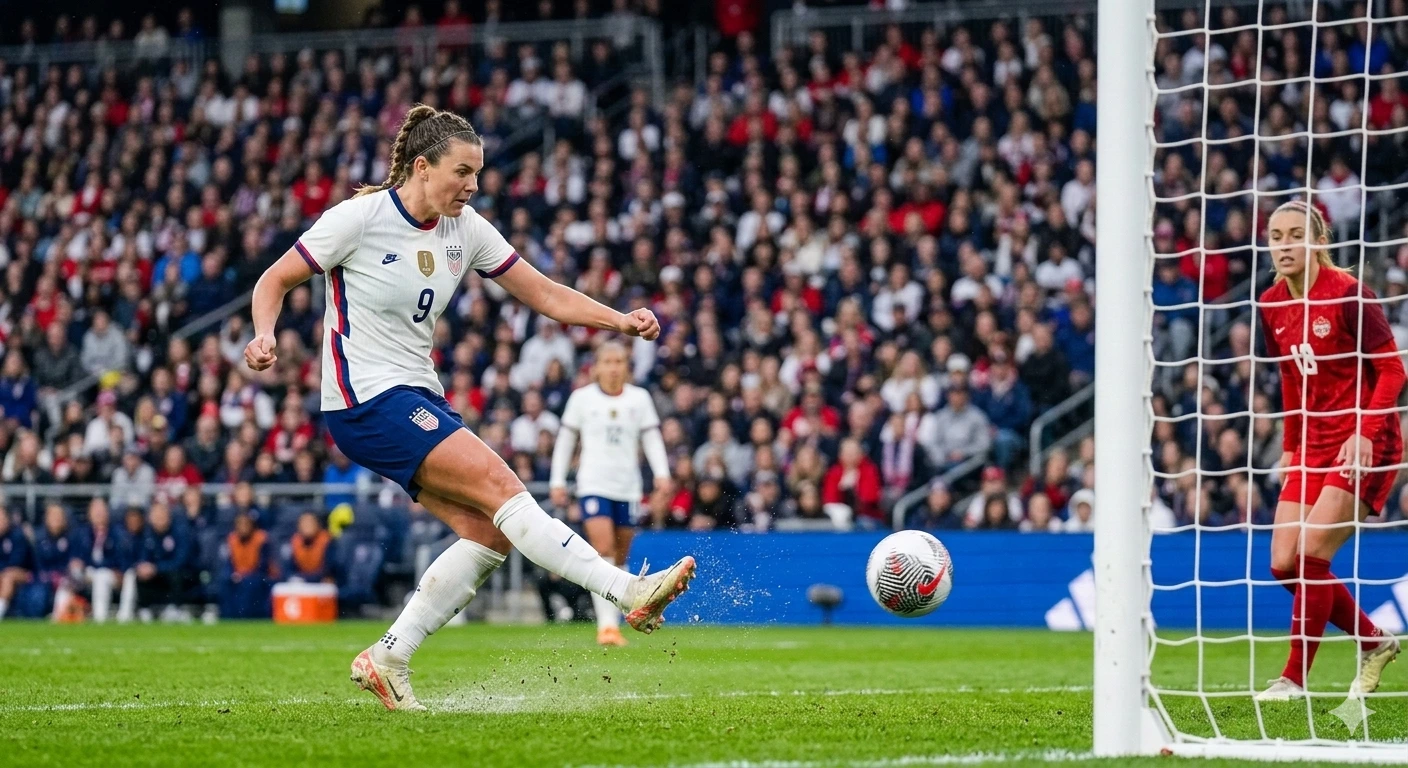
The encounter between the United States Women’s National Team and Canada on March 4, 2026, at ScottsMiracle-Gro Field in Columbus, Ohio, provided a definitive look at the current trajectory of North American women’s football under the technical leadership of Emma Hayes and Casey Stoney. In a fixture defined by intense physicality, high-stakes tactical maneuvering, and the continued emergence of a new generation of American talent, the 1-0 victory for the United States not only secured their position at the top of the SheBelieves Cup standings but also offered a profound look at the evolutionary shifts in the regional hierarchy. The decisive moment arrived in the 55th minute when 22-year-old forward Ally Sentnor clinicaly converted a half-volley following a corner kick, marking her seventh international goal and her third of the 2026 calendar year. However, the broader narrative of the match was the United States’ ongoing transition toward a possession-based, technically sophisticated philosophy that prioritizes structural discipline and patient buildup over the direct, transitional speed of previous cycles.
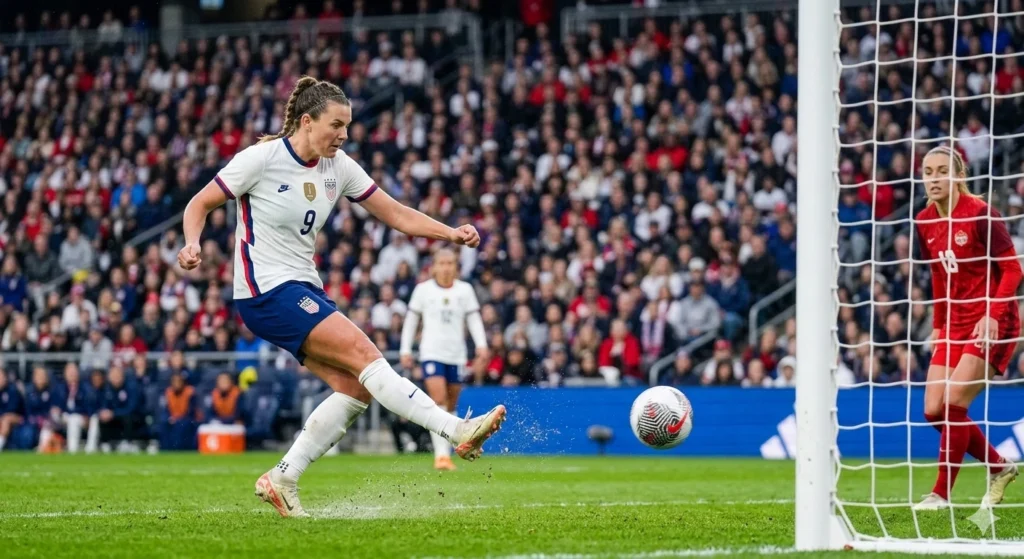
Table Of Contents
- The Strategic Landscape of the 2026 SheBelieves Cup
- Tactical Framework: The Emma Hayes Revolution
- Detailed Analysis of Player Performance and Ratings
- Tactical Breakdown of the Decisive Moment: The 55th-Minute Set Piece
- Canada’s Strategic Progress and Persistent Deficits
- Environmental and Structural Influences on Performance
- Roster Evolution: Transitioning Beyond the “Triple Espresso”
- Future Projections and Tactical Implications
- Synthesis: A Narrative of Tactical Maturity
- Conclusion: Key Takeaways from the Victory in Columbus
The Strategic Landscape of the 2026 SheBelieves Cup
The 2026 edition of the SheBelieves Cup, the eleventh such iteration of the tournament, served as a critical barometer for the participating nations—the United States, Canada, Colombia, and Argentina—as they navigated the intermediate period between the 2024 Olympic Games and the upcoming 2027 FIFA Women’s World Cup. Entering the second matchday in Columbus, both the United States and Canada had secured maximum points from their opening fixtures in Nashville, making their head-to-head meeting a virtual championship decider. The United States had opened with a 2-0 win over Argentina, while Canada had delivered a statement 4-1 victory over Colombia. The result in Columbus propelled the Americans to six points, meaning a draw or a win in their final match against Colombia in Harrison, New Jersey, would secure their eighth tournament title.
2026 SheBelieves Cup Standings and Results (Through March 4)
| Position | Team | GP | W | L | D | PKW | GF | GA | GD | Points |
|---|---|---|---|---|---|---|---|---|---|---|
| 1 | United States | 2 | 2 | 0 | 0 | 0 | 3 | 0 | +3 | 6 |
| 2 | Canada | 2 | 1 | 1 | 0 | 0 | 4 | 2 | +2 | 3 |
| 3 | Colombia | 2 | 1 | 1 | 0 | 0 | 2 | 4 | -2 | 3 |
| 4 | Argentina | 2 | 0 | 2 | 0 | 0 | 0 | 3 | -3 | 0 |
The tournament format in 2026 introduced a technical nuance: all matches ending in a draw after 90 minutes of regulation time proceeded directly to a penalty kick shootout, with the winner receiving two points and the loser one. This rule change emphasizes the tournament’s role as a simulation for knockout-stage football, forcing managers to consider late-game personnel changes for spot-kick proficiency. The United States, however, avoided this necessity by securing the win in regulation, a testament to their defensive organization and ability to capitalize on set-piece opportunities.
Tactical Framework: The Emma Hayes Revolution
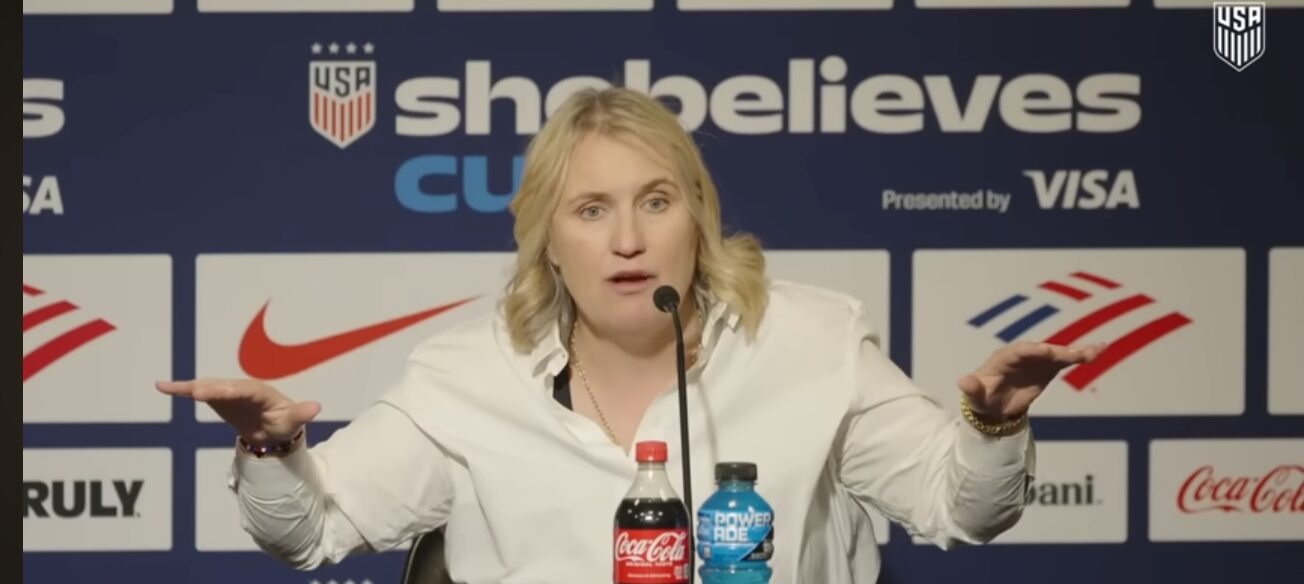
The match provided an extensive showcase for the “Emma Hayes Revolution,” a term increasingly applied to the comprehensive overhaul of the American tactical approach throughout 2025 and early 2026. Under Hayes, the United States has moved away from a reliance on verticality and transition, instead implementing a sophisticated 4-2-3-1 or 4-3-3 hybrid system that emphasizes technical proficiency in the midfield and positional fluidity across the attacking line. In the first half against Canada, the Americans maintained a dominant 68% share of possession, a statistic that reflects the team’s new emphasis on dictating the tempo through short, rhythmic passing rather than speculative long balls.
Positional Fluidity and Half-Space Exploitation
A core pillar of the Hayes philosophy is the use of inverted wingers and drifting attackers to create overloads in the half-spaces. This was observed through the movements of Alyssa Thompson and Trinity Rodman, who frequently cut inside to occupy central defenders, thereby creating space for the full-backs to overlap or for the central midfielders to arrive late into the box. The presence of Sam Coffey as a deep-lying playmaker facilitated this fluidity, as her ability to anchor the midfield provided the “safety blanket” required for the more creative elements to roam.
The defensive structure similarly reflects modern elite principles, focusing on a high-line press designed to win the ball back within five seconds of turnover. This aggressive counter-pressing was evident in the 1-0 win, as the United States limited a potent Canadian attack—which had scored four goals in its previous outing—to just six total shots and a single shot on target.
Comparative Match Statistics: USA vs. Canada
| Statistical Category | United States | Canada |
|---|---|---|
| Goals Scored | 1 | 0 |
| Total Shots | 18 | 6 |
| Shots on Target | 4 | 1 |
| Total Corner Kicks | 11 | 2 |
| Possession Percentage | 60% | 40% |
| Passes Attempted | 558 | 296 |
| Pass Accuracy | 88% | 78% |
| Fouls Committed | 7 | 14 |
| Saves Recorded | 1 | 3 |
The disparity in corner kicks—11 for the United States to just two for Canada—underscores the sustained pressure the Americans applied, particularly from wide areas. This pressure eventually paid dividends in the 55th minute, validating the team’s intensive work on set-piece delivery during the Columbus training camp.
Detailed Analysis of Player Performance and Ratings
The individual player ratings from the Columbus match highlight the successful integration of seasoned veterans and emerging prodigies, a balance that Emma Hayes has prioritized in her roster construction for the 2026 cycle.
The Defensive Unit and Goalkeeper
Phallon Tullis-Joyce (6/10): Making her first SheBelieves Cup appearance and earning her fifth cap, Tullis-Joyce experienced a match defined by early psychological hurdles. The Manchester United goalkeeper showed initial nerves with the ball at her feet, nearly leading to a turnover in the opening ten minutes. However, she recovered effectively, handling a low shot from Simi Awujo with composure and organizing her backline during several high-pressure Canadian counterattacks. Her contribution to the team’s seventh consecutive shutout (714 minutes without conceding) remains a vital statistic as she competes for the No. 1 spot.
Naomi Girma (7/10): Girma’s performance reinforced her reputation as the “ultimate safety blanket” for the United States. Earning her 51st cap, she demonstrated elite reading of the game, neutralizing Canadian transition threats before they could penetrate the final third. Her distribution out of the back was precise, serving as the first phase of the American buildup and allowing the team to bypass the initial Canadian press.
Emily Sonnett (7/10): Partnering with Girma, Sonnett provided the necessary physical bite and marking discipline. She was particularly effective in winning the ball in tight spaces and showed exceptional concentration as a marking defender during Canada’s rare forays into the American box. Her versatility remains a primary asset for the squad as they build toward the World Cup.
Emily Fox (6/10): Fox utilized her tactical maturation from Arsenal to play an inverted role, moving into central midfield during possession phases to disrupt the Canadian mid-block. This maneuver created passing lanes for Coffey and Hutton while allowing Fox to exploit space down the flank for aggressive overlaps.
Gisele Thompson (6/10): The 20-year-old left-back showed strong anticipation and defensive tenacity. While she was targeted by the experienced Nichelle Prince in the second half, Thompson remained resilient, and her ability to drive forward under pressure provided a valuable secondary attacking outlet.
The Midfield Engine
Sam Coffey (7/10): Coffey anchored the midfield with a performance characterized by intelligence and stability. As the primary outlet player, she facilitated the team’s reset of possession, ensuring that the Americans maintained their 60% share of the ball. Her role in guiding the younger Claire Hutton was notable, as she managed the defensive spacing to compensate for Hutton’s more aggressive forward surges.
Rose Lavelle (7/10): The “set-piece queen” was the creative fulcrum of the side. Beyond her perfectly executed outswinging corner kick that led to the goal, Lavelle was involved in nearly every major American chance, including a floating cross to Coffey in the 30th minute and several testing shots from range. Her presence in the starting XI—averaging 47.3 caps—was essential for managing the emotional intensity of the rivalry.
Claire Hutton (5/10): Hutton’s performance was defined by energy but lacked the clinical execution seen in her previous summer outings. Playing at a “frantic tempo,” she was guilty of several misplaced passes and over-ambitious long switching balls that surrendered possession. This erraticism is typical for a 19-year-old in a high-intensity rivalry match, and the experience will likely serve as a foundational learning moment in her development.
The Attacking Vanguard
Ally Sentnor (8/10): The standout performer of the match, Sentnor demonstrated why she was named U.S. Soccer’s Young Player of the Year in 2024. Playing as a No. 9, she was active across the horizontal plane, tracking back to pressure Canada’s defenders and making intelligent runs between the Canadian center-backs. Her goal in the 55th minute—a half-volley after settling the ball on its bounce—was a masterclass in final-third composure under wet conditions.
Alyssa Thompson (6/10): Thompson showed elite bursts of speed and technical skill when cutting inside, frequently drawing multiple defenders. However, despite her high-scoring form with Chelsea, she struggled to find the decisive final pass, a frustration noted by the coaching staff as an area for continued refinement in her international game.
Trinity Rodman (5/10): Returning from a back injury, Rodman appeared out of rhythm. Her touch was occasionally heavy, and she struggled to win the one-on-one duels that typically define her game. Despite these struggles, her tactical awareness remained high; her dummy on the game-winning goal was the crucial movement that distracted the Canadian defense and allowed the ball to reach Sentnor.
Performance Summary: USWNT Starters and Impact Subs
| Player | Position | Rating | Key Tactical Insight |
|---|---|---|---|
| Ally Sentnor | Forward | 8/10 | Clinical half-volley; high-pressure defensive work rate. |
| Naomi Girma | Defender | 7/10 | Impeccable positioning; primary phase-one distributor. |
| Rose Lavelle | Midfield | 7/10 | Elite set-piece delivery; creative focal point. |
| Sam Coffey | Midfield | 7/10 | Tactical discipline; facilitated 60% possession. |
| Emily Sonnett | Defender | 7/10 | Physical ball-winning; effective marking in the box. |
| Phallon Tullis-Joyce | Goalkeeper | 6/10 | Shutout achieved; overcame early distribution nerves. |
| Emily Fox | Defender | 6/10 | Inverted full-back role; disrupted Canadian press. |
| Gisele Thompson | Defender | 6/10 | Resilient defending against Prince; forward drive. |
| Alyssa Thompson | Forward | 6/10 | Dribbling threat; central cut-ins created space. |
| Trinity Rodman | Forward | 5/10 | Critical dummy on goal; struggled with physical rhythm. |
| Claire Hutton | Midfield | 5/10 | Frantic tempo; misplaced long switching balls. |
| Emma Sears | Sub (MF) | 6/10 | Provided speed and width in the closing stages. |
| Lindsey Heaps | Sub (MF) | 6/10 | Settled the midfield; maintained defensive shape. |
| Lily Yohannes | Sub (FW) | 6/10 | Controlled possession; minimal drop-off in quality. |
| Jaedyn Shaw | Sub (MF) | 4/10 | Limited impact; failed to influence the match tempo. |
Tactical Breakdown of the Decisive Moment: The 55th-Minute Set Piece
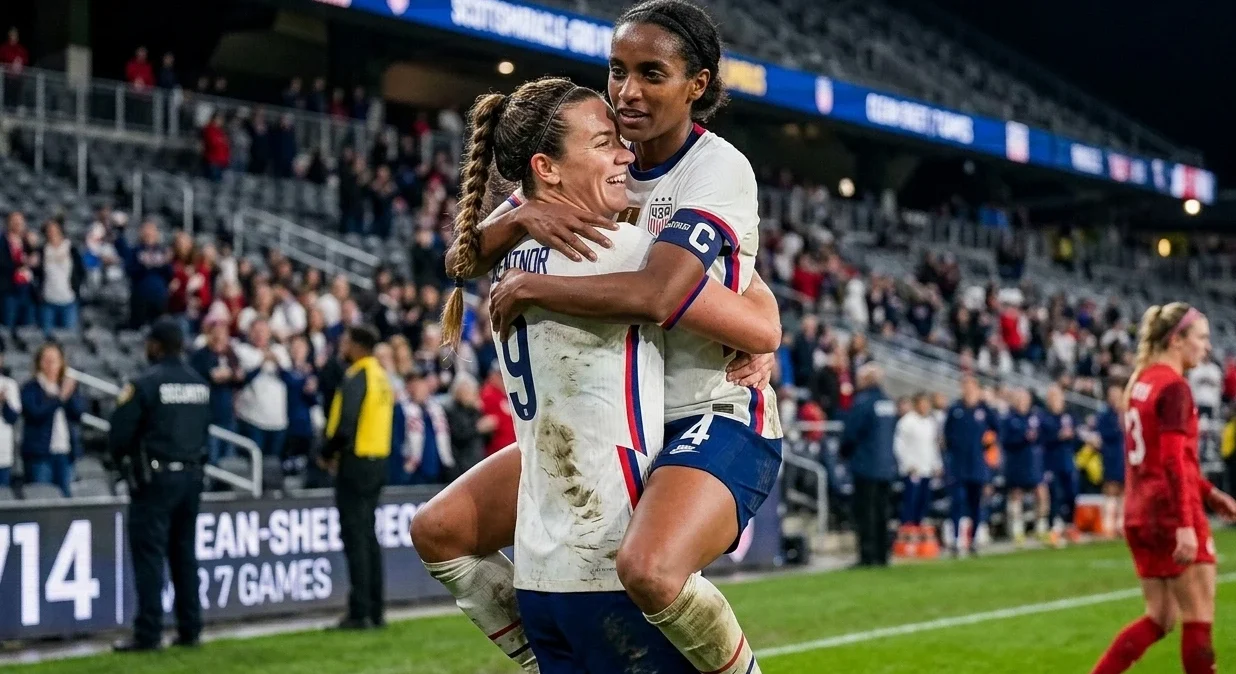
The mechanism of the game-winning goal provides a textbook example of the United States’ emphasis on set-piece architecture under the Hayes regime. Following a deflection of an Alyssa Thompson cross, the Americans won a corner kick on the left side. Rose Lavelle delivered a low, curling service that was designed to exploit the gap between the Canadian zonal marking and their man-to-man markers.
The ball traversed the primary line of defenders, helped by the slippery surface and a deliberate dummy from Trinity Rodman, which froze the Canadian markers. Ally Sentnor, who had found a yard of space as Cloé Lacasse vacated the area to prepare for a counterattack, was the beneficiary. Sentnor’s technical execution was exemplary: she steadied herself after the ball’s initial bounce carried it skyward, “taking the sting out of the ball” before striking a half-volley with her left foot into the far post.
This goal was not merely a moment of individual brilliance but a culmination of a team-wide shift toward patience. As Sam Coffey noted at half-time, the team had been over-eager in their shot selection during the first 45 minutes. The second-half performance reflected a more “front-footed” but composed approach, prioritizing high-percentage looks over speculative distance strikes.
Canada’s Strategic Progress and Persistent Deficits
For Canada, the 1-0 result represented a duality of progress and stagnation. Head coach Casey Stoney characterized the performance as “huge progress” compared to the lackluster 3-0 defeat the team suffered in Washington, D.C., in July 2025. In that previous meeting, the United States had enjoyed 66% possession and outshot Canada 22-7, a match Stoney called a “reality check for everybody”.
Defensive Structure and the Clean Sheet Crisis
Despite the perceived improvement in distance-keeping and discipline, Canada remains haunted by an inability to keep the ball out of their own net. The concession in Columbus extended their streak without a clean sheet to eleven consecutive matches, a stretch during which they have lost seven fixtures. Stoney expressed specific disappointment that the goal originated from a set piece, an objective they had prioritized for the March camp.
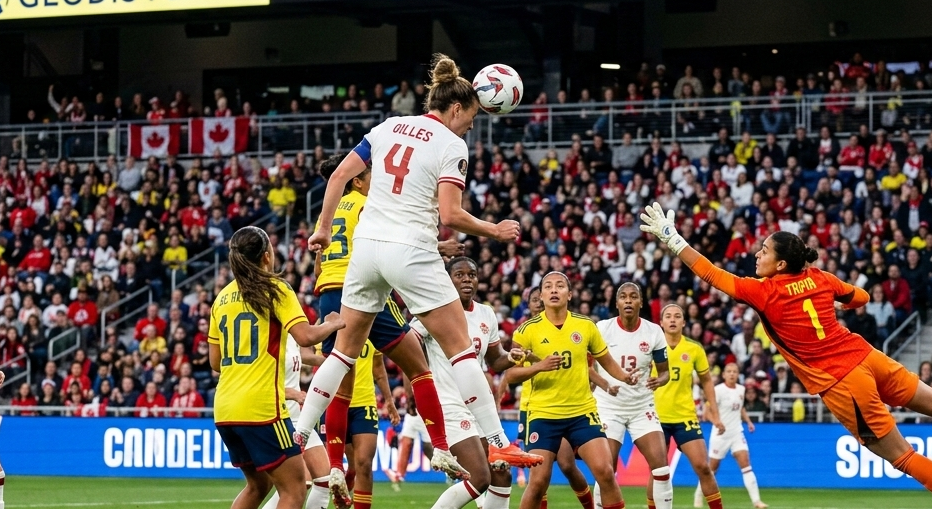
The Canadian defensive effort was led by veteran Vanessa Gilles, who served as captain in the absence of Jessie Fleming. Fleming, a pivotal figure in the Canadian midfield, was sidelined due to an illness that appeared to affect several members of the camp, including Simi Awujo, who was forced to leave the match in the 37th minute.
Offensive Struggles and the Absence of Clinical Finishing
While Canada was more opportunistic in the second half—targeting Gisele Thompson through the speed of Nichelle Prince—they failed to test Phallon Tullis-Joyce consistently. Prince found Cloé Lacasse in a dangerous position in the 49th minute, but the American defense, led by Girma and Sonnett, effectively shut down the shooting lanes. The Canadians ended the match with just one shot on target, a statistic that highlights the disconnect between their buildup play and their execution in the final third.
Comparative Historical Context: USWNT vs. Canada
| Era/Event | Result Trend | USWNT Dominance Note |
|---|---|---|
| All-Time Series | 55-4-9 | Americans hold 84% winning percentage. |
| Last 6 Meetings | USA 6-0-0 | Canada winless against USA since 2021. |
| 2021 Olympic Semi-final | Canada 1-0 | Canada’s last victory in the rivalry. |
| July 2025 Friendly | USA 3-0 | “Reality check” for the Canadian program. |
| March 4, 2026 (SBC) | USA 1-0 | Americans extend shutout streak to 714 mins. |
Environmental and Structural Influences on Performance
The match was held at ScottsMiracle-Gro Field, a world-class downtown stadium in Columbus that is slated to serve as a soccer venue for the 2028 Los Angeles Olympics. The venue provided a professional but atmospheric backdrop, with an announced crowd of 18,545 enduring rain and 54-degree temperatures. The wet surface played a significant role in the game’s tactical texture, increasing the speed of short passes but making long-range control more difficult, a factor that favored the Americans’ technical buildup over Canada’s more direct transition attempts.
The United States’ record in Columbus—now 10-1-2 across 13 matches—further cements the city’s reputation as a fortress for the national team. The return of the SheBelieves Cup to the city for the second time in three years underscores U.S. Soccer’s strategy of utilizing world-class infrastructure to provide “great competition against opponents that we’ll face in the future,” as noted by Emma Hayes.
Roster Evolution: Transitioning Beyond the “Triple Espresso”
A defining theme of the USWNT’s 2026 campaign is the evolution of the forward line in the absence of the “Triple Espresso” trio—Sophia Wilson (formerly Smith), Mallory Swanson, and Trinity Rodman—that defined the 2024 Olympic gold medal run. With Swanson and Wilson currently away from the squad (both expecting children) and Rodman only recently returning from a nagging back injury, Emma Hayes has been forced to widen the player pool and accelerate the integration of younger attackers like Ally Sentnor and Alyssa Thompson.
The Ascension of Ally Sentnor
Ally Sentnor’s emergence as a reliable No. 9 is perhaps the most significant development of the tournament. The 22-year-old, who plays professionally for the Kansas City Current, has successfully transitioned from her role as the captain of the U-20 national team to becoming a focal point of the senior attacking unit. Her 2026 statistics highlight her clinical efficiency:
- International Goals (All-Time): 7
- 2026 Goals: 3 (leads the team)
- 2026 Caps: 4
- SBC Record: Scored the game-winner in the rivalry’s “final.”
Sentnor’s ability to “put in a shift,” as described by analysts, reflects her defensive diligence as much as her offensive output. In the Columbus match, she was frequently seen pressing the Canadian center-backs, forcing them into the 14 fouls recorded by the visitors.
Youthful Contributions and Statistical Trends
The United States’ reliance on youth is a deliberate tactical choice. In 2026, 64% of the USA’s combined 13 goals and 12 assists have involved a player under the age of 25. This is a continuation of a trend established in 2025, when 51% of goal involvements came from the same age demographic.
| Metric: Goal Contributions by Age (<25) | 2024 | 2025 | 2026 (YTD) |
|---|---|---|---|
| Percentage of Goals/Assists | 68% | 51% | 64% |
| Leading Contributor (<25) | Trinity Rodman | Jaedyn Shaw | Ally Sentnor |
| New SBC Debutantes (2026) | 8 | N/A | 8 |
This focus on development is geared toward the 2027 World Cup in Brazil, with Hayes using the SheBelieves Cup as a “high-pressure simulation” for the qualifying matches scheduled for late 2026.
Future Projections and Tactical Implications
The 1-0 victory provides the United States with a commanding position heading into the final matchday in Harrison, New Jersey. To secure the title, the Americans need only a draw against Colombia, or even a loss in the penalty kick shootout following a draw. Colombia, led by the dynamic Linda Caicedo, recently defeated Argentina 1-0 and will present a “technically masterful and physically challenging” test.
Tactical Adjustments for the Final
Observers expect Hayes to potentially rotate the squad for the Harrison match, given the high physical toll of the “chippy” fixtures against Argentina and Canada. The possible return of Jaedyn Shaw to the starting lineup and the continued monitoring of Trinity Rodman’s back rhythm will be central storylines. Furthermore, the team will need to address the “missing final pass” in the attacking third that prevented them from turning their 60% possession into a more comfortable scoreline against Canada.
Canada’s Rebuilding Phase
For Canada, the focus shifts to their final game against Argentina and the longer-term necessity of ending their clean sheet drought. The progress noted by Casey Stoney must be translated into defensive reliability if the team hopes to compete at the elite level during the CONCACAF W Championship in November. The integration of younger talents like Anabelle Chukwu and Kaylee Hunter will be critical as the program navigates the retirement of the “golden generation” including Christine Sinclair and Desiree Scott.
Synthesis: A Narrative of Tactical Maturity
The match in Columbus was more than a regional victory; it was an exhibition of tactical maturity. The United States showed a newfound ability to maintain composure under the pressure of a “heated rivalry,” relying on structural discipline to neutralize a dangerous opponent while waiting for the decisive moment. Ally Sentnor’s goal was the tangible result, but the 714-minute shutout streak and the 88% pass accuracy are the true indicators of the program’s health.
As the USWNT looks toward the 2027 World Cup and the 2028 Olympics, the performance in the 2026 SheBelieves Cup suggests that Emma Hayes has successfully laid the foundation for a squad that can dominate through technical mastery rather than just physical superiority. The “Revolution” is no longer a future prospect; it is the current reality of the American game.
Conclusion: Key Takeaways from the Victory in Columbus
The 1-0 win over Canada validates several key strategic decisions made by the USWNT technical staff:
- Set-Piece Efficiency: The intensive focus on set-piece architecture provided the breakthrough in a match where open-play chances were limited.
- Defensive Consistency: The partnership of Girma and Sonnett, combined with the inverted role of Fox, has created an “impenetrable” defensive structure that has now gone seven games without conceding.
- Youth Integration: The successful promotion of Ally Sentnor and the Thompson sisters indicates that the program’s developmental pipeline is producing players capable of deciding elite international fixtures.
- Managerial Adaptation: Emma Hayes’ decision to field an experienced lineup for the rivalry match demonstrated a nuanced understanding of the psychological demands of the SheBelieves Cup.
With the tournament title within reach, the United States has transitioned into the “Third Stage” of its development, characterized by tactical sophistication and a clear vision for the 2027 World Cup. The victory over Canada was a pivotal step in this journey, reinforcing the Americans’ status as the preeminent power in North American football.