

The USMNT’s home World Cup ended Monday night the way it always seems to: a Round of 16 exit, this time a 4-1 defeat to Belgium in Seattle, with Romelu Lukaku’s stoppage-time finish putting a bow on a night the Americans never really controlled. It’s the fourth straight cycle the U.S. men have bowed out at that same stage, and for a program that hosted this tournament, the ceiling didn’t move.
That chapter is closed. The one that actually determines whether the United States adds a fifth star to its women’s crest opens now — and it opens with more pressure attached to it than fans might realize.
Emma Hayes’ USWNT is entering the most consequential stretch of her tenure. Concacaf has redesigned its qualifying path to the 2027 FIFA Women’s World Cup in Brazil, and the new format strips away the safety net American fans have gotten used to. Understanding why that matters requires looking past the SheBelieves Cup trophy in the case and at what’s actually still unresolved about this team.
Key Takeaways
- The USMNT’s elimination shifts full national soccer attention to the USWNT’s build toward the 2027 Women’s World Cup in Brazil.
- Concacaf’s qualifying format for 2027 is now a straight knockout: the U.S. and Canada get a bye to the November 2026 quarterfinal, but a single loss from there ends direct qualification hopes.
- Emma Hayes has rebuilt the USWNT around a possession-based, defensively disciplined structure — a real shift from the transition-heavy identity of past cycles.
- A road loss to Brazil earlier this year exposed cracks in that plan away from home, which is exactly the environment Brazil 2027 will demand.
- The next 18 months will test whether Hayes’ deeper, more experienced player pool can hold up when a single bad night carries elimination-level consequences.
Main Story: A Different Team, A Different Kind of Pressure

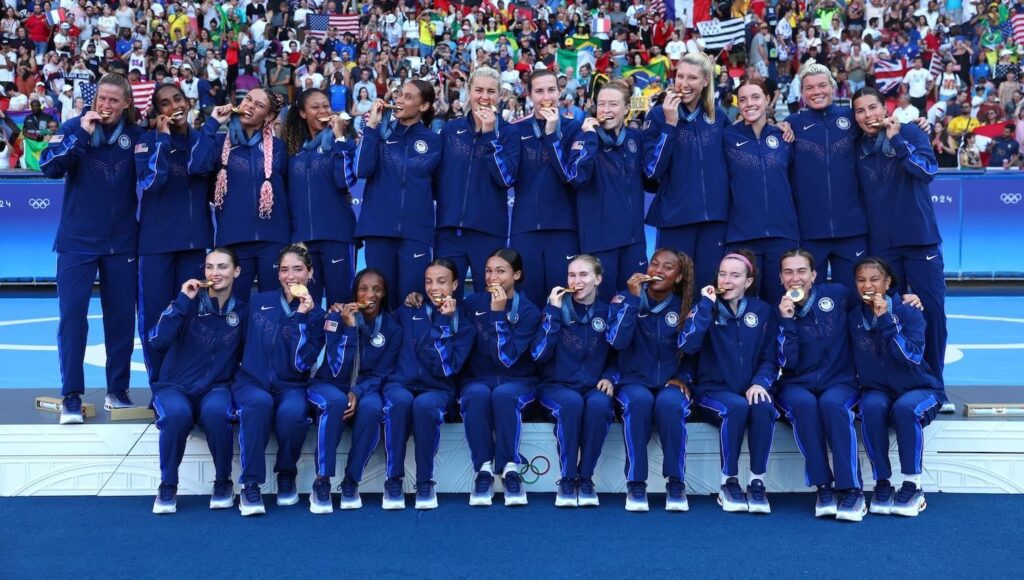
Hayes has spent her tenure — which began in May 2024 — deliberately reshaping how the USWNT plays. The team has moved away from the transition-heavy, purely athletic style that defined previous cycles toward a possession-oriented, defensively rigid system. The clearest evidence came at the 2026 SheBelieves Cup, where the USWNT captured its eighth tournament title while conceding zero goals across three matches extending a shutout streak that reached 804 minutes.
That defensive foundation has been built around a clear pairing: Naomi Girma and Emily Sonnett anchoring a backline kept compact by a single holding midfielder, with center-backs in constant communication to avoid getting caught out of shape.</cite> It’s a deliberate trade for lower-scoring, harder-to-beat soccer 1-0 wins decided by moments like Alyssa Thompson’s 82nd-minute strike against Colombia, rather than the blowout scorelines American fans got used to in past eras.
But SheBelieves Cup dominance came against Argentina, Canada, and Colombia — not the kind of hostile, physical environment Brazil 2027 will actually demand. Hayes got a preview of that gap this spring.The USWNT lost 2-1 in São Paulo in a physical friendly, one that featured 16 called fouls and countless others ignored, in a trip Hayes explicitly framed as preparation rather than a normal friendly.She told her players afterward that they needed to be “tougher” and get out of the comfort zones they typically operate in domestically.
That’s the tension defining this USWNT right now: a tactically coherent, defensively excellent team at home, still figuring out how it holds up on the road, against physicality, and under a crowd working against it — precisely the conditions of a World Cup played in Brazil.
Why It Matters: Concacaf Removed the Safety Net
Here’s the part of this story that hasn’t gotten enough attention: qualifying for 2027 is no longer the group-stage formality it used to be.
Concacaf’s new format for the 2027 Women’s World Cup and 2028 Olympics scraps the traditional round-robin-plus-knockout structure in favor of a pure knockout competition for the final eight teams.The United States and Canada, as the region’s two highest-ranked teams, get direct entry to the quarterfinal stage of the Concacaf W Championship, running November 24 through December 5, against a field that includes Costa Rica, El Salvador, Haiti, Jamaica, Mexico, and Panama.
That bye sounds like an advantage — and it is one. But it also means the U.S. women’s entire path to direct qualification for Brazil compresses into a single win-or-go-home match. A single loss at the quarterfinal stage means missing out on direct qualification for the World Cup entirely, with the four beaten teams instead fighting for a spot in the intercontinental playoff.
So what?

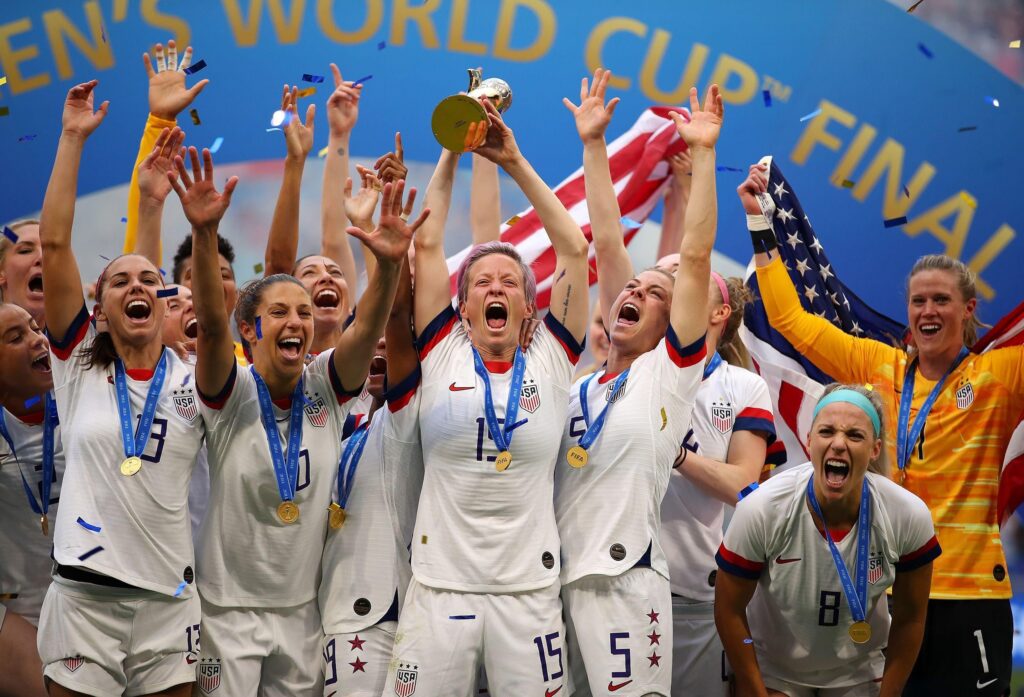
The USWNT has never failed to qualify for a Women’s World Cup. That streak has never depended on winning one specific knockout match on one specific night. Under the old format, an off day could be absorbed across a group stage. Under this one, it can’t. That’s a meaningfully different kind of pressure than any previous American qualifying cycle has carried — and it lands at a moment when Hayes’ team is still working through exactly the road-game toughness that a single elimination match would expose.
Tactical Analysis: What Hayes Actually Changed, in Plain Terms
Strip away the jargon, and the shift under Hayes comes down to this: the USWNT used to try to win by running teams off the park — pressing high, forcing turnovers, and scoring in transition before an opponent could organize. That worked against teams the U.S. was simply more athletic than. It worked less well against opponents who could keep the ball and pick the press apart, which increasingly described the rest of the world.
Hayes’ answer was to slow the team down on purpose. Instead of chasing chaos, the USWNT now tries to control the game by keeping the ball, staying compact defensively, and picking spots to attack rather than manufacturing them through pressure alone. The clearest sign it’s working: opponents simply aren’t scoring against this team in low-stakes settings. The risk, as the Brazil trip showed, is that a controlled, patient style can be dragged into a track meet by a physical opponent and a hostile crowd — and that’s a fight the U.S. hasn’t yet proven it can win away from home.
For a reader trying to picture it: think of the difference between a boxer who wins by throwing haymakers early and hoping one lands, versus one who wins by controlling distance and picking shots. Hayes has built the second kind of team. The open question is whether it can still take — and answer — a hard punch when Brazil throws one.
Bigger Picture Impact: A Deeper, Younger Player Pool Meets a Higher-Stakes Format
The other structural change under Hayes has been in personnel, not just system. She has given first caps to 60 different players through her tenure</cite>, an unusually aggressive approach to roster development for a program at this level. That’s produced real depth — the kind that protects against the loss of any single star to injury or off-form — but it’s also meant some rosters have carried far less collective experience than USWNT fans are used to.
That trend reversed heading into 2026. The SheBelieves Cup roster featured zero uncapped players for the first time in a full year, averaging 30.4 caps per player— a deliberate pivot toward experience as qualifying approached, anchored by veterans like Lindsey Heaps, Rose Lavelle, and Emily Sonnett.
That timing isn’t a coincidence. A knockout-format qualifier is exactly the kind of match where experience under pressure matters more than upside. Hayes’ pivot toward capped, tested players for 2026 suggests the staff already understood what was coming in November — a single match against a Concacaf opponent playing with nothing to lose, where the margin for error is a lot smaller than the SheBelieves Cup trophy suggests.
What Comes Next
The calendar between now and Brazil 2027 has a few concrete checkpoints worth tracking:
- Fall 2026 friendlies: Expect Hayes to continue testing the squad against physical, road-game opponents in the mold of the Brazil trip, rather than another soft home slate.
- November 24–December 5, 2026 — Concacaf W Championship: The USWNT’s bye sends it straight to the quarterfinal. One match. Win it, and direct qualification for Brazil is secured. Lose it, and the U.S. drops into a playoff scramble for one of Concacaf’s two remaining intercontinental slots.
- Early 2027: If needed, the intercontinental playoff tournament runs its final phase in February 2027 — a path the U.S. has never had to use and would rather avoid entirely.
- June 24–July 25, 2027: The tournament itself kicks off in Brazil, running across eight host cities from Rio de Janeiro’s Maracanã to São Paulo’s Arena Corinthians.
Conclusion
The USMNT’s exit was familiar, almost expected at this point — a program still searching for its breakthrough. The USWNT’s story right now is the opposite: a team that already knows how to win trophies, working to prove it can win the specific type of match — physical, hostile, single-elimination — that stands between it and a fifth World Cup. That single Concacaf quarterfinal in November carries more weight than it may look like on paper, and it’s the real test of everything Hayes has built over the past two years.
FAQ
When does the USWNT play its next qualifying match for the 2027 World Cup?
The USWNT enters the Concacaf W Championship at the quarterfinal stage, with the tournament running November 24 to December 5, 2026.
What happens if the USWNT loses its Concacaf qualifying match?
A loss at the quarterfinal stage would eliminate the U.S. from direct qualification, sending the team into a playoff for one of Concacaf’s two intercontinental play-off spots rather than an automatic berth.
How has Emma Hayes changed the USWNT’s style of play?
Hayes has shifted the team from a high-press, transition-heavy approach toward a possession-based system built on defensive compactness, anchored by center-backs Naomi Girma and Emily Sonnett and a single holding midfielder.
Has the USWNT ever missed qualifying for a Women’s World Cup?
No. The United States has qualified for every FIFA Women’s World Cup since the tournament began in 1991, a streak now facing its most format-driven test yet.
Where and when is the 2027 Women’s World Cup?
Brazil hosts the tournament from June 24 to July 25, 2027, across eight cities, marking the first Women’s World Cup held in South America.