When a sports legend speaks, the industry listens. USWNT icon Alex Morgan recently highlighted a critical narrative shaping the future of global soccer: the 2026 FIFA Men’s World Cup in North America isn’t just a monumental event in its own right—it is the ultimate catalyst for the 2027 FIFA Women’s World Cup in Brazil.
Rather than viewing the two tournaments in isolation, Morgan and sports executives are leaning into a powerful bridge narrative. By leveraging the unprecedented scale of the 104-match 2026 tournament, the global soccer ecosystem is setting the stage for a watershed moment in women’s sports just twelve months later.
Here is why the 2026 tournament is poised to be the most significant driver of growth for the 2027 Women’s World Cup.
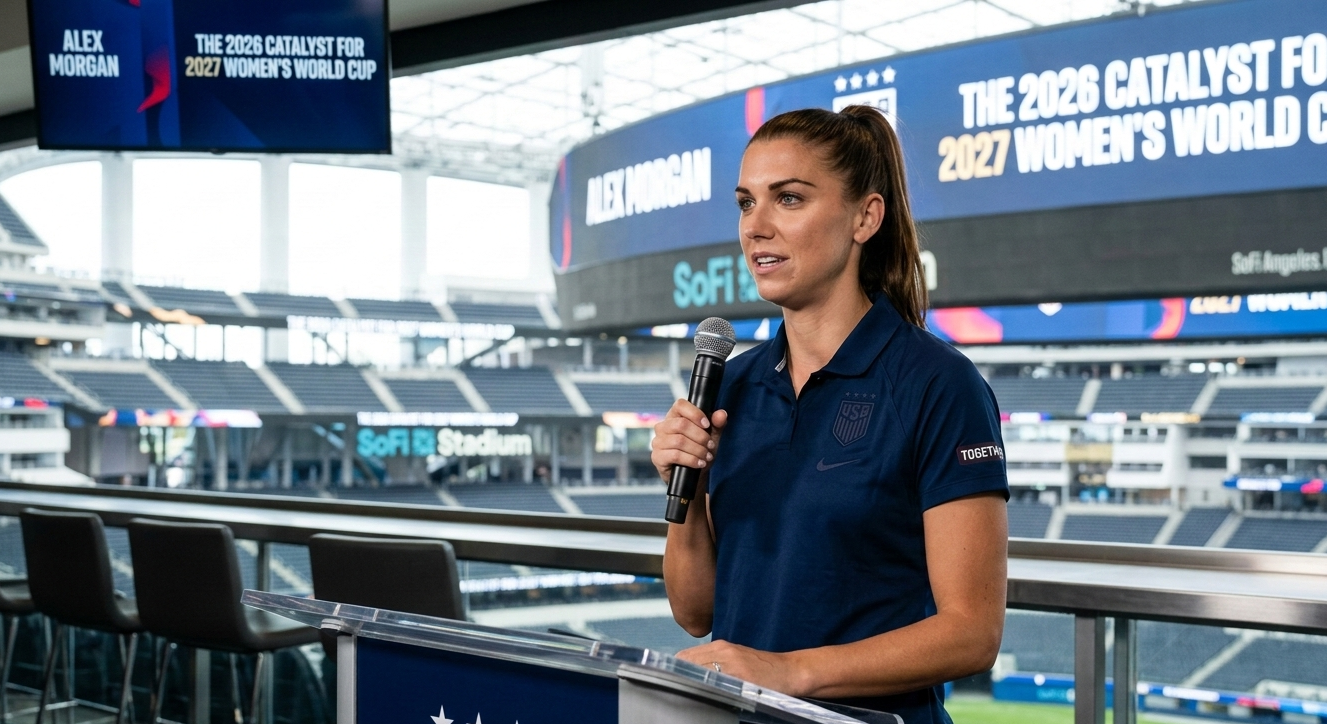
Table Of Contents
The “Summer of Soccer” Continuity
Historically, Men’s and Women’s World Cups have operated in separate cultural silos. However, the current strategy revolves around the concept of a continuous “Summer of Soccer.”
”As much as we want the focus to be on the men for this summer, it’s a great catalyst for next summer, for the women,” Morgan recently noted.
The 2026 tournament will capture the attention of casual fans, creating an inclusive fandom that naturally spills over into 2027. By treating these consecutive summers as a single, multi-year narrative arc, governing bodies and brands can keep audiences engaged year-round, converting temporary tournament watchers into long-term, direct-to-consumer (DTC) fans of the women’s game.
The Commercial Flywheel and Investment Parity
The conversation around women’s soccer has evolved. It is no longer framed as a “social good” or a charitable endeavor; it is a high-growth asset class with an undeniable business case.
The 2026 World Cup is expected to generate record-breaking revenues and establish a massive commercial flywheel. The corporate sponsors, broadcasters, and tech partners investing heavily in 2026 are actively being pushed to bundle their commitments with the 2027 Women’s World Cup. This cross-pollination ensures that the untapped valuation of the women’s game is finally realized, inching the sport closer to true media rights parity and equal prize money.
Infrastructure Legacy and Market Maturity
While the 2026 tournament will be hosted across the US, Canada, and Mexico, and the 2027 tournament heads to Brazil, the global infrastructure upgrades driven by 2026 will have a universal halo effect.
- Broadcasting Tech: Innovations in how the 2026 games are streamed and analyzed will become the baseline standard for 2027.
- Grassroots to Glass Ceilings: The heightened visibility of global stars in 2026 creates a demand for local, professional soccer. This directly benefits domestic leagues like the NWSL, where the professionalization of daily operations and world-class facilities are becoming the norm.
- Data-Driven Fandom: The massive influx of fan data collected during 2026 will allow marketers to hyper-target audiences, driving unprecedented ticket sales and merchandise demand for 2027.
The “Morgan Effect” and the Future
Alex Morgan’s transition from a generational player to an influential voice and business owner mirrors the evolution of the sport itself. The focus is now on athletes controlling their own ecosystem.
By utilizing the massive runway provided by 2026, the 2027 Women’s World Cup in Brazil won’t just be inheriting an audience—it will be capitalizing on a fully primed, global market ready to witness the next evolution of the beautiful game.
Conclusion: The Golden Era of Global Soccer
The bridge between the 2026 and 2027 World Cups represents much more than a scheduling quirk—it is a strategic masterclass in sports marketing and audience building. As Alex Morgan rightly points out, the unprecedented scale of the 104-match men’s tournament in North America is the ultimate launchpad. By capturing the attention of casual viewers and establishing a massive commercial flywheel, 2026 will lay the groundwork for a historic 2027 Women’s World Cup in Brazil.
We are entering a “Summer of Soccer” continuity where investment parity, infrastructure legacy, and inclusive fandom are no longer just industry buzzwords; they are the new reality. For brands, broadcasters, and fans, the message is clear: the future of global soccer is interconnected, and the momentum generated in 2026 will propel the women’s game to its highest ceiling yet.
Frequently Asked Questions (FAQ)
Q: How will the 2026 Men’s World Cup impact the 2027 Women’s World Cup?
A: The 2026 tournament will act as a commercial and cultural catalyst. Industry experts, including USWNT legend Alex Morgan, anticipate a “halo effect” where the massive broadcasting tech upgrades, fan data collection, and surge in casual viewership from 2026 will directly boost audience engagement and corporate investment for the women’s tournament in 2027.
Q: Where are the 2026 and 2027 FIFA World Cups being hosted?
A: The 2026 FIFA Men’s World Cup will be jointly hosted across North America by the United States, Canada, and Mexico. The following year, the 2027 FIFA Women’s World Cup will make history as it heads to South America, with Brazil serving as the host nation.
Q: Is Alex Morgan playing in the 2027 Women’s World Cup?
A: No, Alex Morgan officially retired from professional soccer in late 2024. However, the two-time World Cup champion remains highly influential off the pitch as an advocate, media founder (Togethxr), and minority owner, working to ensure the women’s game capitalizes on the momentum of upcoming global tournaments.
Q: What does the “Summer of Soccer” mean for the sport’s growth?
A: The “Summer of Soccer” refers to the continuous, multi-year pipeline of major tournaments—ranging from the 2024 Copa América to the 2026 Men’s World Cup, the 2027 Women’s World Cup, and the 2028 LA Olympics. This continuous exposure helps convert seasonal tournament watchers into dedicated, year-round fans of both domestic leagues (like the NWSL) and international play.