

Introduction

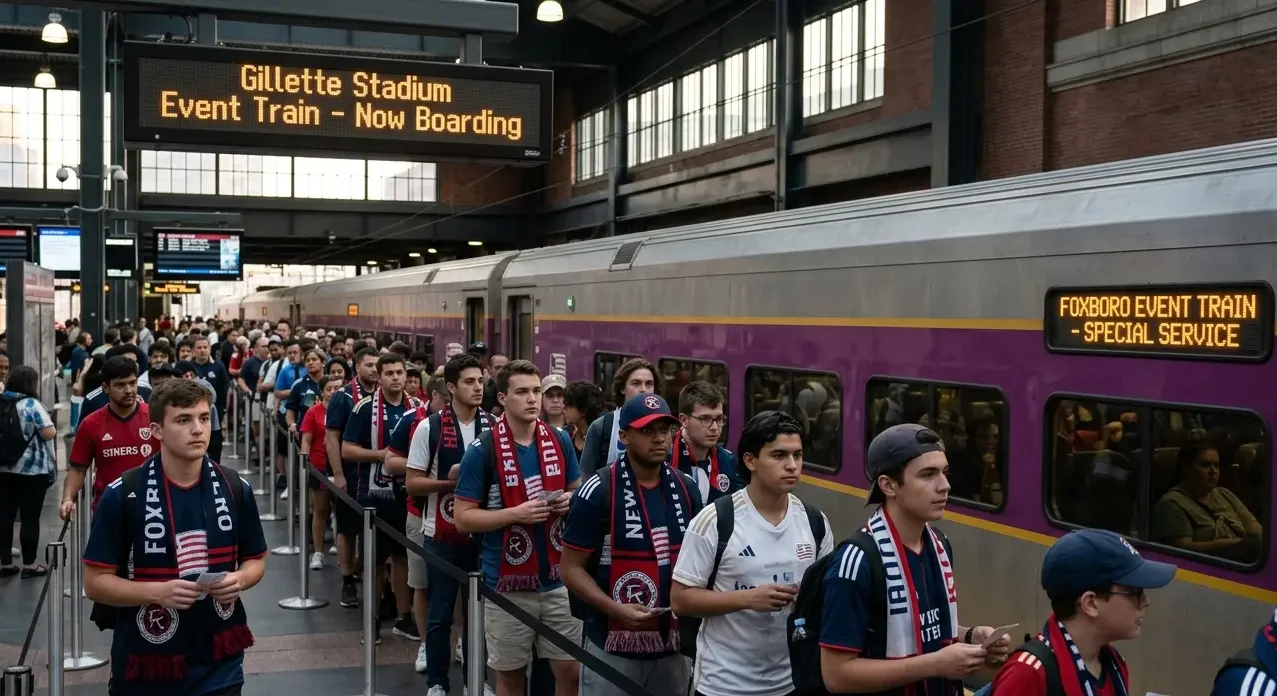
For soccer fans navigating the transit corridors between Boston and Foxborough, the financial logistics of attending live matches are undergoing a drastic shift. The Massachusetts Bay Transportation Authority (MBTA) is preparing to nearly quadruple its standard event train fare for the upcoming 2026 FIFA World Cup. While a standard round-trip ticket to Gillette Stadium has historically cost $20, attendees traveling to the seven international matches scheduled between June 13 and July 9, 2026, will face fares projected at upwards of $75. With matchday parking severely restricted, fans are left with fewer, and far more expensive, options to reach the stadium.
Why This Matters Now
This transit development comes at a critical time for the regional soccer community. As the Greater Boston area successfully launches its NWSL expansion side, Boston Legacy FC, with highly accessible transit initiatives, the stark contrast of the World Cup pricing model is drawing heavy scrutiny. With Gillette Stadium parking reduced by 75% to meet international security protocols, relying on the commuter rail is no longer an alternative option—it is a mandatory reality for tens of thousands of ticket holders.
Breakdown of MBTA Event Train Fares
Getting to Gillette Stadium, located approximately 22 miles south of Boston along the notoriously congested Route 1 corridor, has historically required precise logistical planning. To alleviate traffic, the MBTA, in partnership with Keolis Commuter Services, operates special event trains from South Station directly to Foxboro Station.
Historically, these round-trip tickets have been priced at a flat rate of $20 for New England Patriots games, New England Revolution matches, and concerts. However, recent events have signaled a tiered pricing model based on the scale of the event. During the March 26, 2026, international friendly between Brazil and France, the MBTA deployed four express trains, raising the mTicket price to $30.
For the FIFA World Cup, regional transport authorities are bracing for an unprecedented surge. Recent reports indicate that the Boston to Gillette Stadium MBTA train fare will reach approximately $75 for a round-trip ticket. For a family of four, this translates to $300 in transit costs before entering the venue.
Transit Pricing Data Table
| Event Category | Example Event | Date | Round-Trip Fare |
|---|---|---|---|
| NWSL Regular Season | Boston Legacy FC vs. NJ/NY Gotham FC | March 14, 2026 | $20 |
| Standard Stadium Event | New England Revolution / Concerts | Year-Round | $20 |
| International Friendly | Brazil vs. France | March 26, 2026 | $30 |
| FIFA World Cup 2026 | Group Stage & Round of 32 Matches | June/July 2026 | ~$75 |
Infrastructure and Parking Restrictions in Foxborough

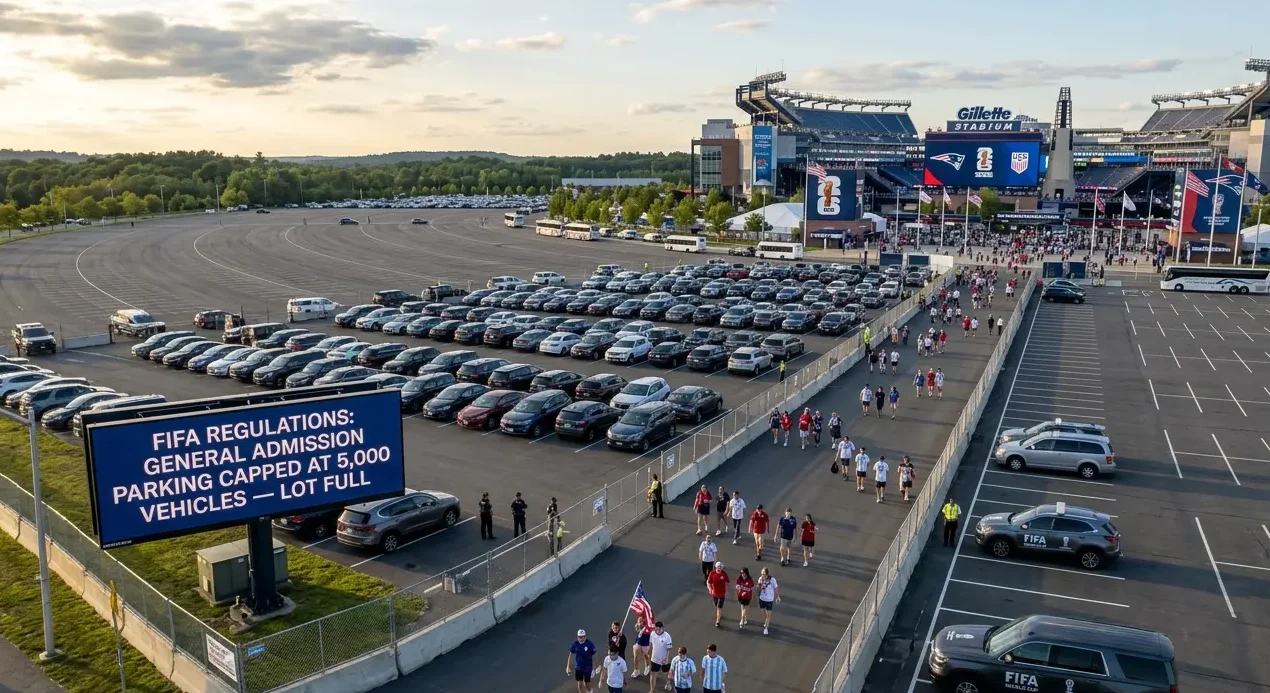
The 400% fare increase is compounded by strict infrastructure changes mandated by the tournament’s organizing committee. Gillette Stadium typically accommodates roughly 20,000 vehicles for major events. However, due to extensive security perimeters, VIP hospitality requirements, and broadcast staging areas required by FIFA, general parking will be drastically reduced.
Official reports indicate that only 5,000 parking spots will be available for fans during the seven World Cup matches. With the stadium holding roughly 65,000 spectators, the vast majority of attendees will be funneled toward public transportation.
The MBTA is actively preparing for this shift, estimating that they will need to transport 20,000 passengers per match. This operational demand requires rerouting rolling stock from other lines, paying staff overtime, and managing complex boarding procedures (such as the Group A and Group B staggered boarding used during the Brazil-France friendly), which officials cite as the primary drivers behind the fare hike.
Comparative Analysis: World Cup vs. U.S. Women’s Soccer Accessibility
As an analyst monitoring the growth of domestic soccer, the dichotomy between local club accessibility and international mega-events is striking. The National Women’s Soccer League (NWSL) has made localized accessibility a core pillar of its growth strategy.
When Boston Legacy FC hosted their inaugural home opener against NJ/NY Gotham FC on March 14, 2026, team executives explicitly prioritized fan transit. Team President Jennifer van Dijk championed the partnership with the MBTA and Keolis, securing a $20 special event train that departed South Station an hour before kickoff. This price point allows the NWSL to cultivate a reliable, repeating matchday culture.
In contrast, the FIFA World Cup operates as a localized economic extraction event. Because the tournament relies on a transient, global fanbase rather than a returning local demographic, transit authorities treat the commute as a premium service rather than a community utility. The disparity highlights a structural difference in sports business models: the NWSL is investing in long-term local access, while the World Cup leverages short-term, inelastic demand.
Comparative Analysis: World Cup vs. U.S. Women’s Soccer Accessibility
As an analyst monitoring the growth of domestic soccer, the dichotomy between local club accessibility and international mega-events is striking. The National Women’s Soccer League (NWSL) has made localized accessibility a core pillar of its growth strategy.
When Boston Legacy FC hosted their inaugural home opener against NJ/NY Gotham FC on March 14, 2026, team executives explicitly prioritized fan transit. Team President Jennifer van Dijk championed the partnership with the MBTA and Keolis, securing a $20 special event train that departed South Station an hour before kickoff. This price point allows the NWSL to cultivate a reliable, repeating matchday culture.
In contrast, the FIFA World Cup operates as a localized economic extraction event. Because the tournament relies on a transient, global fanbase rather than a returning local demographic, transit authorities treat the commute as a premium service rather than a community utility. The disparity highlights a structural difference in sports business models: the NWSL is investing in long-term local access, while the World Cup leverages short-term, inelastic demand.
Global Precedents in Tournament Transit
The MBTA’s strategy of charging premium fares for mega-events diverges sharply from recent international precedents. During the 2022 FIFA World Cup in Qatar, organizers offered entirely free public transit, including the Doha Metro, to all fans holding a Hayya card (the official fan ID and match ticket).
Similarly, during the 2024 UEFA European Championship in Germany, fans holding match tickets were granted a 36-hour travel pass at no additional cost, which permitted free use of regional and local transport networks within the host cities. By comparison, Boston’s decision to transition from standard pricing to a $75 premium fare represents a highly localized, profit-recoupment approach to public transit.
Context and Long-Term Impact Analysis
Short-Term Implications:
The immediate effect of this pricing structure will be severe logistical friction. With parking limited to 5,000 vehicles and trains costing upwards of $75, local infrastructure will be tested by ride-sharing services and private bus charters attempting to fill the gap. Fans attending the World Cup must factor transit into their overall budget, treating the commute as a secondary admission ticket.
Long-Term Significance:
For the MBTA, successfully executing the World Cup transit plan could serve as a proof-of-concept for moving high volumes of passengers securely under intense operational pressure. However, it also sets a controversial precedent for dynamic pricing on public transit during major sporting events.
For the regional soccer market, this highlights the value proposition of domestic leagues. The steep barriers to entry for the men’s World Cup may inadvertently drive local fans toward more accessible, community-focused products like the New England Revolution and Boston Legacy FC, where a family can commute and attend a match for the price of a single World Cup train ticket.
Conclusion
The impending 2026 FIFA World Cup will bring premier international soccer to Massachusetts, but it arrives with significant logistical and financial hurdles. The reduction of Gillette Stadium parking to just 5,000 spaces forces an overreliance on public transit, allowing the MBTA to implement a steep dynamic pricing model. As fares jump from the standard $20 seen at NWSL and MLS fixtures to an estimated $75 for World Cup matches, the cost of transit is becoming a focal point of the tournament’s local impact. Fans planning to attend must prepare for a fundamentally altered, and highly expensive, matchday commute.
FAQ Section
How much is the train from Boston to Gillette Stadium for the 2026 World Cup?
Round-trip event train fares are projected to cost approximately $75, a nearly 400% increase from the standard $20 event fare.
Why is parking reduced at Gillette Stadium during the World Cup?
To comply with FIFA’s security perimeters, VIP hospitality needs, and broadcast requirements, general parking will be restricted from 20,000 spots down to 5,000 spots.
Are there regular commuter trains to Foxboro on match days?
No. During major events, standard commuter rail service to Foxboro is suspended and replaced exclusively by the special event trains, which require pre-purchased tickets via the mTicket app.
How does this transit cost compare to Boston Legacy FC matches?
For the NWSL’s Boston Legacy FC home games, the MBTA offers a highly accessible $20 round-trip event ticket to encourage local fan attendance.
Reader Engagement:
How do you feel about public transit authorities utilizing dynamic pricing for major sporting events? Will the $75 train fare impact your decision to attend the 2026 World Cup in Boston? Let us know your thoughts in the comments below.