Sam Coffey’s Road Back: How Time Away Changed Her View of the USWNT
After knee surgery, another injury setback and months away from the national team, Sam Coffey is back in the USWNT environment. Her return is not just a fitness story. It is a reminder of what representing your country can mean when you have spent time watching from the sidelines.
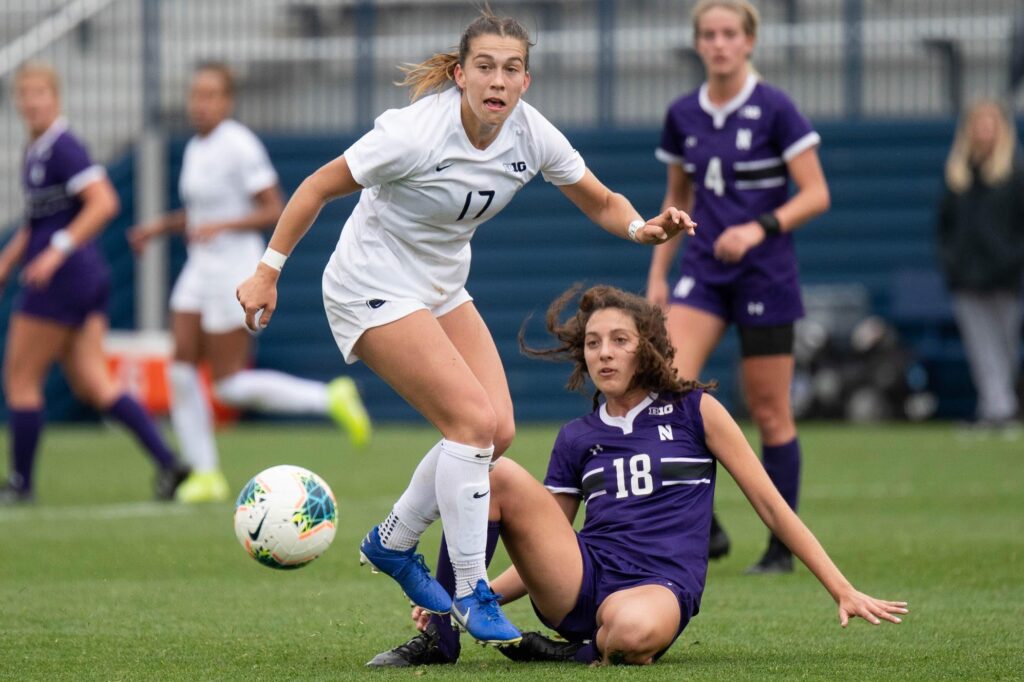
For a professional soccer player, being selected for the national team is usually a moment to celebrate. For Sam Coffey, returning to the United States Women’s National Team after several months away carried an additional meaning.
She had missed important international windows. She had gone through more than one physical setback. And instead of preparing alongside her teammates, she had spent part of the year following the team from a distance.
Now the Manchester City midfielder is back with the USWNT, named to Emma Hayes’ 23-player squad for the 2026 Concacaf W Championship.
When Coffey spoke to U.S. Soccer after rejoining the group, one feeling stood out: gratitude.
She explained that going through injuries had made her appreciate the national-team environment even more. It was not simply about getting another opportunity to play. It was about being part of a group she had missed.
For supporters, that makes her return worth understanding beyond the usual injury-update headline.
A difficult year that started with a knee setback
Coffey’s 2026 campaign did not follow a straightforward path.
After joining Manchester City from Portland Thorns in January, she made a positive start to life in England. City confirmed that she featured 10 times during her first four months at the club as the team won the Women’s Super League title.
But the season ended with a medical setback. Manchester City confirmed that Coffey underwent minor knee surgery and would begin rehabilitation with the club’s medical team.
That meant another period of work away from competitive football.
A separate setback followed later in the year. ESPN reported that Coffey suffered an ankle injury while playing for Manchester City in October, forcing her to withdraw from the USWNT squad originally selected for the matches against Spain.
For a player who had become an important part of the United States midfield, missing those international opportunities was understandably difficult.
The challenge was not only physical. It also meant watching teammates prepare for major matches without being able to contribute on the field.
Her return began at Manchester City

The road back did not end with a call-up.
Coffey first needed to get back into club football. Manchester City provided that opportunity in early November, when she returned as a substitute during a 2-1 victory over London City Lionesses.
She entered the match in the second half, making her first appearance since recovering from the later injury.
That appearance was an important step, but it should not be mistaken for the completion of her comeback. Returning to competitive action is one milestone. Building consistent minutes, match rhythm and confidence is another.
For Manchester City, having an experienced midfielder available again adds another option in the middle of the pitch. For the USWNT, it offered encouraging signs ahead of the next international challenge.
The two stages of her return matter: first getting back onto the field for her club, then finding her way back into the national-team environment.
She stayed connected even when she could not play
One of the more interesting parts of Coffey’s comeback is what she did while she was away.
She did not simply disappear from the national-team picture. According to U.S. Soccer, she continued watching match footage, discussed tactical details with the coaching staff during the Spain series and attended the United States’ 2-2 draw against Spain in Chester, Pennsylvania, on October 13.
That experience gave her a different perspective.
Watching a team from the stands is not the same as being on the field. A midfielder who normally helps control the space in front of the defence suddenly has to observe those movements from outside the game.
Coffey said watching the team made her proud of its progress, while also identifying details that still needed improvement.
There is a useful lesson in that experience. A player can remain involved in the team’s development even when injury prevents her from contributing during a match.
It also shows why communication between players and coaching staff matters during rehabilitation. Staying connected can help a returning player understand how the team is developing and what will be expected when she is available again.
Why Coffey matters to Emma Hayes’ midfield
Coffey’s importance to the USWNT is not built around goals or headlines.
Her role as a defensive midfielder is often about the work that happens before an attacking opportunity becomes visible. She can help protect the back line, compete for possession, close spaces and connect defensive phases with forward movement.
Those responsibilities can be easy to overlook when supporters focus mainly on goals and assists.
But a team that wants to control matches needs players who can recognise danger early, keep the structure organised and make sensible decisions under pressure.
Coffey has become an important option in that part of the United States midfield. Her return gives Hayes another experienced player to work with as the team builds toward the 2027 FIFA Women’s World Cup.
That does not mean the team should rush her back into a heavy workload. Her availability is positive news, but her match rhythm and physical readiness will still need to be managed carefully.
The bigger benefit may come from having another trusted midfield option available as the national team prepares for the challenges ahead.
The difference between returning and being fully back
There is an important distinction between being named to a squad and returning to your best level.
Coffey has completed meaningful steps: she has returned to club action, rejoined the USWNT camp and earned selection for the Concacaf W Championship.
Those are encouraging developments.
Still, supporters should avoid assuming that her comeback is finished or that a particular number of minutes is guaranteed. Coaches must consider the player’s fitness, the demands of the schedule and the needs of the team.
For Coffey, the coming period is an opportunity to rebuild her place in the rhythm of international football. That process may involve training, tactical work and carefully managed appearances.
A sensible return is more important than a rushed one.
What her comeback means for the next USWNT cycle
The United States is working toward qualification for the 2027 FIFA Women’s World Cup in Brazil. The 2026 Concacaf W Championship is a major step in that process.
Coffey’s return gives Hayes another experienced midfield option during an important stage of the cycle. It also allows her to reconnect with teammates and continue developing her understanding of the team’s tactical approach.
But there is a longer-term story here, too.
The next generation of the USWNT will be built through competition, depth and players who can remain available over time. A healthy and settled Coffey could be an important part of that picture.
Her experience in England with Manchester City also gives her exposure to a different competitive environment. Bringing those experiences back into the national-team group can add value beyond what appears on a match statistics page.
More than an injury comeback
Sam Coffey’s road back has included surgery, rehabilitation, another injury setback and time spent following her country from the sidelines.
It has also included a return to club football and another opportunity to represent the United States.
Her own words suggest that the time away changed how she views the national-team environment. That is perhaps the most human part of this story.
Professional athletes are often judged by performances, selection decisions and availability. But behind every comeback is a person adjusting to uncertainty, working through difficult days and trying to return to something that matters to them.
Coffey is back in the USWNT picture. The next chapter will be measured not by how quickly she returns to her previous workload, but by how well she builds from this point.
For supporters, that is a comeback worth following.